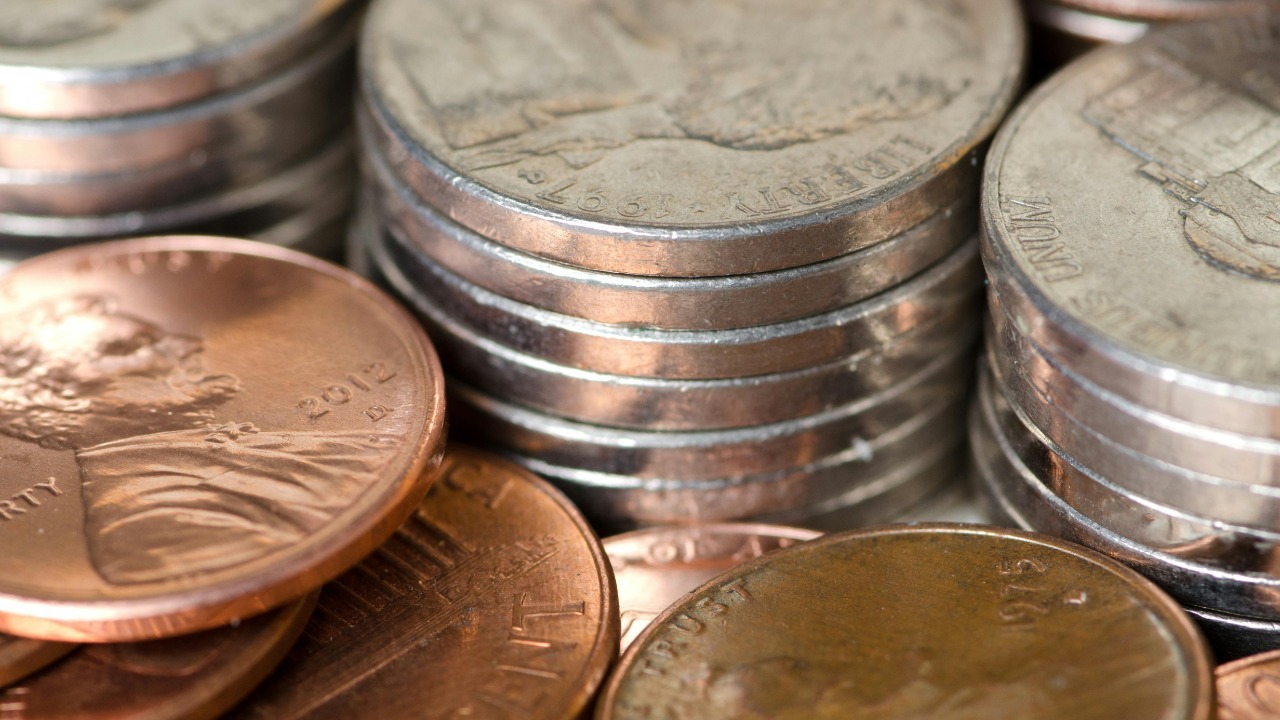
Somewhere in the United States, a one-cent coin struck on the wrong metal blank during World War II could be sitting in a jar of loose change, worth hundreds of thousands of dollars. The 1943 copper penny, the 1944 steel cent, and the 1955 Doubled Die Obverse are among the most sought-after error coins in American numismatics, with confirmed auction prices reaching $372,000 for a single penny. For collectors and casual coin-checkers alike, knowing what to look for and how to separate genuine rarities from common counterfeits is the difference between a windfall and a worthless fake.
How Wartime Shortcuts Created Million-Dollar Mistakes
The story of America’s most valuable pennies begins with a wartime decision. In 1943, the U.S. Mint switched from the standard bronze composition to zinc-coated steel cents because copper was needed for shell casings and other military hardware. The changeover affected all three active mint facilities, and billions of steel pennies entered circulation that year. But the transition was not perfectly clean. A small number of copper-alloy planchets, left over from 1942 production runs, were accidentally fed into the presses and struck with 1943 dies.
Those accidental copper cents became some of the rarest coins in American history. Approximately 40 of these 1943 copper-alloy cents are known survivors, according to the Mint’s own reporting. Their scarcity stems from the sheer improbability of their creation: in a system designed to produce only steel cents that year, a handful of bronze blanks slipped through quality controls at a time when wartime production quotas left little room for inspection. The mirror-image error occurred the following year, when the Mint returned to bronze composition but a few leftover steel blanks were struck with 1944 dies, producing another off-metal rarity that collectors now chase just as eagerly.
The 1943 Copper Penny: $372,000 and Climbing
A single 1943 bronze Lincoln cent sold for $372,000 at auction on February 25, 2021. That price reflects the coin’s extreme rarity and the intensity of collector demand for wartime error pieces. Each genuine example weighs 3.11 grams, composed of 95% copper and 5% tin and zinc, matching the standard pre-1943 Lincoln cent specification. By contrast, the regular 1943 steel cent weighs just 2.70 grams and is magnetic, which provides the simplest initial screening test for anyone who thinks they might have found a bronze example in change or an old collection.
Authentication goes beyond the scale and the magnet. The font of the numeral “3” in the date serves as a diagnostic marker, since counterfeiters who alter 1948 pennies into fake 1943 coppers often fail to replicate the correct die typography. Counterfeits also include copper-plated steel cents, which can pass a quick visual inspection but fail the magnet test because the steel core is attracted to a magnet while genuine bronze planchets are not. The U.S. Mint has warned that these fakes circulate widely, and any suspected 1943 copper cent should be examined by a professional grading service before a collector assigns it significant value or offers it for sale.
The 1944 Steel Cent: A Reverse Error Worth $180,000
If the 1943 copper penny is the king of wartime mint errors, the 1944 steel cent is its counterpart. When the Mint resumed bronze production in 1944, a small number of zinc-coated steel planchets remained in the hopper and were struck with the new year’s dies. These off-metal 1944 steel cents weigh 2.70 grams, the same as their 1943 steel predecessors, and they are magnetic. One confirmed example sold for $180,000 through Heritage on June 20, 2021, underscoring how powerfully collectors respond to coins that were never supposed to exist.
The Professional Coin Grading Service has certified 1944 steel cents under its Mint Error Program, a designation that helps establish provenance and authenticity for coins struck on the wrong metal. Because steel planchets are visually distinct from bronze, with a silvery-gray appearance that darkens unevenly over time, raw examples sometimes surface in old collections where they were set aside as curiosities decades ago. The authentication challenge here is different from the 1943 copper: instead of copper-plating fakes, counterfeiters sometimes strip the copper coating from regular 1944 bronze cents to expose the underlying zinc color, hoping to mimic the steel cent’s look. Weight and magnetic testing remain the first line of defense, followed by certification from a major grading service for any coin that appears to be a genuine off-metal strike.
The 1955 Doubled Die: Visible Error, Hidden Value
Not every valuable penny is an off-metal accident. The 1955 Doubled Die Obverse Lincoln cent resulted from a production flaw called doubled-die hubbing, in which the hub that imprints the design onto a working die struck at a slightly different angle on a second impression. The result is dramatically doubled lettering on the obverse, visible to the naked eye across “LIBERTY,” “IN GOD WE TRUST,” and the date. Unlike many subtle die varieties that require magnification, the 1955 Doubled Die is immediately recognizable, which is both its appeal and the reason counterfeits exist in significant numbers and continue to appear in online marketplaces and informal trades.
Genuine examples entered circulation in 1955, and many were pulled from change by alert citizens who noticed the obvious doubling. Authenticating a real specimen involves checking for a specific reverse die polish line that is present on all genuine strikes but absent from most forgeries, along with comparing the style and spread of the doubling to known reference images from major grading services. The coin’s survival population is larger than either the 1943 copper or the 1944 steel, which keeps its price below those six-figure benchmarks, but high-grade examples still command strong premiums at auction. For anyone sorting through inherited collections or old rolls of wheat-back pennies, the 1955 Doubled Die is one of the most realistic finds because enough examples entered everyday commerce to make discovery plausible decades later.
Seven More Pennies Worth a Second Look
Beyond the three headline rarities, several other Lincoln cents carry values far above face. The 1909-S VDB, bearing designer Victor David Brenner’s initials on the reverse, had a low mintage that makes it a perennial target for collectors building complete sets. The 1914-D, struck at the Denver facility, is another key date with strong demand in all grades, especially in original, problem-free condition. Both coins are part of the standard wheat-reverse series produced from 1909 to 1958, and they turn up occasionally in unsearched rolls or estate lots where earlier generations saved coins without focusing on specific dates or mint marks.
Later errors and varieties add to the list of cents that merit closer inspection. The 1969-S Doubled Die Obverse, struck at the San Francisco Mint, shows strong doubling similar to the 1955 variety but is considerably rarer, with far fewer certified examples. The 1972 Doubled Die, also an obverse doubling, is more accessible in terms of price but still trades well above a cent, especially in higher grades. The 1982 small-date copper penny, produced during the transition year when the Mint switched from bronze to copper-plated zinc, is a transitional piece that some collectors prize because it represents an overlap of old and new compositions. The 1992 Close AM variety, where the letters A and M in “AMERICA” on the reverse nearly touch instead of being clearly separated, rounds out a short list of modern cents worth checking. Verified auction data from primary grading services is limited for several of these varieties, and collectors should treat secondary price guides with caution until professional certification confirms authenticity and grade.
How to Spot a Fake Before Paying Real Money
The popularity of rare pennies has created a thriving counterfeit market. For the 1943 copper cent, the U.S. Mint has specifically warned about two common fraud methods: copper-plating a genuine 1943 steel cent and altering the date on a common copper penny from another year. The magnet test catches the first type instantly, since a steel core will stick to a magnet regardless of its surface plating. The second type requires closer inspection of the date numerals, particularly the shape of the “3,” which differs between genuine 1943 dies and dies from years like 1948 whose digits can be tooled to resemble a 1943 date; under magnification, the tooling marks and inconsistent spacing usually become evident.
Weight provides another layer of verification. A genuine 1943 copper cent weighs 3.11 grams, while a steel cent weighs 2.70 grams, and off-metal 1944 steel cents should also fall near 2.70 grams. An inexpensive digital scale accurate to 0.01 grams can flag most fakes before a coin ever reaches a grading service. For the 1955 Doubled Die, the reverse die polish line serves as a reliable diagnostic that separates genuine strikes from imitations that only mimic the obverse doubling, and experienced authenticators also look for the correct style of lettering and date placement. Across all rare pennies, red flags include surfaces that look unnaturally bright or granular, mismatched wear between obverse and reverse, and altered mint marks that have been moved or added to create a key date that never left the Mint in that configuration.
Turning Pocket Change Into a Professional Appraisal
For most people, the first step in searching for valuable pennies is simply to slow down and look. Setting aside wheat-back cents, unusually bright or oddly colored pieces, and any coin with obvious doubling or an unusual date-and-mint-mark combination will quickly create a small group worth closer inspection. A magnet, a basic scale, and a 10x loupe are inexpensive tools that allow non-specialists to rule out the most obvious counterfeits and zero in on coins that might justify professional grading. Comparing suspect pieces against clear photographs and specifications from major grading services can further narrow the field before any money is spent on certification fees.
Once a coin passes those initial tests, sending it to a reputable third-party grader becomes the safest way to establish authenticity, condition, and market value. Certification not only protects buyers and sellers from undisclosed problems or clever alterations, it also creates a permanent record that can be referenced in future sales or estate planning. Whether the coin turns out to be a six-figure wartime error or a modestly valuable doubled die, the combination of careful at-home screening and professional verification helps ensure that rare pennies are treated as what they are: tiny pieces of metal that, through a mix of history, chance, and collector enthusiasm, have become miniature treasures hiding in plain sight.
More From The Daily Overview
*This article was researched with the help of AI, with human editors creating the final content.

Cole Whitaker focuses on the fundamentals of money management, helping readers make smarter decisions around income, spending, saving, and long-term financial stability. His writing emphasizes clarity, discipline, and practical systems that work in real life. At The Daily Overview, Cole breaks down personal finance topics into straightforward guidance readers can apply immediately.

