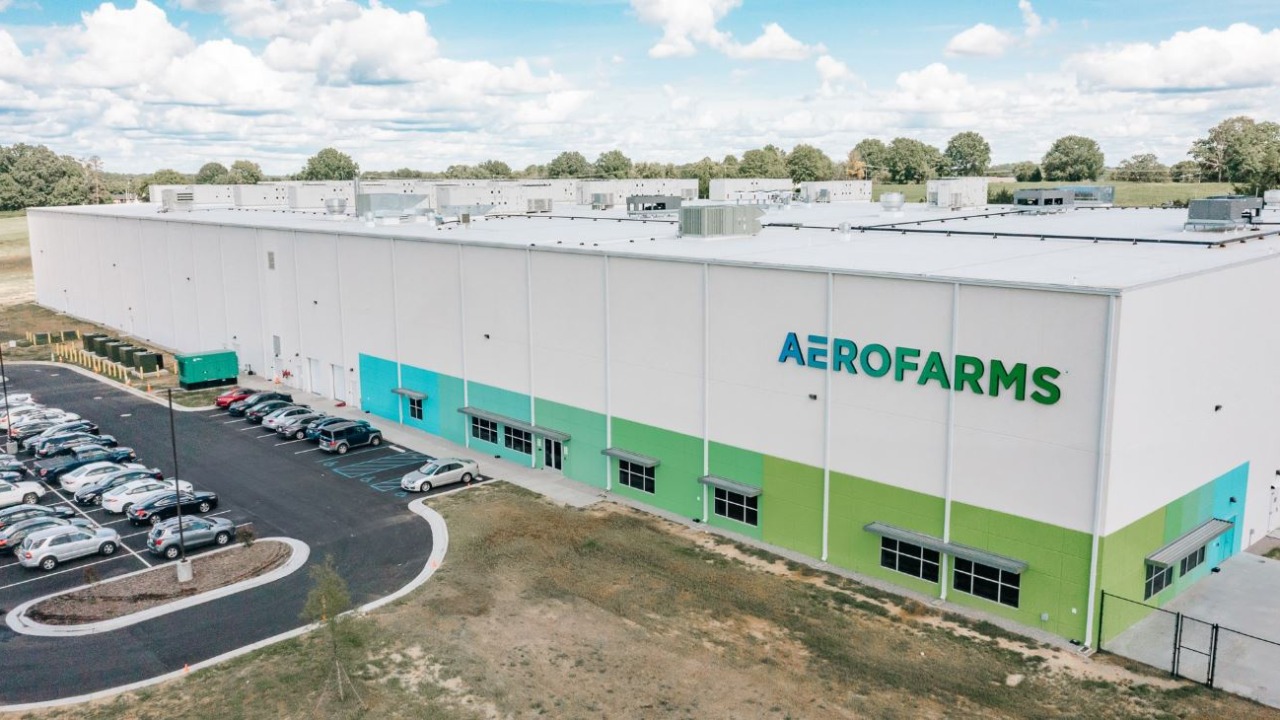
A $17 million indoor farming plant in rural Virginia has gone dark just days before Christmas, leaving 172 people without paychecks and a community scrambling to understand what went wrong. The shutdown, centered in Pittsylvania County near Danville, is a stark reminder of how quickly high-tech promises can unravel when funding dries up and markets shift. For the workers who had counted on steady jobs heading into the holidays, the closure is not a business story so much as a personal emergency.
The facility’s owner, AeroFarms, notified local officials through a formal WARN Notice that operations would cease and that all 172 positions would be eliminated. Instead of celebrating the end of the year, families in and around Ringgold are now weighing mortgage payments, child care and holiday plans against the sudden loss of income. I see in this moment not just a corporate setback, but a test of how Virginia’s economic development and workforce systems respond when a marquee employer collapses without much warning.
The abrupt shutdown and a community on edge
The closure of the AeroFarms facility in Pittsylvania County landed with particular force because it was supposed to be a long-term anchor for the region’s push into controlled-environment agriculture. According to a WARN Notice sent by the company to Danville Mayor Alonzo Jones, the plant at Cane Creek Centre in Ringgold is shutting down and 172 employees are losing their jobs, a blow that arrives just as households are bracing for winter expenses. The company had invested roughly $17 million into the site, positioning it as a flagship for high-yield, indoor leafy green production that could operate year-round regardless of weather.
Instead of the stability that was promised when the project was announced, the shutdown has left workers and local leaders in PITTSYLVANIA COUNTY confronting a painful gap between expectations and reality. Reporting on the WARN Notice describes how AeroFarms cited funding problems and the need to halt operations, leaving employees in limbo and officials searching for a new tenant for the facility in Cane Creek Park. The fact that the layoffs were communicated through a formal WARN process underscores how quickly the company’s financial picture deteriorated, and how little room there was to phase out jobs more gradually.
What a $17 million bet on vertical farming was supposed to deliver
When AeroFarms chose Pittsylvania County, the decision was framed as a sign that rural Virginia could compete for cutting-edge agricultural technology. The $17 million investment in the Ringgold plant was meant to bring not only jobs, but also a new identity for the region as a hub for vertical farming and sustainable food production. The facility’s location in Cane Creek Park, within the Cane Creek Centre industrial area, was carefully selected to leverage existing infrastructure, highway access and proximity to Danville’s labor pool.
That context makes the shutdown feel less like a single company’s misstep and more like a setback for a broader strategy to diversify the local economy. The plant’s closure raises questions about how aggressively communities should court capital-intensive startups whose business models depend on steady streams of outside funding. It also highlights the risk of tying a rural workforce to a single employer whose fortunes can turn quickly when investors pull back. The site itself, cataloged in state and local databases as a major industrial asset, is now being marketed again as officials look for a replacement user for the Cane Creek facility that was supposed to symbolize a new era.
Holiday layoffs and the human cost of a WARN Notice
For the 172 people whose jobs vanished, the timing of the announcement is as painful as the numbers. Losing work just before Christmas means canceled travel, pared-back gifts and a scramble to cover basic bills at a time when seasonal expenses are already high. A WARN Notice is designed to give workers advance warning of mass layoffs, but in practice it can feel like a cold, legalistic document that arrives too late to soften the blow. In Pittsylvania County, the notice to Mayor Alonzo Jones signaled that the company’s decision was final, leaving employees with little leverage and even less time.
I have seen how such notices can ripple through a community, from local churches organizing food drives to small businesses worrying about lost customers. In a rural county, 172 jobs represent not just individual paychecks but a significant share of local purchasing power, tax revenue and civic engagement. The fact that the layoffs are concentrated in a single facility in Ringgold magnifies the impact, since many workers likely live in the same neighborhoods and send their children to the same schools. The WARN process may satisfy legal requirements, but it does not answer the deeper question of how a region rebuilds trust in economic development promises after a high-profile employer walks away.
How Virginia’s workforce system is trying to catch workers when they fall
One of the few bright spots in a story like this is the network of workforce organizations that can step in to help displaced employees. In Virginia, that safety net increasingly includes mobile and regional services designed to meet people where they are, rather than expecting them to navigate a maze of offices on their own. In Orange County, for example, local economic development officials have highlighted a partnership with Virginia Career Works in the Piedmont Region to pilot a mobile offering of workforce services to job seekers. That model, which brings resume help, training information and employer connections directly into communities, could be especially valuable in places like Pittsylvania County where transportation can be a barrier.
Virginia Career Works, through its regional boards, has been experimenting with ways to connect laid-off workers to new opportunities more quickly, whether through on-site rapid response teams or targeted job fairs. The partnership in the Piedmont Region shows how local governments and workforce agencies can collaborate to deliver services in a more flexible way, using mobile units and pop-up events to reach people who might not otherwise engage. For former AeroFarms employees, access to such programs could mean the difference between a prolonged spell of unemployment and a relatively swift transition into another role, even if that role is in a different industry than indoor agriculture.
Job fairs, retraining and the long road back to stability
Beyond immediate crisis response, the question is how quickly 172 displaced workers can find comparable jobs in a regional economy that is still evolving. Northern Virginia offers one template for how coordinated job fairs can connect employers and job seekers at scale. In Fairfax County, Virginia Career Works Northern, in partnership with DFS Employment and Training, brought together 58 employers from across Northern Virginia to meet a diverse pool of professional job seekers. That kind of event, which compresses dozens of hiring conversations into a single day, can dramatically shorten the time it takes for someone to move from layoff to new employment.
While Pittsylvania County does not have the same density of employers as Fairfax, the principles are transferable. Regional workforce boards can organize targeted fairs that bring in manufacturers, logistics firms, health care providers and other employers who are actively hiring, then pair those events with on-the-spot resume reviews and interview coaching. I see retraining as another critical piece, particularly for workers whose skills are tied to specialized indoor farming technology. Programs that offer short-term credentials in fields like industrial maintenance, commercial driving or health care support can open doors to more resilient careers. The challenge, and the opportunity, is to ensure that the energy and coordination seen in Northern Virginia’s 58-employer events is adapted to the realities of rural labor markets, so that the AeroFarms layoffs become a turning point rather than a permanent scar on the local economy.
More From TheDailyOverview

Grant Mercer covers market dynamics, business trends, and the economic forces driving growth across industries. His analysis connects macro movements with real-world implications for investors, entrepreneurs, and professionals. Through his work at The Daily Overview, Grant helps readers understand how markets function and where opportunities may emerge.

