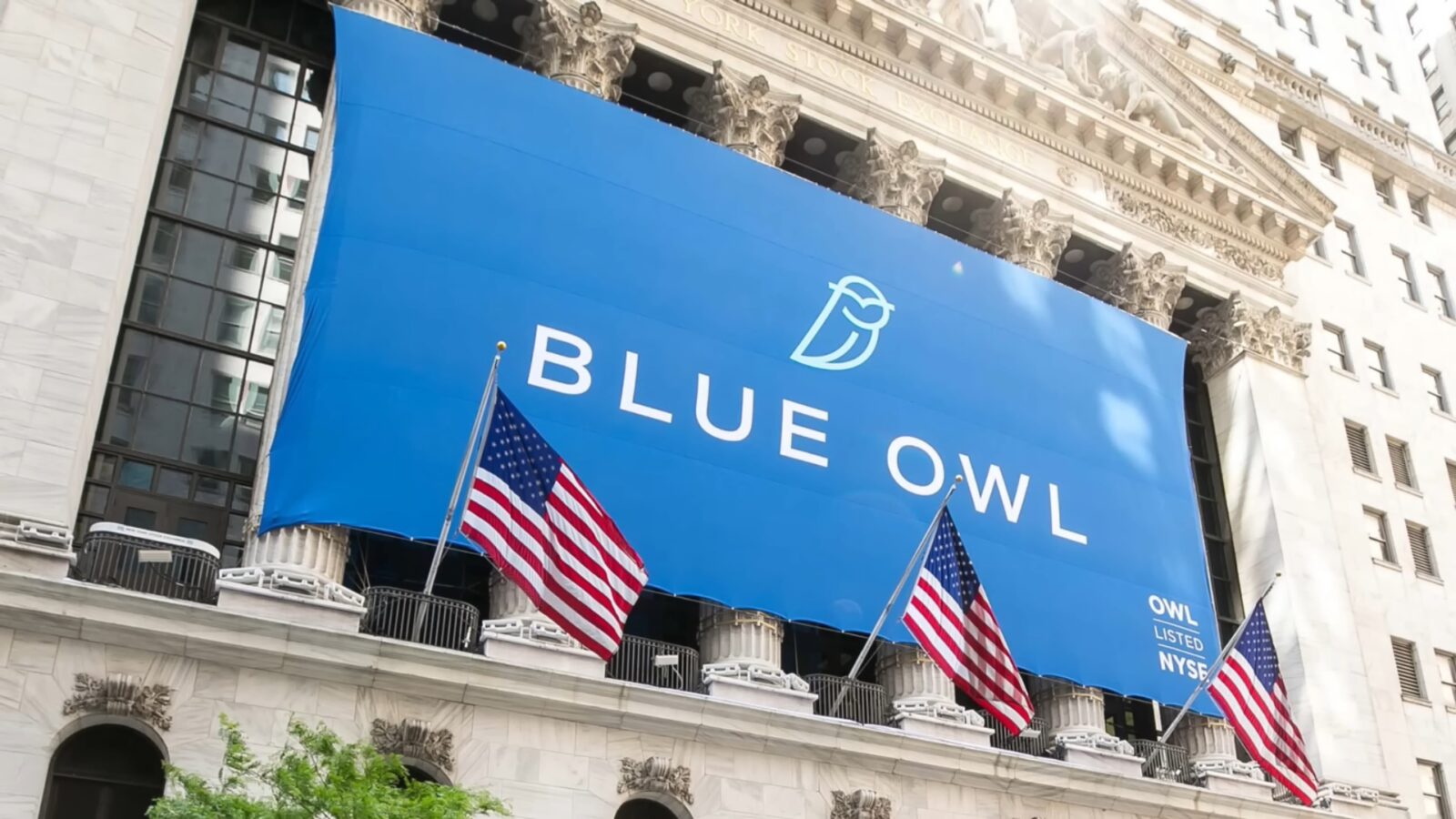
Blue Owl Capital Corporation II disclosed on February 17, 2026, that it had entered into loan sale agreements totaling $1.4 billion across its funds, a move that signals deepening stress inside the $3 trillion private credit market. The transaction, filed with the SEC, involved a retail-facing private credit vehicle grappling with liquidity mismatches between illiquid loan portfolios and investor redemption demands. That pressure is compounding as so-called shadow defaults, where troubled borrowers quietly restructure terms rather than formally miss payments, spread through the sector alongside a surge in lower-quality deals.
Blue Owl’s $1.4 Billion Asset Sale and What It Reveals
The Form 8-K filing from Blue Owl Capital Corporation II documents concrete structural changes to a vehicle that sells private credit exposure to retail investors. The loan sale agreements, aggregating $1.4 billion, represent an effort to generate liquidity by offloading assets rather than waiting for loans to mature or be repaid. When a fund of this size needs to sell loans at scale, it raises hard questions about whether the underlying credits are performing as advertised or whether hidden distress is forcing managers to find exit routes. The fact that the sales span multiple counterparties and facilities underscores that this is not a marginal portfolio clean-up but a broad repositioning of risk.
The filing also references amendments to the fund’s credit facility, pointing to broader balance-sheet adjustments beyond the loan sales themselves. For everyday investors who may hold exposure through pension allocations or interval funds, these moves matter because they can dilute returns and shift risk profiles without a headline-grabbing default announcement. The transaction is one of the clearest public signals yet that private credit vehicles built for retail distribution face real structural tension when borrower quality deteriorates and investors want their money back at the same time. It also highlights how leverage and liquidity tools, which worked smoothly in an era of low defaults, can become pressure points once credit conditions tighten.
Shadow Defaults Mask True Distress Levels
Traditional default metrics count missed payments and bankruptcy filings. Shadow defaults operate differently: lenders quietly extend maturities, waive covenants, or accept payment-in-kind interest instead of cash, allowing borrowers to avoid triggering a formal default. The result is a credit market where headline default rates look manageable while actual borrower health erodes underneath. Reporting from the Wall Street Journal describes a rising incidence of these quiet restructurings as more capital chases lower-quality deals, a dynamic that rewards aggressive lending in the short term but stores up losses for later. Because these renegotiations are often private, they rarely appear in standard data sets that investors rely on.
This pattern creates a dangerous feedback loop. As shadow defaults rise, fund managers face a choice: acknowledge the deterioration and mark down assets, which can trigger redemptions and force fire sales, or keep extending terms and hope borrowers recover. The second option buys time but concentrates risk. Because private credit funds do not trade on public exchanges, the price discovery that forces transparency in bond and loan markets is largely absent. Investors may not learn the true condition of their holdings until a fund needs to sell assets in bulk, exactly the scenario Blue Owl’s $1.4 billion transaction illustrates. Over time, the accumulation of such hidden stress can turn what looks like a contained credit issue into a broader confidence shock if multiple funds are forced to crystallize losses at once.
Distressed Borrowers Turn to Emergency Financing
The stress is not abstract. First Brands Group, an automotive parts company backed by private credit, secured court approval for immediate access to the full $1.1 billion in debtor-in-possession financing to advance its restructuring through Chapter 11 bankruptcy. DIP financing of that size signals a borrower whose capital structure had become unsustainable, requiring court-supervised reorganization and fresh emergency funds to continue operating. For the lenders that originally underwrote the company’s debt, the need for such a large rescue package implies significant impairment of existing claims and a multi-year path to recovery, if any.
Cases like First Brands illustrate the gap between private credit’s marketing pitch and its real-world outcomes. The asset class grew rapidly by promising institutional-grade underwriting on loans to mid-market companies, with yields well above public debt. But when a portfolio company needs $1.1 billion in emergency court-approved financing, it reveals that the original credit assessment either missed material risks or accepted them in pursuit of higher returns. Each such case erodes the argument that private credit’s illiquidity premium adequately compensates for the risk of concentrated, opaque exposures. The question for the broader market is how many similar situations are being quietly managed through covenant waivers and term extensions before they reach a courtroom, and whether those hidden problems will surface all at once if economic growth slows or financing costs rise further.
Banks Are Not Insulated from Private Credit Losses
A common defense of private credit’s rapid growth is that it shifts risk away from the banking system. A senior IMF official challenged that assumption directly in an October 2025 analysis, arguing that nonbank growth is revealing new financial stability risks. The analysis ties private credit and other nonbank intermediaries to bank-system spillover, noting that shocks can transmit through direct exposures, leading to capital and liquidity impacts on traditional lenders. The IMF’s stress-test-style assessment found that bank exposures to nonbanks are large enough to create meaningful contagion channels, particularly when multiple funds draw on credit lines or sell assets into thin markets at the same time.
That finding directly contradicts the narrative that private credit simply absorbs risk the banking sector no longer wants. In practice, banks provide leverage facilities to private credit funds, co-invest alongside them, and hold residual exposures through syndication. When a private credit fund sells $1.4 billion in loans or a portfolio company enters Chapter 11, the losses do not stay neatly contained. They ripple into bank credit lines, warehouse facilities, and counterparty relationships. The IMF analysis suggests that regulators have not yet built supervisory frameworks adequate to track these connections in real time, leaving a significant blind spot in financial stability monitoring. As a result, policymakers may be underestimating how a wave of private credit losses could intersect with bank funding markets and broader risk sentiment.
Lower-Quality Deals and What Comes Next
The core problem driving both shadow defaults and emergency restructurings is the same: too much money chasing too few creditworthy borrowers. As the private credit market expanded to $3 trillion, competition among lenders intensified, pushing deal terms in borrowers’ favor and weakening traditional protections such as covenants, leverage limits, and information rights. With more capital to deploy than high-quality opportunities available, funds increasingly financed riskier business models, sponsor-friendly dividends, and aggressive acquisition strategies. Those decisions looked rational while growth was strong and interest rates were low, but they have left portfolios vulnerable now that financing costs are higher and earnings growth is uneven across sectors.
What happens next will depend on how quickly managers, regulators, and investors confront those vulnerabilities. Academic voices like Pietro Veronesi have long emphasized how opaque leverage and incomplete information can amplify financial shocks, and the private credit market exhibits both traits. If funds continue to rely on quiet restructurings and selective asset sales, the industry may muddle through but at the cost of subdued returns and lingering uncertainty about true asset quality. Alternatively, a more transparent reset (featuring broader markdowns, tighter underwriting standards, and clearer disclosure of bank linkages) could restore confidence but would likely reveal larger near-term losses. Blue Owl’s $1.4 billion sale is an early test of which path the market chooses, and whether investors are prepared for the structural growing pains of a sector that expanded faster than its risk controls.
More From The Daily Overview
*This article was researched with the help of AI, with human editors creating the final content.

Grant Mercer covers market dynamics, business trends, and the economic forces driving growth across industries. His analysis connects macro movements with real-world implications for investors, entrepreneurs, and professionals. Through his work at The Daily Overview, Grant helps readers understand how markets function and where opportunities may emerge.

