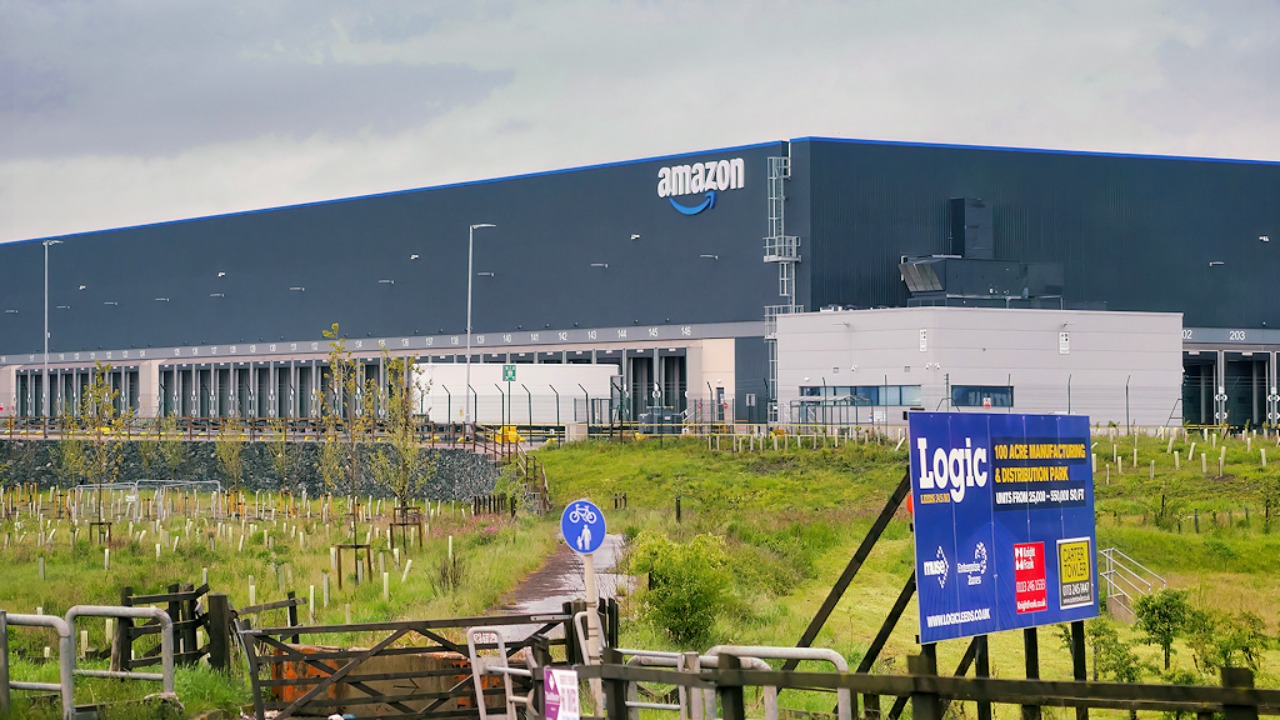
Amazon is accelerating its shift toward automated warehouses, and internal projections suggest that hundreds of thousands of human roles could be on the line as robots take over more of the heavy lifting. At the same time, Warren Buffett is signaling that he is not rattled by the prospect of mass warehouse automation, treating it instead as another chapter in a long history of disruptive technology that markets eventually absorb.
I see a widening gap between the speed of Amazon’s robotics rollout and the pace at which workers, investors, and policymakers are adjusting to what that scale of automation really means. The company’s plans, and Buffett’s calm response, frame a larger question about how much of the modern logistics workforce can be reconfigured around machines without triggering deeper economic and political blowback.
Amazon’s automation push and the 600,000-job question
Amazon has spent years turning its fulfillment centers into test beds for industrial robots, and the scope of that effort is now large enough that internal estimates point to as many as 600,000 warehouse roles that could ultimately be handled by machines instead of people. The company’s robotics portfolio has expanded from the early Kiva-style shelf movers to more advanced systems that can pick, sort, and ferry packages with minimal human intervention, which is exactly the kind of end-to-end capability that lets management model large-scale headcount reductions across its global network of fulfillment and sortation centers, as reflected in the reported projection of up to 600,000 affected jobs.
I read that estimate less as a formal layoff plan and more as a directional signal of how far Amazon believes it can push automation inside its logistics backbone. The company has already deployed tens of thousands of robots in facilities that handle everything from Prime orders to third-party marketplace inventory, and it has been explicit that each new generation of machines is designed to handle a broader range of tasks that used to require human dexterity and judgment, a progression that aligns with reporting on its increasingly capable warehouse robots.
How robots are changing the warehouse floor
On the warehouse floor, the shift is not just about replacing muscle power with metal arms, it is about redesigning workflows so that humans and robots rarely compete for the same task. Amazon’s newer systems can scan, sort, and route packages with high-speed precision, while mobile robots shuttle shelves and containers to fixed workstations, which lets the company reduce walking time and concentrate human workers in roles that still require nuanced decision-making, a pattern that matches descriptions of its evolving fulfillment automation.
As those systems mature, the number of touchpoints where a person is strictly necessary keeps shrinking, which is why the projected displacement figure is so large. I see the 600,000 number as the logical outcome of a design philosophy that treats every repetitive motion, from lifting totes to scanning barcodes, as a candidate for automation, a philosophy that is evident in the company’s investment in advanced picking and sorting robots.
What this means for Amazon’s workers
For the people who currently staff Amazon’s warehouses, the prospect of hundreds of thousands of roles being automated is not an abstract macroeconomic trend, it is a direct challenge to their job security and bargaining power. The company has promoted retraining programs and pathways into higher-skilled technical roles, but the scale of the projected displacement raises hard questions about how many workers can realistically transition into those new positions, especially in regions where Amazon is one of the few large employers, a tension that is reflected in coverage of its internal worker retraining efforts.
I also see a risk that the pace of automation outstrips the pace of policy responses around labor standards, wage floors, and social safety nets. If robots absorb a large share of the physically demanding roles that have historically provided entry-level income for people without advanced degrees, then local and national governments will be forced to confront the downstream effects on unemployment, tax bases, and community stability, concerns that labor advocates have already raised in response to Amazon’s expanding automation footprint.
Buffett’s calm amid the automation storm
Warren Buffett’s lack of alarm about Amazon’s automation plans fits a pattern that has defined his career, which is to treat technological disruption as a constant rather than a crisis. He has repeatedly argued that markets adapt to productivity gains, even when they are painful for specific sectors, and his current stance suggests that he views warehouse robots as another iteration of the same dynamic that accompanied earlier shifts like industrial machinery in manufacturing and software in back-office work, a continuity that is evident in his recent comments on automation.
From an investor’s perspective, I read Buffett’s posture as a bet that the long-term benefits of lower logistics costs, faster delivery, and higher margins will outweigh the near-term turbulence in the labor market. His willingness to stay unfazed by projections of large-scale job displacement signals confidence that consumer demand, new types of employment, and policy adjustments will eventually re-balance the system, a view that aligns with his broader philosophy on long-term economic change.
The broader economic and political stakes
The collision between Amazon’s automation ambitions and Buffett’s steady-handed optimism captures a larger debate about how societies should manage the next wave of labor-saving technology. If one company can plausibly model 600,000 warehouse roles as automatable, then other logistics and retail players will face pressure to follow suit, which could ripple through regional job markets and intensify political scrutiny of corporate investment decisions, a trajectory that analysts have begun to trace in their assessments of automation’s economic impact.
I see this moment as an inflection point where the choices made by executives, investors, and policymakers will determine whether warehouse automation becomes a managed transition or a source of deeper social fracture. The technology is advancing regardless, but the distribution of its gains and losses is still up for negotiation, a reality underscored by ongoing debates over labor protections, tax policy, and the role of large platforms like Amazon in shaping the future of work and public policy.
More From TheDailyOverview
- Dave Ramsey says these two simple questions show whether you’re rich or poor
- Retired But Want To Work? Try These 18 Jobs for Seniors That Pay Weekly
- IRS raises capital gains thresholds for 2026 and what’s new
- 12 ways to make $5,000 fast that actually work

Grant Mercer covers market dynamics, business trends, and the economic forces driving growth across industries. His analysis connects macro movements with real-world implications for investors, entrepreneurs, and professionals. Through his work at The Daily Overview, Grant helps readers understand how markets function and where opportunities may emerge.

