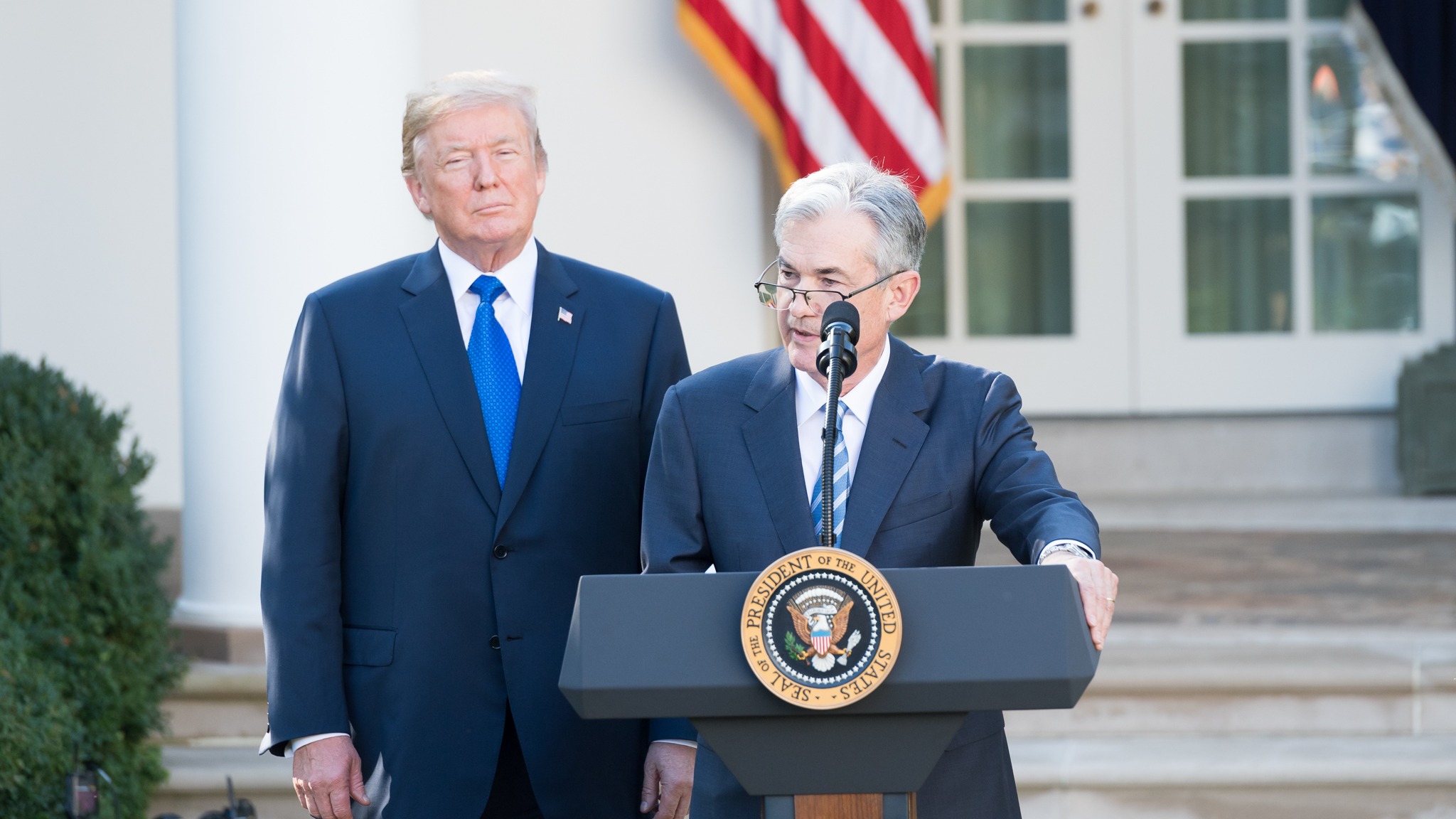
In the hours before President Donald Trump put Kevin Warsh on track to replace Jerome Powell at the Federal Reserve, the outgoing chair moved to address several of the president’s loudest grievances about the central bank. Powell had already begun shifting the Fed’s strategy on inflation, interest rates, and its balance sheet in ways that narrowed the space for a dramatic policy rupture. The result is that Warsh, Trump’s preferred “central casting” pick, is inheriting an institution that has already moved partway toward the agenda the White House has demanded.
That timing raises a sharper question than the usual personnel drama in Washington. I see a Fed that has tried to protect its independence by preemptively adjusting course, and a president who has now chosen a successor promising to go further on growth, trade leverage, and political accountability. How those two trajectories meet will shape borrowing costs, the dollar, and the credibility of American economic management for years.
Powell’s late-course corrections on inflation and politics
Jerome Powell spent his final year as chair quietly rewriting the Fed’s playbook on inflation and communication, moves that undercut some of Trump’s most persistent complaints. At Jackson Hole, Powell confirmed that the Fed had abandoned its experiment with flexible average inflation targeting, or FAI, and was back to treating 2 percent inflation as a ceiling rather than something to overshoot in the name of inclusivity, a shift detailed in his Jackson Hole remarks. That move directly answered critics who argued the Fed had been too tolerant of price spikes after the pandemic, a group that prominently included Trump and his allies.
Powell also used his farewell moments to warn his successor against wading into electoral politics, a line that sounded like both advice and veiled criticism of the president who had spent years berating him. In guidance reported around the time Trump settled on Warsh, Powell stressed that “it is easy to criticize government institutions” and that the next chair would soon “meet the limits” of what monetary policy can do, a message captured in his written advice to whoever followed him. By re-centering the Fed on a stricter inflation target and publicly drawing a boundary around partisan fights, Powell tried to leave behind an institution less vulnerable to accusations that it was either asleep at the wheel or secretly aligned with one party.
A Fed already planning for “life under Trump”
Even before Trump formally moved to replace him, Powell had signaled that the central bank was gaming out how to operate under a second Trump term. In a late 2024 press conference, he acknowledged that the Fed was “already thinking about life under Trump” while insisting that its policy path was “not changing course just yet,” a stance described in detail by Jerome Powell and his colleagues. That acknowledgment was unusual for a Fed chair, who typically avoids commenting on specific political scenarios, and it underscored how much Trump’s return to the White House was already shaping internal deliberations.
Reporting from Washington correspondent Ben Werschkul made clear that officials were weighing how to maintain independence if the president renewed his public pressure campaign on interest rates and the dollar, a dynamic that had defined Trump’s first term and was expected to intensify as he pushed for faster growth and more favorable trade terms, according to Ben Werschkul. By the time Trump settled on Warsh, the Fed had already begun to adjust its messaging and strategy to a political environment in which the president openly treated monetary policy as another lever of economic statecraft.
Powell’s preemptive answers to Trump’s biggest complaints
The most striking part of the handoff is how directly Powell appeared to respond to Trump’s talking points just before the Warsh nomination became public. In a closely watched appearance, Powell addressed concerns about the size of the Fed’s balance sheet, the pace of rate cuts, and the perception that the central bank had been too slow to react to inflation, themes that had dominated Trump’s criticism of his tenure, as detailed in a widely circulated analysis of his remarks. He emphasized that the Fed was committed to bringing inflation back to target and signaled openness to a more predictable path for shrinking its holdings of Treasuries and mortgage bonds.
A separate account of that same moment noted that, right before Trump named Warsh to lead the Fed, Powell seemed to be speaking not only to markets but also to the White House, effectively defending the central bank’s record while conceding that some recalibration was warranted, a dynamic captured in a second account of how his comments landed. By leaning into transparency on issues like the balance sheet and rate path, Powell tried to shore up the Fed’s legitimacy at the very moment Trump was preparing to install a chair more aligned with his instincts.
Who Kevin Warsh is, and why Trump wanted him
Kevin Warsh is not an outsider to the institution he is about to lead, and that is part of what makes Trump’s choice so revealing. Warsh previously served as a Fed governor and built a reputation as a policy hawk who, during the 2008 crisis, worried that aggressive rate cuts might fuel future instability, a stance recalled in profiles that describe how he raised concerns as the economy tumbled into a deep recession and the Fed debated further easing, including one detailed recounting of his crisis-era views. More recently, however, he has argued for lower rates to support growth, a shift that aligns him more closely with Trump’s desire for cheaper money.
Trump has praised Warsh as a “central casting” Fed chair, a phrase that surfaced in a briefing on his background and in a separate interview where the president predicted Warsh would “go down as one of the greats.” A more detailed list of “five things to know” about Warsh highlighted his ties to Wall Street, his previous stint in Washington, and his long-standing skepticism of unconventional monetary tools, painting a picture of a chair who could both reassure markets and satisfy a president eager for a tougher line on inflation and a more assertive stance on the global stage, as laid out in a second profile of his record.
What Warsh is likely to change at the Fed
Warsh’s own writings and interviews suggest he will push the Fed in a more explicitly growth-oriented and politically attuned direction, even as he inherits many of Powell’s late-term adjustments. Analysts who have parsed his recent commentary expect him to favor a faster reduction of the Fed’s balance sheet, a more rules-based approach to rate setting, and a willingness to coordinate more closely with the White House on issues like the dollar and trade leverage, themes explored in a detailed assessment of his plans. In that reading, Powell’s decision to abandon FAI and reassert a 2 percent ceiling on inflation gives Warsh a starting point, not a constraint.
At the same time, Warsh’s nomination has been framed as a chance for Trump to install a loyal advocate with a Fed background who may be more willing to “break the mold” of his predecessors, including on how monetary policy interacts with tariffs and trade negotiations, a point emphasized in coverage that described how, In Warsh, the president sees someone ready to use interest rates as part of a broader economic strategy. Another analysis of his policy leanings noted that Warsh has historically supported higher rates to control inflation but has more recently argued for lower rates, suggesting he could pivot quickly if Trump presses for easier money, a tension laid out in a detailed report on his evolving stance.
More From TheDailyOverview
*This article was researched with the help of AI, with human editors creating the final content.

Grant Mercer covers market dynamics, business trends, and the economic forces driving growth across industries. His analysis connects macro movements with real-world implications for investors, entrepreneurs, and professionals. Through his work at The Daily Overview, Grant helps readers understand how markets function and where opportunities may emerge.

