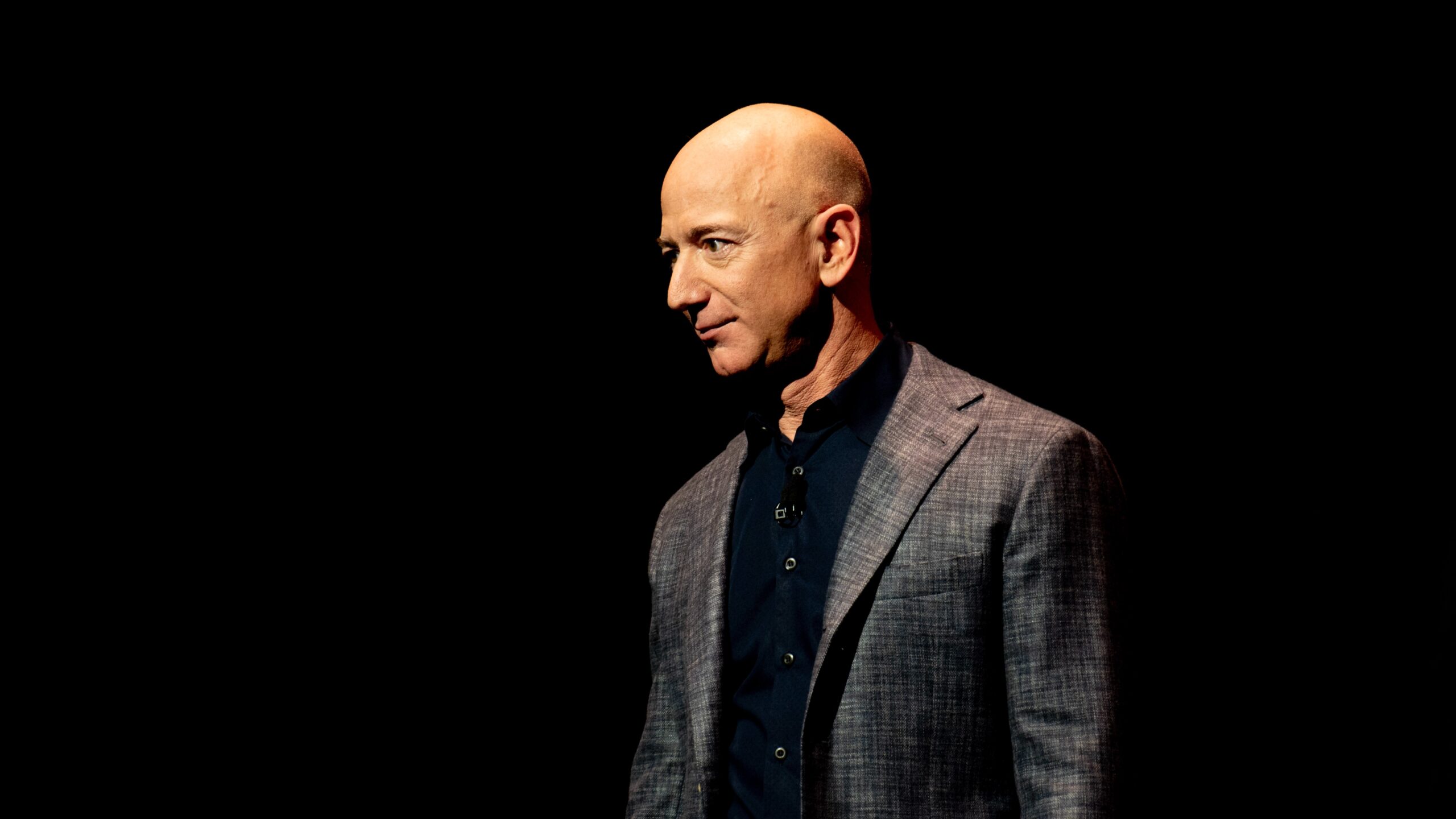
The Washington Post has been plunged into its most dramatic contraction in decades, with roughly a third of its newsroom wiped out in a single day and one of its most symbolically sensitive casualties being the reporter who covered Amazon. The decision to cut the journalist who scrutinized the company owned by Jeff Bezos, alongside hundreds of colleagues, has turned a painful restructuring into a flashpoint about power, accountability and the future of a storied paper.
I see a collision here between the cold logic of cost cutting and the fragile trust that sustains independent reporting. When the owner of a global tech giant presides over layoffs that include the person assigned to cover his own empire, the optics are impossible to ignore, even if the decisions were filtered through layers of management.
The Amazon reporter who lost her beat
At the center of the outrage is Caroline O’Donovan, the journalist who had been tasked with covering Amazon for Jeff Bezos’s Washington Post. She publicly confirmed that “Today I was laid off from my job covering Amazon for Jeff Bezos’s Washington Post,” turning what might have been one more anonymous pink slip into a pointed example of how this restructuring lands on the reporters closest to the owner’s core business. Her track record on technology and labor, stretching back to her earlier work at other outlets, had made her a recognizable byline on one of the most consequential corporate stories in the world, and her exit instantly resonated across media circles.
Her removal is not just about one job. It raises questions about how aggressively any newsroom can cover a company when the billionaire who owns that company also owns the paper. The fact that Caroline O’Donovan was among those cut, and that she had been specifically assigned to Amazon for Jeff Bezos, has fueled suspicion that the layoffs did not fall evenly across the newsroom. Although there is no verified evidence in the available reporting that her position was targeted for editorial reasons, the symbolism is powerful enough that it has become a shorthand for the entire upheaval.
A ‘bloodbath’ that wiped out a third of the newsroom
O’Donovan’s departure came amid what staffers and observers alike have described as a Bloodbath inside the Washington Post. The Washington Post has laid off one-third of its staff, a staggering proportion for any major news organization and one that instantly reshapes the institution’s capacity to report. Coverage notes that The Washington Post eliminated entire desks and programs in one sweep, a scale of reduction that goes far beyond trimming around the edges and instead amounts to a wholesale redesign of what the paper can do.
The carnage was not abstract. Reports describe how The Washington Post laid off one-third of its staff Wednesday, a move characterized as a BRUTAL BLOW TO JOURNALISM that wiped out its sports section and several other high profile teams. One account framed the day as a BRUTAL BLOW JOURNALISM moment, while another described a Bloodbath as Washington Post managers axed a third of its staff. For a newsroom that once prided itself on being overbuilt for big stories, the new reality is leaner, harsher and far more uncertain.
Inside the numbers and the global cuts
Management has been reluctant to spell out the full toll, but outside tallies have filled in the gaps. The Post did not disclose the number of job cuts, yet the New York Times reported that approximately 300 of its 800 newsroom employees were being eliminated, a figure that aligns with the one-third estimate circulating among staff. Those numbers, 300 and 800, are not just statistics, they are a measure of how radically the organization is being downsized in a single stroke. One account described the atmosphere as a War zone layoff, capturing the sense of shock as employees learned their fate.
The pain was felt far beyond Washington. All Mideast correspondents and editors laid off in one sweep, with Word of specific cuts drifting out over the day, including the dismissal of Cairo Bureau Chief Clair who had been central to coverage of the region. The internal account of the restructuring confirms that All Mideast correspondents and editors were let go, effectively erasing a key foreign coverage footprint overnight. For a paper that built its reputation on deep international reporting, the decision to shutter its Middle East team is as consequential as any domestic cut.
Bezos, Murray and the battle over the Post’s mission
Hovering over every conversation about these layoffs is Jeff Bezos, the billionaire owner whose stewardship has long been framed as a bet that patient investment could reinvent a legacy paper for the digital age. Supporters note that Bezos has poured money into the newsroom and technology, and he remains one of the few tech titans to own a major newspaper outright. Yet the spectacle of mass layoffs, including the Amazon reporter, has sharpened criticism that his commitment is wavering at the very moment the press is under intense political and economic pressure. The fact that Jeff Bezos is both a subject of coverage and the ultimate boss makes every staffing decision feel politically charged.
Inside the building, executive editor Matt Murray has tried to frame the cuts as a painful but necessary reset. On a call with employees, Matt Murray told staff that The Post had lost too much money and had not been meeting readers’ needs, arguing that a smaller, more focused newsroom could still thrive. In a separate account, But Murray, as well as several other staffers, urged colleagues and the public to take stock of what the publication is actually publishing, insisting that the core mission should survive and should thrive despite the reductions. Those defenses sit uneasily alongside the anger of Some employees who found out that they were let go on Wednesday and then sounded off publicly about the layoffs, describing a process that felt chaotic and dismissive of the institutional knowledge that makes the paper special.
Outside leadership, critics have been far less diplomatic. Former Washington Post executive editor Marty Baron, who helped steer the paper through its early Bezos years, blasted what he saw as a failure of nerve. One account quotes Former Washington Post chief Marty Baron taking aim at Jeff Bezos in a scathing response, accusing the billionaire of not doing enough to protect the press and The Post’s mission. For a figure as respected as Marty Baron to publicly question Bezos’s resolve is a sign of how deeply this restructuring has shaken confidence in the owner’s long term vision.
What the cuts mean for coverage and accountability
Beyond the internal drama, the question I keep returning to is what this means for readers and for democratic accountability. When The Washington Post cuts a third of its staff, eliminates its sports section and shutters foreign bureaus, the public loses reporting that cannot easily be replaced by smaller outlets or social media. The internal account of the staff reduction makes clear that the changes are not limited to back office roles but reach into core coverage areas that once defined the brand. For a paper that famously adopted the motto “Democracy Dies in Darkness,” the symbolism of turning out so many lights at once is hard to miss.
The treatment of O’Donovan’s Amazon beat is a particularly stark example. One detailed account of the layoffs notes that “Today I was laid off from my job covering Amazon for Jeff Bezos’s Washington Post,” she confirmed in a later post, and that The Post cut her along with other reporters in what was widely described as a layoff bloodbath. That same report underscores how she had previously covered technology and labor at BuzzFeed News, experience that made her well suited to scrutinize Amazon’s workplace and market power. When a newsroom decides it can live without that kind of specialized scrutiny of one of the world’s most powerful companies, owned by its own proprietor, it sends a message about priorities that goes far beyond any single balance sheet.
More From The Daily Overview
*This article was researched with the help of AI, with human editors creating the final content.

Grant Mercer covers market dynamics, business trends, and the economic forces driving growth across industries. His analysis connects macro movements with real-world implications for investors, entrepreneurs, and professionals. Through his work at The Daily Overview, Grant helps readers understand how markets function and where opportunities may emerge.

