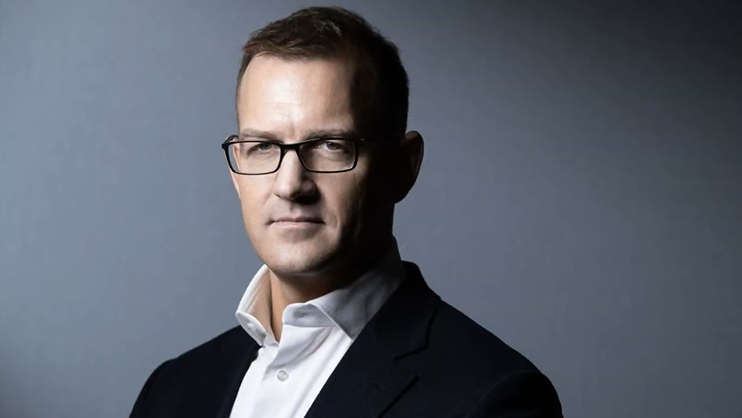
Daniel Kretinsky has spent the past decade assembling a sprawling portfolio of energy, media, and retail assets across Europe, and his latest move with TotalEnergies signals that he now wants to turn that regional empire into a platform for global growth. By tying his industrial ambitions to one of the world’s largest integrated energy groups, he is positioning himself not just as a consolidator of legacy assets but as a partner in the next phase of the energy transition.
What emerges is a strategy that uses Europe as a launchpad, not a limit, with TotalEnergies providing both geographic reach and technical depth that Kretinsky’s EPH and EP Corporate Group could not easily build alone. I see this as a calculated attempt to turn a patchwork of European holdings into a more coherent, internationally relevant energy and infrastructure player.
Kretinsky’s European footprint and the logic of partnering with TotalEnergies
Daniel Kretinsky built his fortune by buying unloved or complex assets in Europe’s power and industrial sectors, then squeezing value from them through restructuring and long-term contracts. His energy holding EPH, together with EP Infrastructure, controls a mix of coal, gas, and district heating operations in countries such as the Czech Republic, Slovakia, Germany, Italy, and the United Kingdom, giving him a dense network of generation and midstream assets across the continent that can be verified in the provided reporting on his EPH portfolio. That base has been complemented by stakes in companies like Royal Mail owner International Distributions Services and supermarket group Casino, which show his willingness to move beyond pure energy while still leaning on infrastructure-style cash flows.
Despite that breadth, Kretinsky’s empire has remained heavily European, with most of his operating assets and regulatory relationships concentrated inside the European Union and the United Kingdom. The partnership framework with TotalEnergies changes the scale of what is possible, because TotalEnergies brings a global upstream and liquefied natural gas network, a large pipeline of renewables, and a presence in Africa, the Middle East, and the Americas that Kretinsky does not have on his own, as reflected in the company’s detailed registration documents. By aligning his capital and deal-making appetite with TotalEnergies’ project pipeline and technical expertise, he can plug his European midstream and power assets into a broader value chain that stretches from gas fields and LNG terminals to solar farms and electric vehicle charging networks.
Using TotalEnergies to pivot from legacy assets to transition growth
Kretinsky’s reputation was forged in coal and gas, but the economics and politics of European energy are steadily pushing capital toward lower-carbon assets, and that is where TotalEnergies becomes a useful ally. TotalEnergies has committed to grow its integrated power and renewables business, targeting 100 gigawatts of gross renewable capacity by 2030 according to its latest climate strategy, and it has been buying or developing solar, wind, and battery projects in markets from Spain and France to the United States and India. By contrast, Kretinsky’s own transition exposure has been more opportunistic, often tied to repurposing existing infrastructure rather than building greenfield projects at scale.
By teaming up, Kretinsky can reposition some of his legacy gas and power assets as flexible backbones for a renewables-heavy system, while TotalEnergies gains access to regulated networks and dispatchable capacity that support its push into electricity. For example, EPH’s gas-fired plants and storage facilities in Central Europe, documented in the reporting on its generation and infrastructure, can be paired with TotalEnergies’ LNG supply and trading operations to create integrated gas-to-power chains that are more resilient and bankable. At the same time, district heating networks and transmission assets in Kretinsky’s portfolio offer natural platforms for adding heat pumps, biomass, or waste-to-energy projects that align with TotalEnergies’ broader low-carbon ambitions.
Expanding beyond Europe: LNG, power, and infrastructure plays
The most obvious way for Kretinsky to move beyond Europe with TotalEnergies is through liquefied natural gas and gas infrastructure, where TotalEnergies already ranks among the top global players. The company has equity stakes in LNG projects in Qatar, the United States, and Mozambique, and it markets LNG to customers across Asia and Latin America. Kretinsky’s experience running pipelines, storage, and power plants in Europe positions him as a natural partner for downstream or midstream investments linked to those LNG flows, whether that means import terminals, regasification capacity, or gas-fired power plants in new markets.
Beyond gas, TotalEnergies’ global renewables pipeline opens doors for Kretinsky to co-invest in solar and wind projects outside Europe, using his balance sheet and appetite for complex deals to accelerate growth. The company has been particularly active in utility-scale solar in the United States and India and in offshore wind in the North Sea and Asia. If Kretinsky channels capital into these projects, he can diversify his geographic exposure while gradually shifting his asset mix toward lower-carbon technologies, turning his European cash cows into funding engines for global growth.
Regulatory scrutiny and political risk around a bigger footprint
Scaling up with TotalEnergies will not be frictionless, because Kretinsky already attracts scrutiny from European regulators and policymakers who worry about concentration of critical infrastructure in the hands of a single private investor. His attempted and completed deals in sectors such as postal services, media, and supermarkets have drawn close review from competition and foreign investment authorities, as seen in the detailed coverage of his bids for International Distributions Services and Casino. Adding a deeper partnership with a major oil and gas group could intensify those concerns, especially where energy security and consumer prices are politically sensitive.
Outside Europe, the political calculus becomes even more complex, because host governments will weigh not only TotalEnergies’ track record but also the profile of its financial partners. Some jurisdictions may welcome Kretinsky’s capital and operational experience, particularly in emerging markets that need reliable power and infrastructure investment, while others may be wary of perceived foreign control over strategic assets. The reporting on European debates around energy sovereignty and critical infrastructure, including scrutiny of cross-border pipeline and storage deals in Central Europe, highlights how quickly such concerns can surface when large investors expand their reach into regulated sectors, as documented in analyses of gas storage ownership.
What Kretinsky gains, and what TotalEnergies gets in return
For Kretinsky, the strategic upside of aligning with TotalEnergies is clear: he gains access to a global project pipeline, technical expertise in upstream and LNG, and a stronger narrative around the energy transition that can help justify continued investment in his portfolio. His track record of moving quickly on distressed or politically complicated assets, such as coal plants and struggling retailers, gives him a deal-making edge that can complement TotalEnergies’ more structured capital allocation process, as illustrated by his acquisitions catalogued in the reporting on his deal history. In effect, he can trade some autonomy for scale and diversification, turning his European holdings into a springboard for a more global role.
TotalEnergies, for its part, gains a financially aggressive partner that is comfortable taking on regulatory and operational complexity in mature markets, which can free the French group to focus more on technology, project development, and global trading. Kretinsky’s control of gas pipelines, storage, and power plants in Central and Western Europe offers TotalEnergies a way to deepen its integration across the gas and power value chain in a region where it already has significant marketing and trading operations, as described in its gas and electricity business. By pooling their strengths, both sides can pursue larger and more integrated deals than they might attempt alone, from LNG-to-power platforms in new geographies to hybrid portfolios that bundle renewables, flexible generation, and retail supply.
More From TheDailyOverview

Grant Mercer covers market dynamics, business trends, and the economic forces driving growth across industries. His analysis connects macro movements with real-world implications for investors, entrepreneurs, and professionals. Through his work at The Daily Overview, Grant helps readers understand how markets function and where opportunities may emerge.

