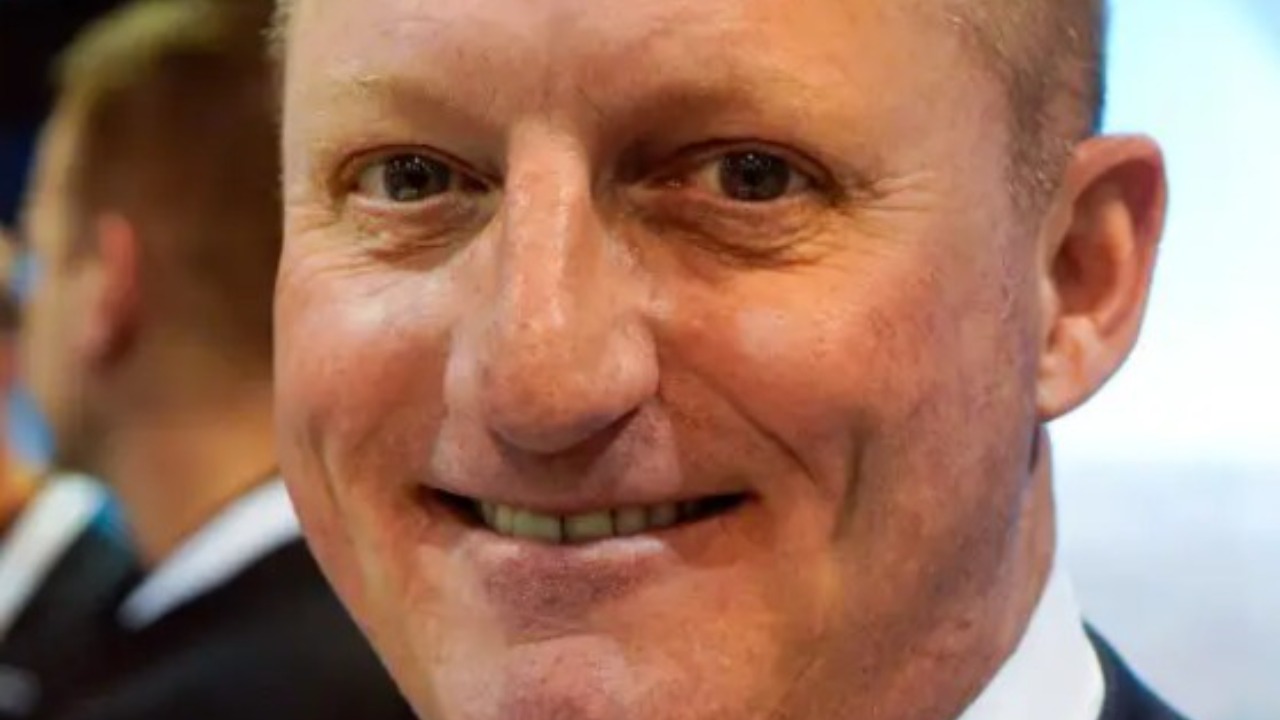
Warren Buffett has spent decades telling shareholders that Berkshire Hathaway’s culture matters more than any single deal. His first extended television conversation since stepping aside as chief executive turned that philosophy into a personal vote of confidence, as he used a high-profile CNBC interview to give Greg Abel what he called a “huge endorsement” as the new CEO. Coming just as the leadership handoff becomes real, his remarks were aimed as much at nervous investors as at the man now sitting in his old chair.
Buffett’s comments were not a casual pat on the back. They were a deliberate signal that the architect of Berkshire’s modern era believes Abel can protect the company’s distinctive model and, crucially, its reputation for disciplined capital allocation. For shareholders who have long wondered what Berkshire looks like without Buffett in the corner office, the message was clear: the Oracle is no longer the decider, but he is still watching, and he likes what he sees.
Buffett’s final turn as CEO and the stakes of succession
The handover to Greg Abel capped what Becky Quick described as the “end of an era,” as Warren Buffett finished his last day as chief executive of Berkshire Hathaway at the close of 2025. On “Squawk Box,” Becky Quick, CNBC’s longtime Berkshire/Buffett correspondent, noted that for the most part Buffett had been the one person at the center of decisions affecting the conglomerate’s dozens of operating companies and the businesses that have joined it, underscoring how concentrated authority had been in his hands over the years, a point reflected in the detailed coverage of his retirement as Berkshire CEO. That history is what makes the transition so sensitive: investors are not just losing a chief executive, they are losing the singular filter through which every major capital decision has flowed.
In his final sit-down as CEO, Buffett tried to reframe that anxiety as an opportunity, arguing that Berkshire Hathaway is better positioned than any company he knows to endure for another century. He said that as he hands over the reins he believes the conglomerate has the best odds of lasting 100 more years, and he stressed that he would no longer be “the decider,” a phrase captured in his retirement interview with Yun Li. That combination of humility and confidence set the stage for his subsequent endorsement of Abel, making clear that the future he envisions for Berkshire depends on the judgment of his successor.
Greg Abel steps into the spotlight
Greg Abel is not a new face inside Berkshire, but the shift in his formal role is still historic. As of Jan 1, 2026, Greg Abel is the CEO of Berkshire Hathaway, succeeding Warren Buffett after he retired at the end of 2025, a milestone that was highlighted in a widely shared post noting that Greg Abel is the CEO of Berkshire Hathaway as of January 1, 2026, succeeding Warren Buffett at the end of 2025, which was captured in an update on Dec leadership changes. Abel had already been vice chairman overseeing the non-insurance operations, including the sprawling energy business, but the new title makes him the public face of the conglomerate and the primary steward of its cash.
Buffett’s televised praise was designed to introduce Abel to a broader audience that has followed Berkshire mainly through the lens of the Warren Buffett Watch and its steady stream of analysis for those who Follow FREE ACCOUNT updates. In the interview, Buffett emphasized that Abel is not a “distorted individual,” a phrase he used to describe executives who let wealth or status warp their judgment. Instead, he said Abel “lives what would look like a normal life,” even though he now runs one of the world’s largest conglomerates, a characterization that appeared in a segment focusing on how Buffett praised Abel for not being a distorted individual and that he lives what would look like a normal life, captured in the section labeled Abel for. For a company that prides itself on modest headquarters and a culture of frugality, that kind of personal endorsement matters as much as any résumé line.
The “huge endorsement” and what it really signals
Buffett’s description of his support for Abel as a “huge endorsement” was not just colorful language, it was a deliberate attempt to close the gap between a legendary founder and a successor who has spent most of his career outside the spotlight. In the interview text and accompanying analysis, Buffett went out of his way to say he would rather have Greg Abel handling his money than himself, a striking admission from a man whose investing record has made him a benchmark for capital allocation, a sentiment captured in a clip where Warren Buffett said he would rather have Greg Abel handling his money, which was shared in a Jan reel. For shareholders, that is as close as Buffett comes to telling them that the person now in charge may be even better suited to the job in the current environment.
The interview also highlighted how Buffett thinks about process, not just personalities. He referenced the research and analysis that underpin Berkshire’s decisions and suggested that Abel has fully absorbed that approach, a point that was underscored in the Warren Buffett Watch write-up that invited readers to follow their favorite stocks and CREATE a FREE ACCOUNT to see how Berkshire’s moves fit into broader market trends, as reflected in the segment of the interview that discussed the analysis and the prompt to Follow favorite stocks and CREATE a FREE ACCOUNT, which appeared in the Jan analysis. By framing his endorsement in terms of process, Buffett was telling investors that Abel is not just a capable operator, he is a custodian of the Berkshire playbook.
How Berkshire’s power structure is changing, and what stays the same
Even as Abel takes over the CEO role, Buffett is not disappearing from the company he has led for so long. Billionaire Warren Buffett will remain with Berkshire Hathaway as chairman of the board when vice chairman Greg Abel takes over as CEO to begin 2026, a structure that keeps Buffett in the room for major strategic discussions while making clear that day-to-day authority has shifted, as detailed in an Associated Press account that noted how Billionaire Warren Buffett will remain with Berkshire Hathaway as chairman when Greg Abel takes over as CEO to begin 2026, a point summarized in a report on Buffett remaining chairman. That arrangement is meant to reassure investors that the transition will be orderly, but it also creates a delicate balance between continuity and the need for Abel to establish his own authority.
Buffett himself has tried to resolve that tension by publicly insisting that he is no longer the decider, even as he keeps the chairman title. In his final interview as CEO, he stressed that Berkshire has the best odds of any company to last another 100 years because of its decentralized structure and the strength of its operating managers, not because of any single person, a point that was reiterated in the detailed Q&A with Warren Buffett of Berkshire Hathaway that explored how the company is positioned for the next century, as captured in the section of the retirement interview that highlighted how Warren Buffett of Berkshire sees the company’s odds of enduring, which was documented in the piece linked to Published Fri EST. By drawing that distinction, he is effectively telling shareholders that Abel’s success will depend less on copying Buffett’s every move and more on preserving the systems and culture that made those moves possible.
What investors should watch in the Abel era
For investors, the immediate question is how to translate Buffett’s endorsement into a practical framework for judging Abel’s performance. The early signals suggest continuity: Abel has been deeply involved in capital allocation decisions for years, and Buffett’s willingness to say on camera that he would trust Abel over himself with his own money is a powerful indicator that the internal handoff has been gradual rather than abrupt, a theme that ran through the extended transcript and video package that accompanied the interview, which was presented as a comprehensive look at how Buffett backs the new CEO Greg Abel with a huge endorsement in a Jan 2 interview. Investors will likely focus on how Abel deploys Berkshire’s cash pile, whether he maintains the company’s conservative balance sheet, and how he navigates the political and regulatory environment that now surrounds every large corporate move.
At the same time, the media ecosystem around Berkshire is evolving, with newsletters like Warren Buffett Watch and recurring television segments turning each of Buffett’s comments into a market event, a dynamic that will now extend to Abel as he becomes a regular presence on programs such as “Squawk Box,” which has already featured Becky Quick’s breakdown of the leadership transition and the text of Buffett’s interview in a segment that framed the endorsement as a pivotal moment for the company, as seen in the coverage that introduced Here is video of Becky’s report on the interview from Friday’s Squawk Box along with the text of Buffett’s interview, which appeared in the Here Becky Friday recap. As Abel steps into that spotlight, the “huge endorsement” he has received from Buffett buys him time and credibility, but it also raises expectations: the market will now judge whether the man Buffett trusts with his own money can deliver the kind of long-term compounding that made Berkshire Hathaway a model for patient investors.
More From TheDailyOverview

Grant Mercer covers market dynamics, business trends, and the economic forces driving growth across industries. His analysis connects macro movements with real-world implications for investors, entrepreneurs, and professionals. Through his work at The Daily Overview, Grant helps readers understand how markets function and where opportunities may emerge.

