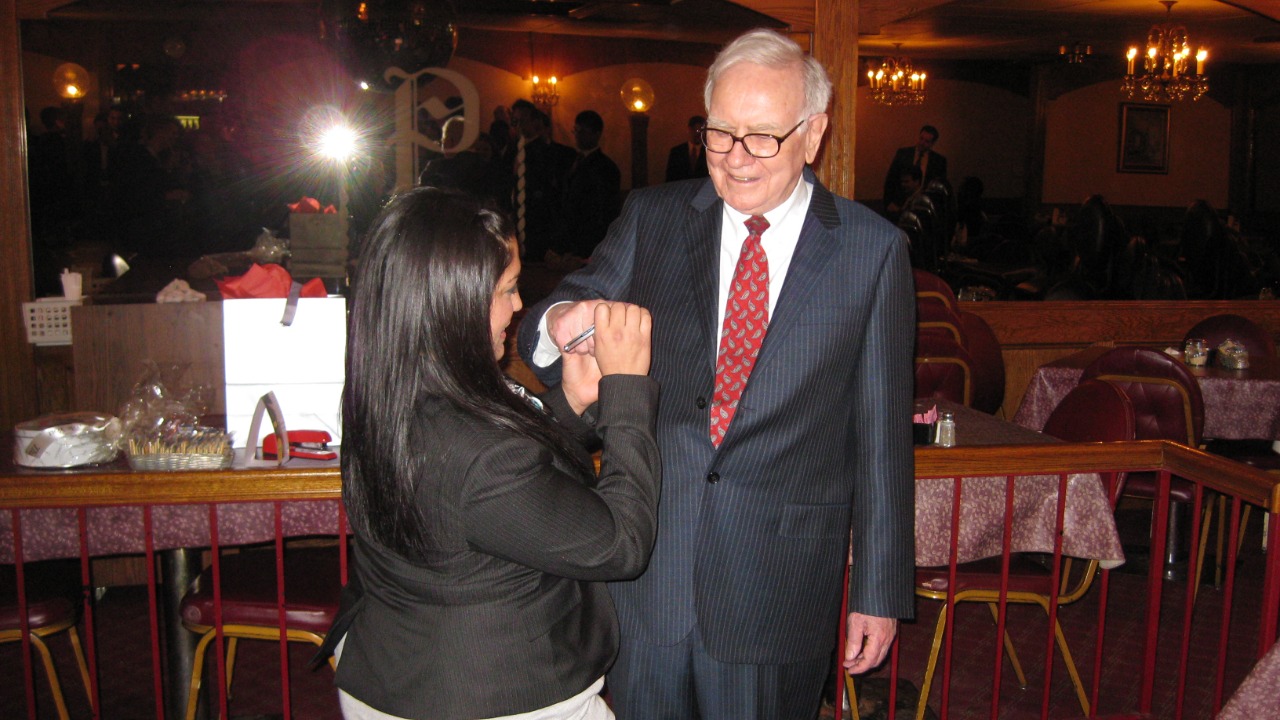
Warren Buffett has finally done what markets spent decades preparing for: he has stepped away from the front line at Berkshire Hathaway while insisting the conglomerate is built to thrive long after he is gone. As he hands the reins to Greg Abel, Buffett is arguing that Berkshire’s structure, culture, and balance sheet give it a realistic shot at remaining a dominant force for the next 100 years. The transition is testing whether one of the most personality-driven success stories in corporate history can now prove it is bigger than its legendary founder.
Buffett’s last word as “the decider”
In his final stretch as chief executive, Buffett framed the leadership handoff not as an ending but as the logical next chapter for a company he believes is unusually durable. He has said Berkshire has the best odds of any business of still being around a century from now, a claim rooted in the way the conglomerate has been assembled over nearly six decades rather than in any single bet or personality. In his telling, the real story is that the machine can keep running even when the original engineer steps away.
That confidence came through in his last extended interview as chief, where he described how Berkshire’s decentralized model and fortress balance sheet give it what he called the best chance of lasting another 100 years. He acknowledged that he had long been “the decider” on capital allocation and major deals, but he argued that the systems and people now in place mean those decisions no longer depend on him alone, a point underscored as he formally ceded that role to Greg Abel.
A deliberate exit after nearly six decades
Buffett’s departure from the top job is not a sudden break but the culmination of a succession plan that has been telegraphed for years. After building Berkshire Hathaway from a struggling textile mill into a vast conglomerate, he is stepping down from the chief executive role while staying on as a kind of elder statesman. The move caps one of the longest and most closely watched tenures in corporate America, and it is unfolding on terms largely set by Buffett himself.
The transition became concrete when it was confirmed that Greg Abel would take over the role on January 1, with Buffett stepping down after a long and successful career at the helm. That handover formalized what many investors already assumed, that Abel was the designated successor, and it signaled that Berkshire’s board and senior leadership were ready to move from planning for a post‑Buffett era to actually living in it.
Letting go of the letter and the stage
Even before relinquishing the chief executive title, Buffett had started to pull back from the public rituals that defined his relationship with shareholders. He decided that he would no longer write the annual letter that for decades served as a masterclass in investing and corporate governance, and he also chose to step away from the starring role at Berkshire’s marathon shareholder meeting in Omaha. For a company that built a kind of civic religion around those events, this was a clear signal that the era of Buffett as public ringmaster was ending.
The shift was laid out when it was announced that Warren Buffett will no longer write the annual letter or speak at the Berkshire Hathaway shareholder meeting, a change that also highlighted the role of Myles Udland, Head of coverage that chronicled the decision. The farewell tone was reinforced in a widely watched video in which the legendary investor, referred to as Warren Buffet, reflected on nearly six decades of guiding investors with his words and wisdom, effectively passing the narrative baton to the next generation of Berkshire leaders.
Greg Abel’s mandate and the $1.1 trillion question
Greg Abel steps into the chief executive role with a mandate that is both simple and daunting: preserve what Buffett built while proving that Berkshire can still evolve. Abel, long seen as Buffett’s protégé, inherits a sprawling collection of operating companies and investments that require a steady hand on capital allocation and culture. The key test is whether he can maintain Berkshire’s discipline while making decisions without the automatic deference that Buffett commanded.
Investors are already parsing how Abel will deploy Berkshire’s vast portfolio, which includes a conglomerate valued at about $1.1 trillion. As Berkshire Hathaway shares ticked lower when Warren Buffett formally exited and the Greg Abel era began, markets signaled both respect for the outgoing leader and curiosity about how the new chief will handle buybacks, acquisitions, and the conglomerate’s enormous cash pile.
Why Buffett thinks Berkshire can last a century
Buffett’s claim that Berkshire can outlast almost everyone for the next century rests on a few core design choices. The company owns a collection of durable, cash‑generating businesses, from insurers to railroads and utilities, that operate with significant autonomy. Rather than micromanaging, Berkshire’s headquarters keeps overhead lean and focuses on capital allocation, letting local managers run their operations with minimal interference.
In his parting reflections, Warren Buffett argued that Berkshire is built to survive 100 years because it owns strong businesses with minimal corporate meddling. He pointed to the conglomerate’s conservative balance sheet and its habit of keeping large amounts of cash on hand as additional buffers that can help it weather recessions, market panics, and leadership changes without being forced into short‑term decisions.
Market reaction and the first test of the Abel era
The immediate market response to Buffett’s formal exit was muted but telling. Berkshire’s stock slipped modestly as investors digested the symbolism of the moment and the practical implications of a new decision‑maker at the top. The move did not trigger panic, which suggests that the succession plan had been largely priced in, but it did highlight how closely the company’s identity has been tied to a single individual.
Coverage of the handover noted that Buffett stepping aside carried long‑term significance for investors, given his nearly six decades at the helm and his role in shaping Berkshire’s culture. As the company enters its next phase, the modest share price dip around the transition underlined that markets are watching closely to see whether Abel can maintain the performance and discipline that made Berkshire a touchstone for long‑term shareholders.
Challenges that could derail the 100‑year vision
Even as Buffett talks up Berkshire’s odds of surviving another century, the company faces real headwinds. Its sheer size makes it harder to find acquisitions that can move the needle, and its massive cash hoard can become a drag if it cannot be deployed at attractive returns. At the same time, competition for deals has intensified, and the macro environment is more volatile than during much of Buffett’s tenure.
Some analysts have already flagged that Berkshire’s stock lagged the S&P 500 in parts of the year, with commentary pointing to a “succession overhang” and to the fact that the company sold more in stocks than it purchased. Those concerns, captured under the heading “Although the” stock recovered somewhat, underscore that Berkshire’s next chapter will be judged not just on stability but on whether it can still outperform in a market where passive index funds and tech‑heavy benchmarks set a high bar.
Buffett’s legacy and the culture he leaves behind
Buffett’s most important contribution to Berkshire may not be any single deal but the culture he embedded. He cultivated a reputation for integrity, patience, and clear communication, and he attracted managers who were comfortable operating with significant autonomy under a light corporate touch. That culture has been a key part of Berkshire’s appeal to both investors and operating executives, and it is now one of the main assets Abel must preserve.
In a concise assessment of the transition, Vlad Schepkov described how Warren Buffett has officially stepped aside after being one of the most closely watched CEOs in the United States, with BRK shares reflecting that shift. The commentary emphasized that investors are not just losing a stock picker but a chief executive whose personal credibility anchored Berkshire’s identity, a factor that will loom large as Abel and his team try to show that the culture can endure without daily input from its architect.
What a 100‑year Berkshire would mean for investors
If Berkshire does manage to remain a powerhouse for the next century, it will validate Buffett’s belief that a carefully constructed conglomerate can outlast any individual leader. For long‑term investors, that would reinforce the idea that owning a stake in Berkshire is less about betting on a single stock picker and more about owning a diversified collection of resilient businesses. It would also show that corporate structures built around decentralization and conservative finance can still thrive in an era dominated by fast‑moving technology firms.
Buffett has argued that Berkshire has the best odds of any company of still being here 100 m years from now, a characteristically bold way of expressing his faith in the model he built. Whether that proves literally true is unknowable, but the early days of the Greg Abel era will offer the first concrete evidence of whether Berkshire can turn that aspiration into a durable reality, one quarterly report and one capital allocation decision at a time.
More From TheDailyOverview

Grant Mercer covers market dynamics, business trends, and the economic forces driving growth across industries. His analysis connects macro movements with real-world implications for investors, entrepreneurs, and professionals. Through his work at The Daily Overview, Grant helps readers understand how markets function and where opportunities may emerge.

