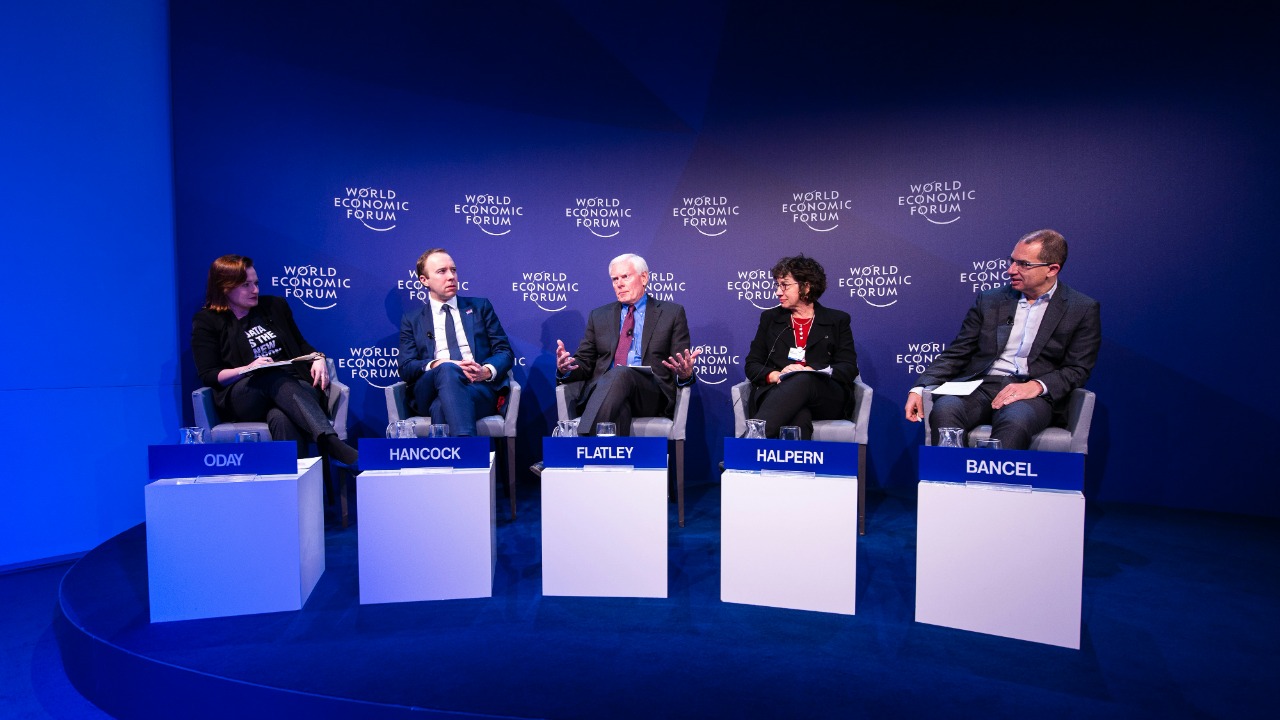
As the World Economic Forum wrapped up in Davos, the message from global chief executives to Europe was unusually blunt: adapt fast or watch investment, innovation and jobs flow to rivals in the United States and China. At stake is not only the continent’s competitiveness but also its social cohesion and political clout in a world where economic power is concentrating in a few heavyweight blocs.
I see a widening gap between European ambition and execution, and Davos crystallised that tension. Business leaders, policymakers and analysts converged on a single warning: unless Europe streamlines regulation, scales up industrial projects and embraces risk, it will struggle to keep pace with the policy firepower and market scale that Washington and Beijing are already deploying.
CEOs’ stark verdict: Europe is falling behind
Executives left the Alpine resort arguing that Europe’s current model is not fit for a world defined by strategic competition. In private sessions and public panels, they contrasted the continent’s fragmented decision making with the more centralised approaches in the United States and China, where industrial policy, subsidies and defence planning can be mobilised at speed. According to reporting from Davos, more than 800 senior figures from across sectors gathered at The WEF in Davos, and many of them voiced concern that Europe is not leveraging its own vast single market to the same effect.
The criticism was not abstract. One widely cited refrain was that “if Europe wants to attract investment like the US and China, it has to become faster and more predictable,” a sentiment captured in detailed coverage of the pharmaceutical and industrial debates. Executives warned that in areas such as artificial intelligence, defence and advanced manufacturing, Europe risks becoming a rule taker rather than a rule maker if it cannot match the speed of capital deployment and regulatory approvals seen in Washington and Beijing.
Regulation, bureaucracy and the investment chill
When I listened to the complaints about Europe, one theme dominated: regulation that never seems to end. Reporting from Davos described how Europe’s seemingly never-ending regulations drew a fair share of criticism, with Nicola Mendelsohn, the head of Facebook owner Meta Pla, highlighting how overlapping rules on data, content and competition complicate long term planning. For global tech and life sciences firms, the perception is that Europe is excellent at setting standards but slow at approving projects, which pushes marginal investment decisions toward more permissive jurisdictions.
Detailed accounts of the CEO sessions described leaders citing everything from over regulation and clunky bureaucracies to the inability of the continent to leverage its market of about 450 million consumers to drive scale. One executive complained that “it makes no sense to build an Italian corvette ship, a German frigate and a French destroyer separately,” arguing that Europe must share platforms and projects if it wants to compete on cost and innovation. That critique goes beyond red tape, it is about a structural failure to pool resources in sectors where the United States and China already think in continental terms.
European leaders push back, but accept the urgency
European politicians did not arrive in Davos unaware of these criticisms. In a Special Address, Emmanuel Macron, President of France, framed his country’s strategy as a balance between openness and sovereignty, insisting that trade partners must respect the level playing field while Europe invests in its own industrial base. His remarks, captured in the full transcript of the World Economic Forum session, underscored a belief that Europe can be both a regulatory superpower and a manufacturing hub if it coordinates better on energy, defence and technology.
Ursula von der Leyen used her own stage time to argue that European independence has become a salient and urgent priority amid current geopolitical shocks. She promised that companies investing in clean tech and digital infrastructure would enjoy the same predictable rules across the bloc and pledged to make the supervisory framework more efficient, as outlined in her World Economic Forum address. I read those interventions as an attempt to reassure CEOs that Brussels has heard the message, even if the legislative machinery will take time to catch up.
Security shocks, Trump’s tariffs and the sovereignty debate
The economic debate in Davos unfolded against a tense geopolitical backdrop that sharpened the CEOs’ warnings. German Chancellor Friedrich Merz coupled gratitude for US efforts to secure Europe with a call for the continent to shoulder more of its own defence and industrial burden, a stance described in detail in the account of Europe at Davos. Their appearances took on an amplified sense of urgency because leaders know that supply chains, energy routes and digital infrastructure are now explicit targets in geopolitical contests, not neutral backdrops.
Pressure from Washington also loomed large. Reporting on five key takeaways from Davos highlighted how U.S. threats on the eve of the meeting to impose tariffs on European allies for resisting Trump’s ambition to acquire Greenland rattled delegates and revived memories of past transatlantic trade spats. That account of Trump, Greenland and tariffs reinforced the sense that Europe cannot rely indefinitely on US security guarantees while also expecting frictionless access to American markets. For CEOs, this mix of strategic dependence and commercial vulnerability is another reason to demand a more assertive European industrial and trade policy.
From pharmaceuticals to AI: where Europe risks losing ground
Behind the rhetoric about competitiveness lie very specific sectors where Europe could either regain momentum or slip further behind. Detailed coverage of the CEO discussions stressed that whether it is in pharmaceuticals, artificial intelligence or defence, the gap with the United States and China is widening. In the drugs industry, executives argued that shorter approval timelines and more flexible pricing rules are essential if Europe wants to host cutting edge research rather than simply import medicines developed elsewhere, a point illustrated in the analysis of how shorter regulatory cycles could benefit patients.
Artificial intelligence and digital platforms were another flashpoint. Nicola Mendelsohn’s intervention on behalf of Meta Pla underlined how global tech firms see Europe as both an essential market and a regulatory minefield, a tension captured in the reporting on Europe and digital rules. Executives warned that if Europe continues to focus primarily on constraints rather than incentives, AI labs, semiconductor fabs and cloud infrastructure will cluster in the United States and China, where industrial strategies are more explicitly geared toward scale and speed.
More From TheDailyOverview
*This article was researched with the help of AI, with human editors creating the final content.

Grant Mercer covers market dynamics, business trends, and the economic forces driving growth across industries. His analysis connects macro movements with real-world implications for investors, entrepreneurs, and professionals. Through his work at The Daily Overview, Grant helps readers understand how markets function and where opportunities may emerge.

