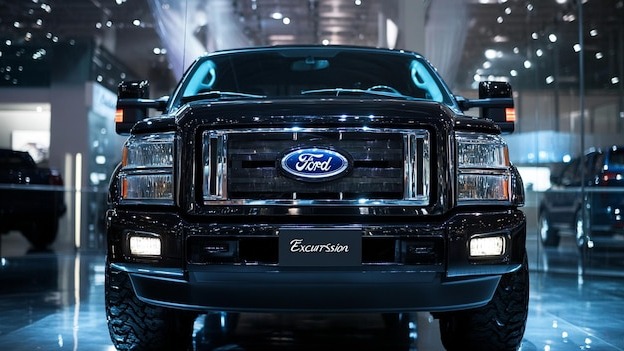
Company filings for 2025 show a changing of the guard in global auto rankings: Chinese giant BYD reported 4,602,436 units of new energy vehicle sales, while Ford’s worldwide wholesales slipped to just under 4.4 million. That gap is enough to lift BYD into the global top six automakers by volume and push Ford out of the club it long dominated. The shift marks a clear moment in the electric transition, raising questions about how quickly Chinese brands are scaling and how legacy carmakers will respond.
Breaking Down the 2025 Sales Data
The latest global league table compiled from company filings and cited by Bloomberg News shows BYD edging ahead of Ford on raw volume. According to that ranking, Ford’s worldwide wholesales dropped almost 2 percent to just under 4.4 million vehicles, while BYD reported around 4.6 million. The decisive figure comes from BYD’s own disclosure that it sold exactly 4,602,436 units of new energy vehicles in 2025, giving the Chinese company a narrow but clear lead over the U.S. group.
BYD’s momentum was especially visible in December. The company’s filing cited by cnevpost shows December NEV sales of 420,398, including 133,172 units sold overseas. Those year‑end numbers highlight two trends that help explain the new ranking: BYD is not only selling more electrified vehicles overall, it is also rapidly increasing its presence outside China. The Bloomberg-compiled table leans on these primary filings rather than analyst estimates, which is why the 4,602,436-unit total and Ford’s sub‑4.4‑million wholesales carry so much weight in the global top‑ten reshuffle.
BYD’s Explosive Growth Trajectory
BYD’s 2025 breakthrough builds directly on its 2024 performance. Company results reported by the Associated Press put BYD’s 2024 vehicle sales at roughly 4.3 million, with revenue reaching 777.1 billion yuan. That means BYD added hundreds of thousands of NEV sales in a single year to reach 4,602,436 units in 2025, while also scaling a business that already generated 777.1 billion yuan in annual revenue. The step up from about 4.3 million to more than 4.6 million vehicles underscores how quickly the company is converting its manufacturing base into global share.
Exports are a big part of that story. The December filing highlighted by cnevpost shows 133,172 overseas units in a single month, and the same report notes that BYD’s full‑year overseas sales have surpassed 1 million vehicles. Analysts quoted by the Guardian argue that BYD’s strategy of focusing on affordable electric and plug‑in hybrid models, backed by in‑house battery technology, has allowed it to flood markets where price sensitivity is high and charging infrastructure is still developing. That combination of scale at home and targeted expansion abroad set the stage for BYD to overtake Ford in the latest global ranking.
Ford’s Slipping Position Amid Legacy Struggles
Ford’s drop to just under 4.4 million wholesales, as reported in the Bloomberg‑based table cited in the Guardian live business coverage, reflects the broader strain on traditional automakers. A near‑2 percent decline may sound modest, but in a market where rivals like BYD are adding volume, even a small contraction can translate into a lost rung on the global ladder. The filings‑based data suggest Ford is holding its ground in combustion and hybrid segments while struggling to grow fast enough in electric vehicles to offset that slowdown.
Public comments from Ford executives referenced in the same Bloomberg‑compiled reporting point to slower‑than‑expected EV adoption and pricing pressure as key headwinds. While detailed 2025 EV and internal‑combustion breakdowns sit inside company filings that are not fully quoted in the available coverage, the topline wholesales figure underlines the problem. Where BYD’s 4,602,436 NEV sales are entirely electrified or hybrid, Ford’s sub‑4.4‑million total spans all powertrains, which means its electric share is still relatively limited compared with the Chinese rival that just passed it.
Why This Shift Matters for Global Autos
The fact that a company selling only new energy vehicles can now outrank Ford on global volume is a clear signal about where growth is concentrated. BYD’s December overseas tally of 133,172 units, cited by cnevpost, shows that Chinese brands are no longer confined to their domestic market. Analysts quoted by the Guardian say this surge in Chinese EV exports is reshaping competition in Europe, Latin America and parts of Asia, where lower‑cost models are forcing incumbents to rethink pricing and product plans.
There are also implications for the global supply chain. BYD’s scale, backed by 777.1 billion yuan in 2024 revenue and more than 4.6 million NEV sales a year later, gives it leverage over battery materials, software development and component sourcing that many legacy automakers are still trying to build. Experts tracking the sector argue that this kind of vertical integration could influence everything from lithium prices to which suppliers survive, even if data on non‑NEV segments remain patchy. For Ford and its peers, the new ranking is a reminder that the center of gravity in autos is tilting toward companies whose core business is electrified vehicles.
Uncertainties and What’s Next
Any global ranking depends on methodology, and the Bloomberg‑based table that shows BYD ahead of Ford is built on wholesales and company filings rather than retail registrations. That means the order could look different if analysts focused on end‑customer sales, revenue, or a combination of combustion and electric vehicles. The available reporting also has gaps, particularly on detailed breakdowns of Ford’s 2025 EV volumes and on how non‑NEV vehicles factor into BYD’s longer‑term strategy, so some comparisons remain incomplete.
Looking ahead, industry voices quoted by the Guardian suggest that both Chinese and Western automakers are preparing for tougher regulation, possible trade barriers and ongoing price wars in EVs. Ford has outlined recovery and electrification plans in its own communications, but the filings‑based numbers used in the Bloomberg ranking show it starting from a weaker volume position than BYD. For buyers, the shift is already visible in product lists such as global EV sales rankings and consumer guides like best electric car lineups, where Chinese models increasingly sit alongside established U.S. and European brands. The missing piece is how quickly Ford can convert its under‑4.4‑million wholesales into a portfolio that competes head‑on with BYD’s 4,602,436‑unit NEV juggernaut.
More From The Daily Overview
*This article was researched with the help of AI, with human editors creating the final content.

Grant Mercer covers market dynamics, business trends, and the economic forces driving growth across industries. His analysis connects macro movements with real-world implications for investors, entrepreneurs, and professionals. Through his work at The Daily Overview, Grant helps readers understand how markets function and where opportunities may emerge.

