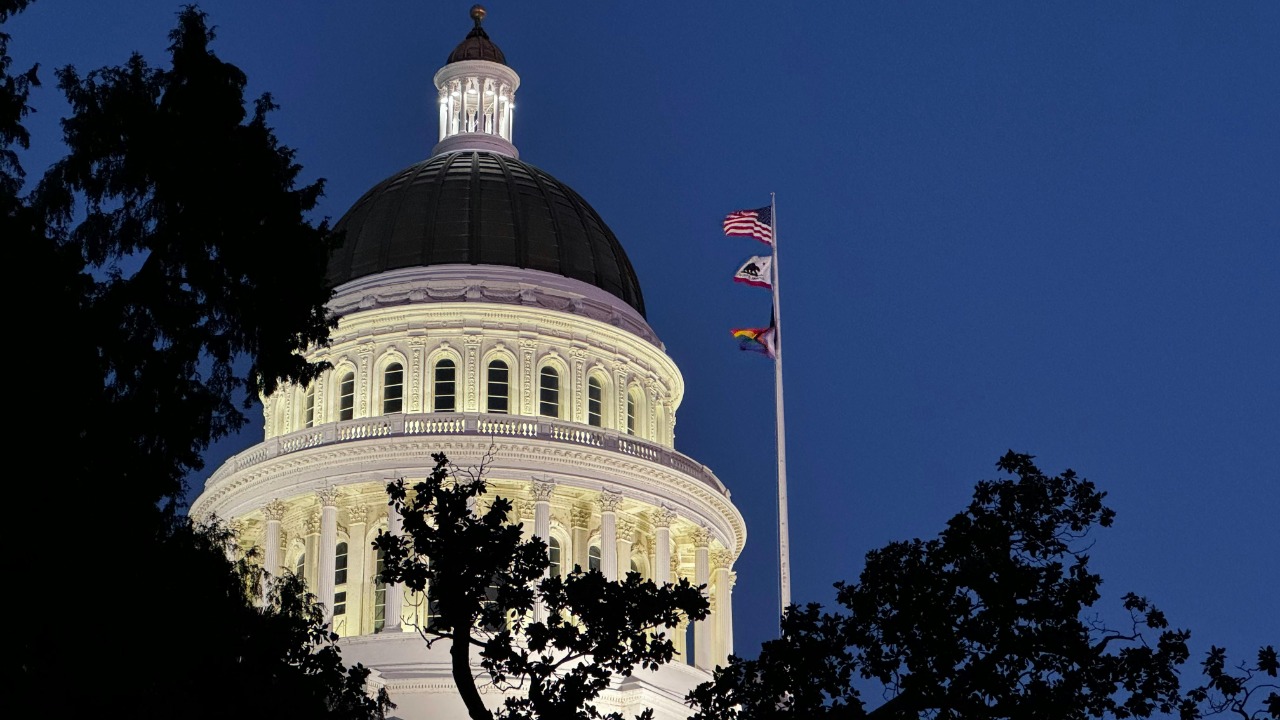
California’s fight over how to pay for its roads has turned into a proxy war over trust in government. Democrats are backing a shift from gas taxes to a per‑mile charge, arguing that electric vehicles and fuel efficiency are blowing a hole in the state’s transportation budget. California Republicans, in response, say the plan treats motorists like cash machines, warning that drivers will feel every extra cent each time they get behind the wheel.
At stake is not just one bill, but the basic deal between drivers and the state: pay at the pump and the roads get fixed. Replacing that with a system that tracks how far people travel, and potentially where, is fueling a backlash that blends pocketbook anxiety with privacy fears and deep partisan suspicion.
The road charge experiment and AB 1421
California has been quietly testing mileage fees for years, long before the current political firestorm. Through a statewide road charge collection pilot, the state has experimented with ways to log miles, from odometer readings to plug‑in devices and smartphone apps, to see whether a per‑mile system could eventually replace the gas tax. The pilot is designed to answer basic questions that now dominate the public debate: how to measure distance accurately, how to protect data, and how to make sure rural and low‑income drivers are not hit harder than urban commuters.
That technocratic work is now colliding with a very political proposal. Assembly Bill 1421, authored by Wilson, would move the concept from experiment to policy by directing state agencies to design a framework for a mileage‑based fee and report back by a set deadline. The bill’s supporters in the majority party see AB 1421 as a necessary bridge between the pilot and a future statewide program, while critics frame it as the first concrete step toward a new tax that will eventually sit on top of what drivers already pay at the pump.
Democrats’ case: gas tax revenue is running on fumes
Democrats backing the shift argue that the math behind the current system no longer works. As hybrids and electric vehicles travel farther on each gallon, the per‑gallon fuel tax is delivering less money per mile driven, even as congestion and maintenance needs grow. One analysis quoted a transportation official saying that “the current per‑gallon fuel tax is no longer keeping up with highway funding needs because vehicles can travel much farther on a gallon of gas,” and stressed that California is not alone in this budgetary bind, with other states also exploring road‑use charges to stabilize revenue budgetary bind.
In the Assembly, Democrats have already signaled they are prepared to move ahead. A caucus statement titled “Assembly Democrats Affirm Support for New Mileage Tax on Drivers” described how Lawmakers advanced AB 1421, sponsored by Wilson, and rejected an amendment that would have barred any future mileage tax, despite warnings that prior state audit recommendations were being ignored Assembly Democrats Affirm. For supporters, the choice is between designing a modern system on their own terms now or waiting until crumbling infrastructure forces more drastic measures later.
Republican backlash: ‘citizens treated like ATMs’
California Republicans have seized on the mileage‑tax debate as proof that Democrats see drivers as a never‑ending revenue stream. In Sacramento, California Republicans have blasted AB 1421 as a prelude to double taxation, arguing that the state should fix waste and mismanagement before layering on new fees. A statement from party leaders under the banner “California GOP Opposes Mileage Tax Effort” described how California Republicans are criticizing the bill that passed in the Assembly and warned that the proposal could eventually be added to the existing gas tax rather than replacing it California GOP Opposes.
The rhetoric has only sharpened as the issue has moved into campaign season. A detailed account of the fight described how California Republicans displayed what one observer called a passionate case of road rage over a Dem‑led push to tax drivers per mile, with critics saying citizens are being treated like ATMs and warning that a statewide road charge program would punish people who have no choice but to drive long distances for work California Republicans. That framing, of ordinary motorists as captive sources of cash, has become the core of the GOP message against the plan.
How much drivers could pay, and who gets hit hardest
Behind the slogans is a simple, unsettling number for many households: 11,400 miles. That is the average distance Golden State drivers put on their vehicles each year, according to one analysis that warned a per‑mile fee could quickly add up for commuters who already feel squeezed by housing and fuel costs 11,400 miles. Another breakdown of the proposal noted that Under such a system, California drivers, who average about 11,400 miles annually, could pay between $228 and $1,026 more per year depending on the rate that is ultimately chosen, figures that have become rallying points for opponents warning of hundreds of dollars in new costs per car such a system.
Supporters counter that the design details matter, and that a well‑crafted system could be more equitable than the gas tax. A separate explainer noted that one concept under discussion would charge different rates for heavier vehicles based on weight, on the theory that a 7,000‑pound SUV or a heavy pickup does more damage to pavement than a compact sedan, and that a mileage fee could be calibrated accordingly through a statewide platform described by KFI AM 640, SoCal News, More Stimulating Talk, which highlighted the role of KFI AM 640. Yet for a delivery driver in a 2015 Ford F‑150 or a nurse commuting in a 2018 Toyota RAV4 from the exurbs into Los Angeles, the headline takeaway is that every extra mile could soon carry a visible price tag.
Campaign trail firestorm and conservative organizing
The policy fight has spilled directly into the governor’s race. One report described how a GOP gubernatorial candidate used the controversy to school Democrats on what he called an outrageous tax that could charge drivers per mile, blasting the idea in a high‑profile interview that linked the plan to the California Transportation Commission and the state Transportation Agency GOP gubernatorial candidate. Another account emphasized that a leading Republican running for governor has promised to fight any attempt to replace the gas tax with a per‑mile fee, tying that pledge directly to the controversial Assembly Bill 1421 and its requirement that agencies deliver a detailed plan by January 1, 2027 Republican. For conservatives, the mileage tax has become a shorthand for what they portray as Democratic overreach.
Outside the Capitol, activists are trying to turn that anger into organized resistance. A campaign branded “Stop California Politicians from Imposing a New Mileage Tax” features State Rep Carl DeMaio warning that The California Mileage Tax proposal would give government bureaucrats sweeping power over how people drive, with rates and rules being determined by officials rather than voters Stop California Politicians. On talk radio, California gubernatorial candidate Steve Hilton has called the proposal “absolutely outrageous” and vowed to veto any such legislation if elected, a promise highlighted in coverage that described how California candidate Steve Hilton framed the mileage tax as a direct threat to working‑class drivers California. The result is a feedback loop in which policy design details are often drowned out by campaign‑trail sound bites.
More From The Daily Overview
*This article was researched with the help of AI, with human editors creating the final content.

Julian Harrow specializes in taxation, IRS rules, and compliance strategy. His work helps readers navigate complex tax codes, deadlines, and reporting requirements while identifying opportunities for efficiency and risk reduction. At The Daily Overview, Julian breaks down tax-related topics with precision and clarity, making a traditionally dense subject easier to understand.

