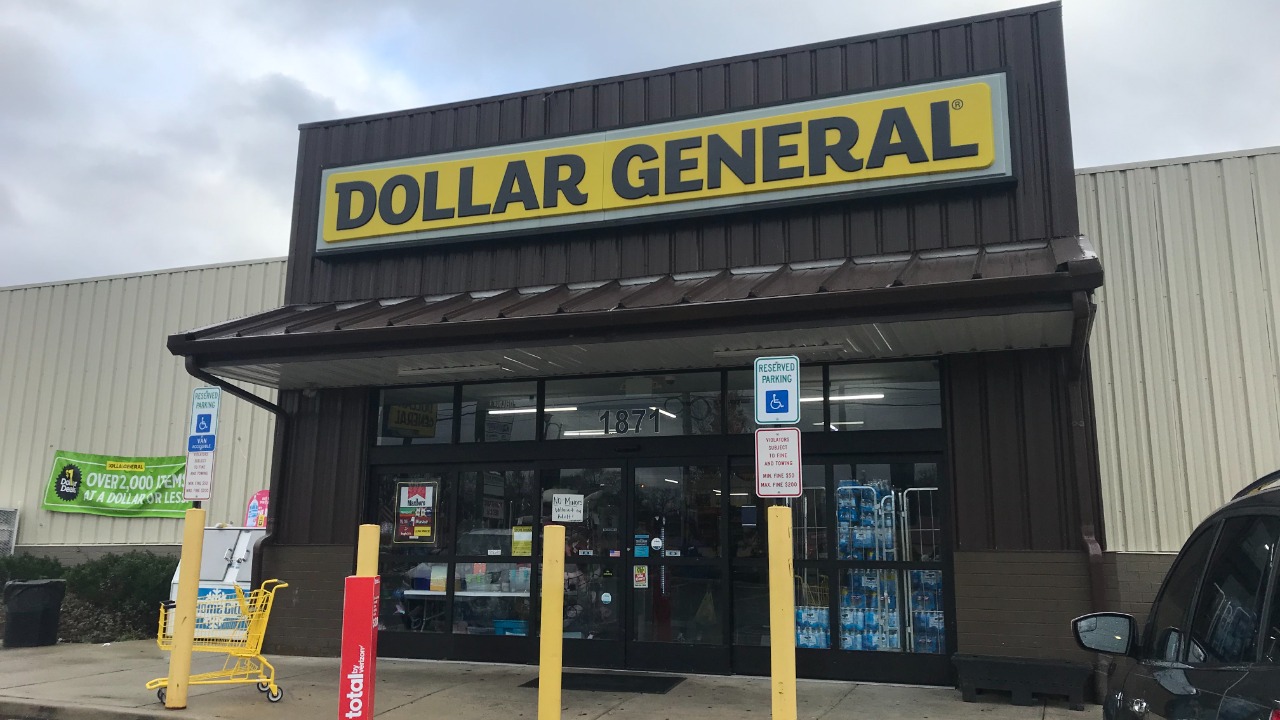
Dollar General charged shoppers more at the register than the prices on its shelves, tags and ads for years and failed to fix the problem after tens of thousands of complaints, the Federal Trade Commission and 20 states allege in a lawsuit filed October 26. The discount chain operates more than 21,000 stores.
The complaint stacks up state inspection failures, undercover purchases by federal investigators and receipts from customers who paid more for milk and eggs than the shelf said. Dollar General disputes the claims, and nothing in the case has been decided.
What the FTC and the states allege
According to the FTC’s announcement, the case was filed in federal court in the Middle District of Tennessee after a 2-0 commission vote. The states joining it are Alabama, Arizona, Arkansas, California, Connecticut, Florida, Illinois, Iowa, Kansas, Louisiana, Michigan, Mississippi, Nebraska, New Jersey, North Carolina, Ohio, Oklahoma, Tennessee, Utah and Wisconsin. The suit claims violations of the FTC Act, the Gramm-Leach-Bliley Act and state consumer laws.
“Dollar General has betrayed the trust of millions of American consumers,” said Christopher Mufarrige, director of the FTC’s Bureau of Consumer Protection. The agency says the company knew about the pricing problem, received tens of thousands of consumer complaints and did not adopt policies that adequately addressed it.
The record the complaint relies on: Much of the Dollar General case rests on receipts that did not match a shelf tag and complaints that customers took the time to file. A fraud evidence and report log in The Senior Fraud Defense & First-Hour Recovery Kit gives one place to write down what was charged, where, and which agency received the report.
The inspection numbers inside the complaint
The complaint says customers filed at least 29,265 complaints about the company not honoring marked prices between January 2023 and March 2026, from every one of the 48 states where it operates. It then walks through state weights-and-measures results. Kansas stores failed more than 39 percent of pricing inspections over roughly three years. Louisiana logged 144 failed price audits and $176,850 in fines. In New Mexico, 53 percent of 73 inspections in early 2026 failed, and Iowa stores failed all eight inspections at seven locations.
Wisconsin inspectors in 2023 found 662 of 7,344 scanned products overcharged, and North Carolina counted at least 399 pricing errors across 28 inspections of 10 stores. FTC investigators also made undercover purchases in 2026 and found net overcharges at stores in Cleveland, Springfield, Missouri, Sharpsburg, Pennsylvania, and Baltimore. At the Cleveland store, 13 of 58 items rang up wrong.
Milk, eggs and small overcharges that add up
The individual amounts are small, which is the point of the case. The undercover trips produced net overcharges of $2.60 to $4.07 per visit. One consumer example in the complaint describes milk marked $3.95 on the shelf and charged at $4.25, and another describes eggs marked $5.10 and charged at $6.35. Spread across a chain of this size, the FTC says the overcharges total millions of dollars, though it does not give a single figure.
The complaint also says Dollar General has settled pricing cases seven times with six state agencies since 2019 for more than $6 million combined, including $1.75 million in Vermont in 2019, $1.2 million in New Jersey and $1 million in Ohio in 2023, and $1.55 million in Pennsylvania in 2025.
What the lawsuit seeks and how the company responded
The FTC and the states are asking the court for a permanent injunction, a monetary judgment, redress for customers such as refunds, and civil penalties under state law. Some state penalties are steeper when older shoppers are harmed: Florida’s law allows $15,000 per violation when the victim is a senior or disabled person, according to the complaint. The FTC’s case page lists the matter as pending.
Dollar General said in an October 26 statement that its “goal is 100% accuracy between shelf and register prices in every store” and that the suggestions in the lawsuit were wrong, saying “Nothing could be further from the truth.” No refund program exists, and none will unless the case ends in a judgment or settlement that creates one.
Checking a receipt before leaving the store
The complaint’s own evidence points to the habit that catches these errors: comparing the receipt with the shelf price before leaving. Shoppers who find a mismatch can ask the store to correct it at the register and keep the receipt. Pricing complaints go to the state or county weights-and-measures office, which is the agency whose inspections fill much of this case, and consumer complaints can also be filed with the FTC or the state attorney general. A photo of the shelf tag next to the item gives a complaint something to verify.
Keeping the receipt trail
The case against Dollar General was built from records: inspection reports, undercover receipts and 29,265 complaints filed by customers. A shopper who spots a register price above the shelf tag is left holding a receipt and a question about where the report should go and what to keep with it.
The Senior Fraud Defense & First-Hour Recovery Kit is a 9-page kit whose fraud evidence and report log is set up to record each charge, each date and each complaint filed.
See the evidence and report log in The Senior Fraud Defense & First-Hour Recovery Kit.
This article was created with AI assistance and reviewed for accuracy against the Federal Trade Commission’s announcement, case page and complaint.

Silas Redmond writes about the structure of modern banking, financial regulations, and the rules that govern money movement. His work examines how institutions, policies, and compliance frameworks affect individuals and businesses alike. At The Daily Overview, Silas aims to help readers better understand the systems operating behind everyday financial decisions. He also covers scams, fraud cases and the audits that expose them.