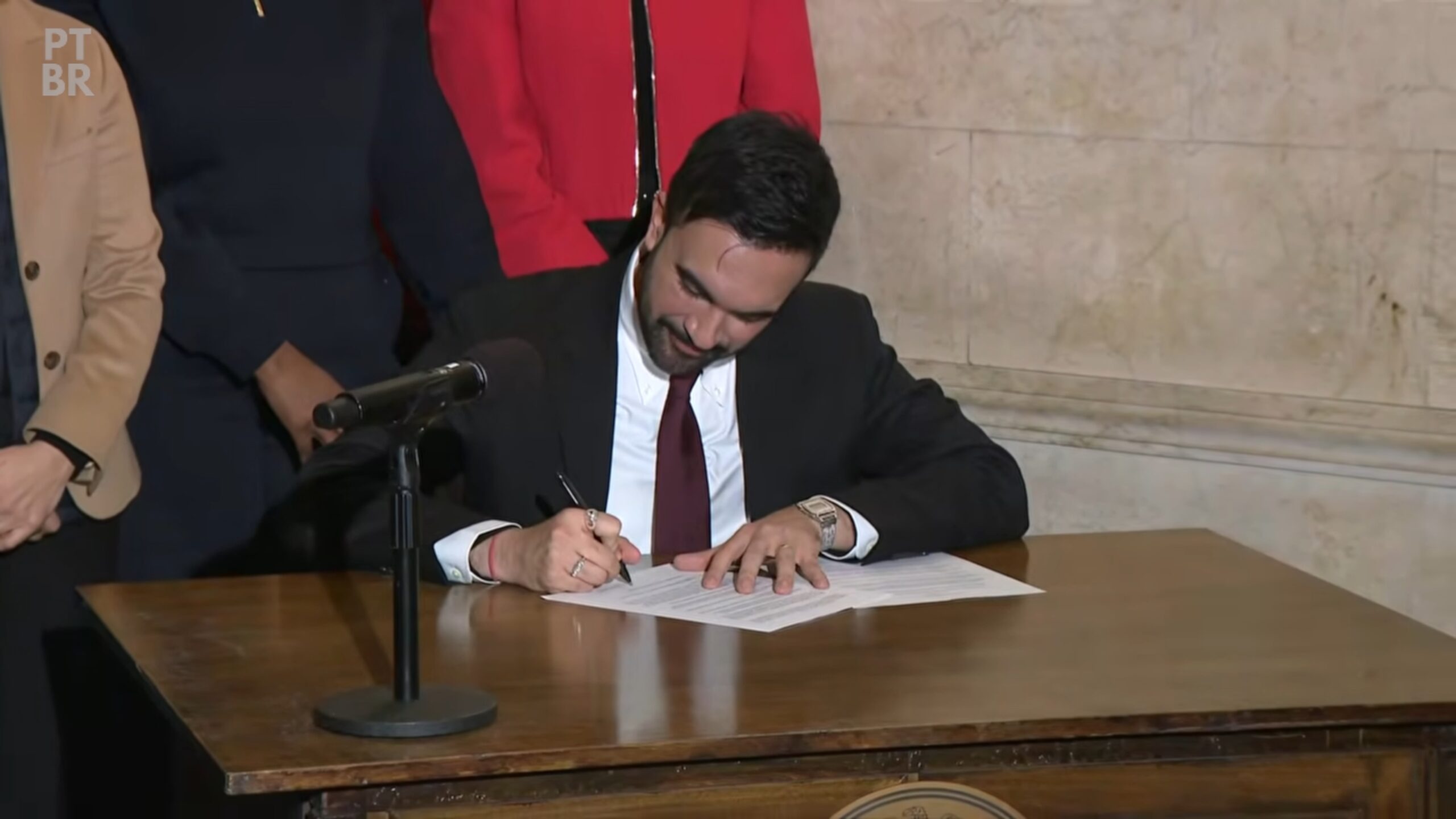
Democratic Socialists of America allies in the New York State Legislature are advancing a progressive income tax bill that begins hitting earners at $323,200, a threshold far below the million-dollar line that dominates campaign messaging. The measure, Assembly Bill 2023-A3115, is tied to DSA-backed Assemblymember Zohran Mamdani, who is now running for New York City mayor on a platform of taxing the rich to fund free transit and affordable housing. The gap between the rhetoric and the bill’s actual reach raises pointed questions about which New Yorkers would bear the cost of these ambitions.
A Tax Bill That Starts Well Below Seven Figures
The central tension in this debate sits inside the text of the Albany proposal, which imposes a progressive income tax structure with new brackets starting at $323,200. The bill adds additional higher brackets above that floor, creating a tiered system that climbs through upper-middle-income professionals before reaching the ultra-wealthy. On the campaign trail and in coalition press events, supporters frame these proposals as asking the rich to pay their fair share. But a household earning $323,200 in New York City, where the median home price routinely exceeds $700,000 and childcare can run five figures annually, does not fit most voters’ definition of “rich.”
The bill emerged from a broader coalition effort. State Senator Robert Jackson and Assemblymember Demond Meeks joined grassroots organizations in launching the Invest in Our New York package, which includes the progressive income-tax bill among its components. NYC-DSA is listed as a coalition participant. The stated intent is to “raise revenue” for public investment, according to Meeks’ office. That framing is honest about the goal but sidesteps the question of who exactly supplies that revenue. A dual-income couple where both partners are mid-career public school administrators or hospital managers could clear $323,200 without owning a yacht or a second home.
Mamdani’s Mayoral Pitch and the Millionaire Messaging Gap
Zohran Mamdani’s mayoral campaign has drawn national attention for its ambitious spending promises. His key planks include free buses, a rent freeze, and a major housing buildout, according to a detailed campaign profile that traces his rise from Queens organizer to citywide contender. To fund those proposals, Mamdani’s pitch includes increasing the corporate tax and imposing a flat tax on people earning more than $1 million. That $1 million figure is the one voters hear most often. It sounds clean and targeted: tax millionaires, fund transit. The problem is that the legislative machinery his DSA allies are building in Albany reaches considerably further down the income ladder.
This disconnect matters because voters evaluate candidates based on what they say, while policy outcomes depend on what their allies file. Mamdani’s name is linked to Assembly Bill 2023-A3115 through the bill’s sponsor and co-sponsor list, even if his mayoral race is formally separate from state legislative work. The campaign’s public-facing rhetoric about millionaires and corporations creates one impression; the bill text creates another. A voter earning $350,000 who supports “taxing the rich” may not realize the proposal includes them. That gap between messaging and mechanism is not unusual in politics, but the scale of the difference here, from $1 million down to $323,200, is large enough to warrant scrutiny from both supporters and skeptics of higher taxes.
Federal SALT Changes Already Squeeze Upper-Middle Earners
The proposed state-level tax increases would land on earners who are already navigating a shifting federal tax environment. New York State Comptroller Thomas P. DiNapoli released an analysis finding that recently enacted federal tax provisions disproportionately benefit higher-income filers, in part by raising the ceiling on state and local tax deductions. The release highlights how many filers in the $100,000 to $500,000 range can once again fully deduct state and local taxes under a higher SALT cap. That data point is telling: filers in that band are not wealthy by New York standards, yet they sit at the intersection of federal SALT policy and proposed state rate hikes, where small statutory changes can translate into large swings in take-home pay.
Layering a new state bracket at $323,200 on top of existing federal dynamics creates a compounding effect. A professional earning in the mid-$300,000s already faces New York State income tax, New York City income tax, federal income tax, and only partial SALT deductibility depending on federal rules. Adding another bracket does not just take a slightly larger slice; it changes the calculus for whether staying in New York makes financial sense at all, especially for mobile workers in finance, tech, or medicine. The Comptroller’s fiscal dashboards have tracked these pressures for years, and the data consistently shows that high-cost-state filers in this income range are uniquely exposed to policy changes at both the state and federal level, even as truly ultra-wealthy households have more tools to minimize their tax bills.
Competing Visions: Tax Cuts for Low Earners vs. Hikes for High Earners
While DSA-aligned legislators push to raise rates, other New York officials have moved in the opposite direction for lower-income residents. Mayor Eric Adams proposed a city tax cut framed as “Axe the Tax for the Working Class,” a plan to eliminate New York City personal income tax for certain low-income filers. The two approaches are not mutually exclusive in theory, but they reflect fundamentally different philosophies about where tax relief and tax burden should concentrate. Adams’ proposal targets the bottom of the income distribution; the DSA coalition targets earners starting at $323,200 and up, with the expectation that this group can absorb higher costs without leaving the city or cutting back spending.
The political friction between these visions is real. A city that simultaneously eliminates taxes for its lowest earners while the state imposes new brackets on households earning above $323,200 would be sending a mixed but unmistakable message about redistribution: those at the bottom should pay less, and those in the upper-middle and top tiers should pay more. Supporters of Mamdani and the Invest in Our New York coalition argue that this is precisely the point (New York’s inequality is so stark that only aggressive progressive taxation can fund universal programs like free buses and large-scale social housing). Critics counter that the plan leans too heavily on a relatively narrow slice of taxpayers, many of whom already feel squeezed by housing, childcare, and tuition costs, and that overreliance on high earners risks eroding the very tax base the city and state depend on.
Who Pays, Who Stays, and the Politics of Transparency
Behind the spreadsheets and campaign slogans lies a basic question of political honesty. When candidates and allied organizations tell voters they will “tax the rich,” they are making an implicit promise about who will be asked to pay more. If the operative definition of “rich” in law begins at $323,200, while the public rhetoric fixates on millionaires, that promise becomes muddy. Voters who do not see themselves as affluent may support the idea in the abstract, only to discover that their own paychecks are on the line once the brackets are implemented. That discovery can fuel backlash, not only against the specific tax but against the broader progressive agenda it was meant to support.
The institutions that shape public understanding of these debates also play a role. Outlets that profile insurgent campaigns and policy fights, such as reader-funded newsrooms, rely on subscriptions and contributions to sustain in-depth reporting on local tax policy that might otherwise be overlooked. Their coverage, and the engagement of readers who choose to take out subscriptions or contribute directly, can surface the fine print in bills like A3115 and test whether campaign messaging holds up against statutory language.
At the same time, the broader civic ecosystem, from advocacy groups to professional associations and even sector-specific platforms like job boards that track where talent is moving, helps determine whether New York remains attractive to the very workers now being asked to shoulder higher taxes. For some upper-middle-income households, the trade-off may feel worthwhile if higher taxes clearly finance better transit, safer streets, and more affordable housing. For others, especially those with remote-work options, the combination of a new $323,200 bracket, federal uncertainty, and rising living costs may tilt the balance toward leaving. How New York navigates that tension will depend not only on the numbers in a tax table, but on the clarity with which its leaders explain who pays, who benefits, and why the gap between slogans and statutes should be trusted.
More From The Daily Overview
*This article was researched with the help of AI, with human editors creating the final content.

Grant Mercer covers market dynamics, business trends, and the economic forces driving growth across industries. His analysis connects macro movements with real-world implications for investors, entrepreneurs, and professionals. Through his work at The Daily Overview, Grant helps readers understand how markets function and where opportunities may emerge.

