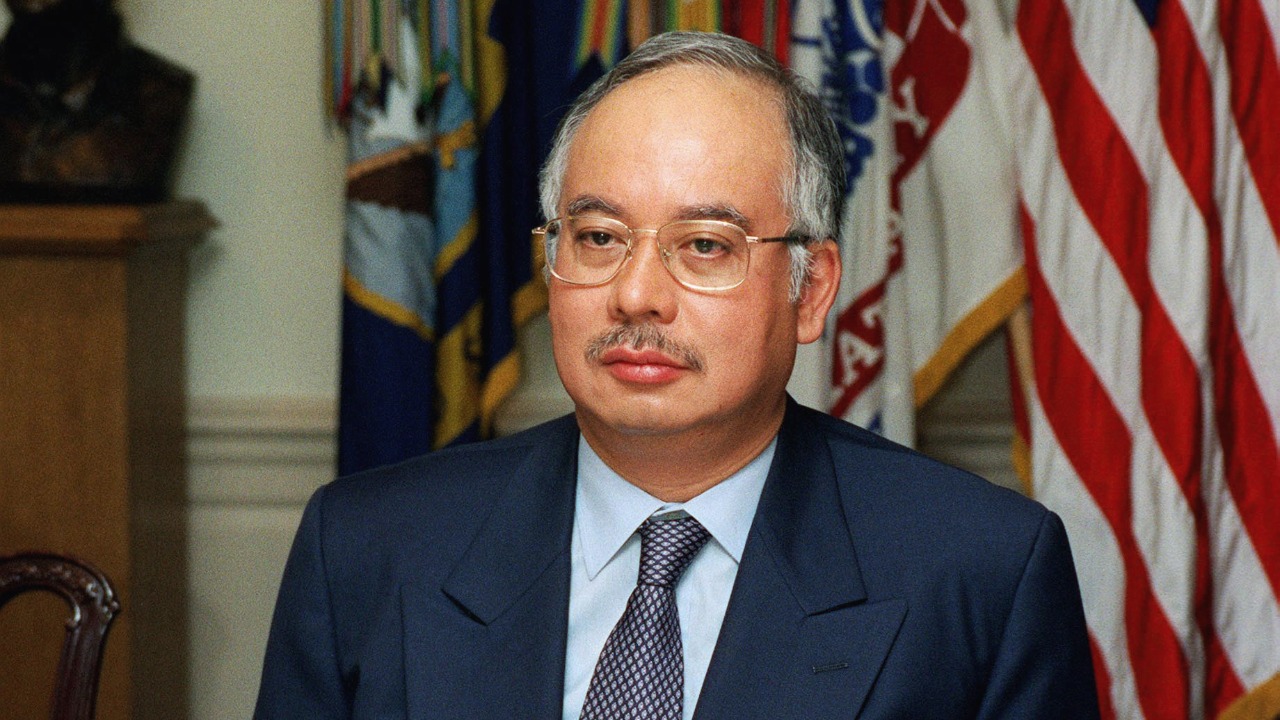
Malaysia has delivered one of the most consequential corruption verdicts in its history, sending former prime minister Najib Razak to prison for 15 years over his role in the 1MDB financial scandal. The punishment deepens the downfall of a leader once seen as political royalty and signals that the country’s courts are prepared to confront the excesses of its own elite.
The new sentence, which comes on top of an existing jail term, caps a decade of revelations about billions of dollars siphoned from a state fund that was supposed to drive national development. It also raises a sharper question for Malaysia and the wider region: whether this moment marks a genuine turning point on graft or a singular reckoning tied to one spectacular case.
The High Court’s 15-year verdict and massive financial penalties
The latest judgment against Najib is striking both for its length and for the breadth of the charges that underpin it. The High Court found the former leader, who is now 72, guilty on four counts of abuse of power and 21 charges of money laundering tied to the 1MDB fund, a sweeping catalogue of misconduct that reflects how deeply the scandal penetrated the machinery of government. Judges concluded that Najib used his authority to steer decisions that allowed money to be diverted into accounts and vehicles he controlled, then obscured the trail through complex financial movements.
On top of the 15-year prison term, the court imposed a multibillion dollar financial penalty that underscores the scale of the alleged theft. Reporting on the verdict notes that the former Malaysian PM Najib Razak was hit with a fine of roughly 2.8 billion dollars, a figure that mirrors the enormous sums prosecutors say were looted from 1MDB and then spent on luxury real estate, art and other personal indulgences linked to the scheme. The combination of a long custodial sentence and a huge monetary sanction reflects a judicial effort to match punishment to the magnitude of the 1MDB losses and to send a message that high office will not shield those who abuse it.
A second major sentence for a fallen prime minister
The 15-year term does not mark Najib’s first encounter with prison walls, which is part of what makes this verdict so significant. He is already serving a six-year sentence after being convicted in an earlier 1MDB-related case, and the new ruling effectively extends his incarceration well into old age. In that earlier proceeding, judges found that money from the fund had been channelled into his personal accounts, rejecting his insistence that the transfers were legitimate political donations.
The latest decision, delivered after what was described as a marathon eight-hour hearing, came from Judge Collin Lawrence Sequera, who ordered that Najib serve 15 more years for the fresh set of charges. According to accounts of the hearing, the judge weighed the former leader’s age and prior service but concluded that the gravity of the offences, and their corrosive impact on public trust, demanded a substantial additional term. The image of a onetime head of government listening as Judge Collin Lawrence Sequera sent him back to prison captured the sense that this was not a one-off misstep but the culmination of a pattern of criminal conduct.
How 1MDB went from development dream to global scandal
When 1Malaysia Development Berhad, better known as 1MDB, was created, it was sold to the public as a bold tool to attract foreign investment and finance infrastructure that would lift living standards. Instead, authorities later alleged that billions were siphoned out of the fund and moved through a maze of shell companies and bank accounts, with large portions ending up in the hands of politically connected figures. Investigators traced money that should have financed power plants and strategic projects into luxury condominiums, private jets and even Hollywood-linked ventures.
At least six countries, including the United States, Singapore and Switzerland, launched financial probes that implicated high ranking officials and bankers in what became one of the world’s most notorious kleptocracy cases. In Malaysia itself, prosecutors argued that the fund had been systematically looted, with authorities alleging that the money was diverted into accounts linked to Najib and his associates rather than into the development projects that had been promised. The sheer number of jurisdictions involved, and the colourful details that emerged about lavish spending, turned 1MDB into a byword for elite corruption far beyond Kuala Lumpur.
The new charges: abuse of power and money laundering in detail
The latest conviction zeroes in on how Najib allegedly used his position to bend the state to his financial interests. The High Court concluded that he committed four counts of abuse of power, essentially weaponising his authority as prime minister and finance minister to influence decisions that allowed 1MDB funds to be misdirected. These findings paint a picture of a leader who blurred the line between public office and personal gain, treating a sovereign wealth vehicle as a private cash reservoir.
Alongside the abuse of power counts, Najib was found guilty of 21 money laundering offences, reflecting the elaborate efforts prosecutors say were made to disguise the origin of the stolen funds. According to detailed accounts of the verdict, the court accepted evidence that money moved through multiple accounts and entities before landing in places where it could be spent or invested with a veneer of legitimacy. The judgment, which described Najib as Najib and set out how billions were looted from 1MDB, underscored that the laundering was not incidental but central to the scheme’s success.
From political dominance to criminal defendant
Najib’s fall from power to prisoner has unfolded in stages that mirror Malaysia’s own political upheavals. As prime minister, he presided over a period of strong electoral dominance for his coalition and cultivated an image as a moderniser who could steer Malaysia through economic headwinds. That aura began to crack as early reports surfaced about irregularities at 1MDB, but for years he resisted calls to step aside, reshuffled critics out of key posts and insisted that the allegations were fabricated by rivals.
The turning point came when voters, angered by the scandal and rising living costs, ousted his long ruling bloc in a historic election, opening the door for investigators to revisit 1MDB without the same political constraints. Once out of office, Najib faced a cascade of charges that transformed him from a dominant political figure into a regular presence in the dock. By the time the High Court found Najib guilty on the latest 1MDB charges, the transformation from power broker to convicted felon was complete, a trajectory that has few parallels in the country’s post independence history.
Inside the courtroom: a marathon hearing and a firm judicial tone
The proceedings that led to the new sentence were as notable for their intensity as for their outcome. Reports from the High Court describe a marathon eight-hour hearing in which prosecutors and defence lawyers sparred over the appropriate punishment, with Najib’s team urging leniency on the grounds of his age and prior service. The judge, however, appeared more persuaded by the argument that the offences struck at the heart of public trust, and that a light sentence would send the wrong signal about accountability for those at the top.
In delivering the verdict, the court laid out a narrative of deliberate wrongdoing rather than administrative oversight, emphasising that the abuse of power and money laundering counts reflected conscious choices. Observers noted that the judge’s language echoed earlier rulings in which courts dismissed Najib’s explanations as implausible, at one point likening some of his claims to tales from the Arabian Nights in a prior judgment. The latest decision, which again involved Najib Ordered to Serve additional Years in Jail, reinforced the impression of a judiciary that has grown increasingly sceptical of his defence narrative.
The global money trail and the role of foreign jurisdictions
One reason the 1MDB saga has resonated so widely is that it did not stop at Malaysia’s borders. The fund’s money flowed through banks and companies in multiple countries, prompting regulators and prosecutors abroad to open their own cases. Authorities in the United States, Singapore and Switzerland pursued asset seizures and criminal charges against bankers and intermediaries, arguing that their financial systems had been used to launder proceeds from the Malaysian fund.
These foreign investigations helped fill in gaps about how the scheme operated, revealing, for example, how shell companies were used to disguise the true origin of funds and how luxury assets were purchased in New York, London and other global cities. In some instances, information gathered overseas fed back into Malaysian prosecutions, strengthening the hand of local investigators who were trying to reconstruct the money trail. The fact that at least six countries, including Singapore and Switzerland, mounted their own probes underscored that 1MDB was not just a domestic scandal but a test of the global financial system’s defences against kleptocracy.
Domestic political shockwaves and the message to Malaysia’s elite
Within Malaysia, the new sentence has deepened a debate about how far the country is willing to go in confronting corruption at the highest levels. Supporters of the verdict argue that jailing a former prime minister for 15 years, and saddling him with a 2.8 billion dollar fine, sends a powerful signal that political status no longer guarantees impunity. They see the High Court’s willingness to convict a figure of Najib’s stature as a milestone in the country’s democratic maturation, one that could embolden investigators to pursue other sensitive cases.
Critics, including some of Najib’s remaining allies, contend that the prosecutions are politically tinged and that the former leader has been singled out for punishment while others involved in 1MDB have faced less scrutiny. They point to the complex web of actors around the fund, including financiers such as Low Taek Jho, and argue that a full accounting requires more than one high profile conviction. Yet even among those who question aspects of the process, there is recognition that the spectacle of a former Malaysian PM Najib Razak being sentenced to 15 years in prison and hit with a multibillion dollar fine has altered the calculus for anyone who might be tempted to treat state resources as a personal slush fund, a reality captured in detailed accounts of how Malaysian PM Najib Razak ended up at the center of the 1MDB scandal.
What comes next: appeals, legacy and the future of anti-graft reform
Najib’s legal team is expected to continue fighting the convictions, and the appeals process could stretch on for years, but the political and symbolic impact of the 15-year sentence is already locked in. Even if some counts are eventually reduced or adjusted, the image of the former leader in a prison uniform, serving time for corruption linked to 1MDB, will shape how Malaysians remember his tenure. It will also influence how future leaders calculate the risks of crossing legal and ethical lines, particularly if the courts maintain a firm stance in any subsequent cases.
For Malaysia’s institutions, the challenge now is to translate this high profile verdict into broader, more durable reforms. That means strengthening oversight of state funds, tightening rules around political financing and ensuring that law enforcement bodies have the independence and resources to pursue complex financial crimes. The fact that a Malaysian court has now sentenced Prime Minister Razak to 15 years and a large fine, and that detailed accounts of the case have circulated widely, gives reformers a concrete example to point to when arguing that the old ways of doing business are no longer acceptable. Whether that momentum leads to systemic change, or fades once the headlines move on, will determine if Najib’s downfall becomes a turning point or a cautionary tale about how hard it is to root out entrenched corruption.
A regional benchmark in the fight against grand corruption
Beyond Malaysia’s borders, the verdict against Najib is being watched as a potential benchmark for how Southeast Asian states handle grand corruption cases involving their own leaders. In a region where entrenched political networks and weak institutions have often shielded powerful figures from accountability, the sight of a former head of government receiving a 15-year sentence and a 2.8 billion dollar fine stands out. It suggests that, under sufficient public pressure and with enough institutional will, even the most politically connected individuals can be held to account.
The case also highlights the importance of cross border cooperation in tackling complex financial crimes. Without the work of foreign regulators and prosecutors, and without the willingness of Malaysia’s own High Court to follow the money trail wherever it led, the full scope of the 1MDB scandal might never have come to light. Detailed coverage of how Malaysia pursued Najib, and how other jurisdictions moved in parallel, offers a template for future cases in which state funds are looted and laundered through the global financial system. For citizens across the region who have grown weary of impunity, the outcome in Kuala Lumpur is a rare example of a mega scandal ending not with a quiet deal, but with a prison term measured in decades.
More From TheDailyOverview

Grant Mercer covers market dynamics, business trends, and the economic forces driving growth across industries. His analysis connects macro movements with real-world implications for investors, entrepreneurs, and professionals. Through his work at The Daily Overview, Grant helps readers understand how markets function and where opportunities may emerge.