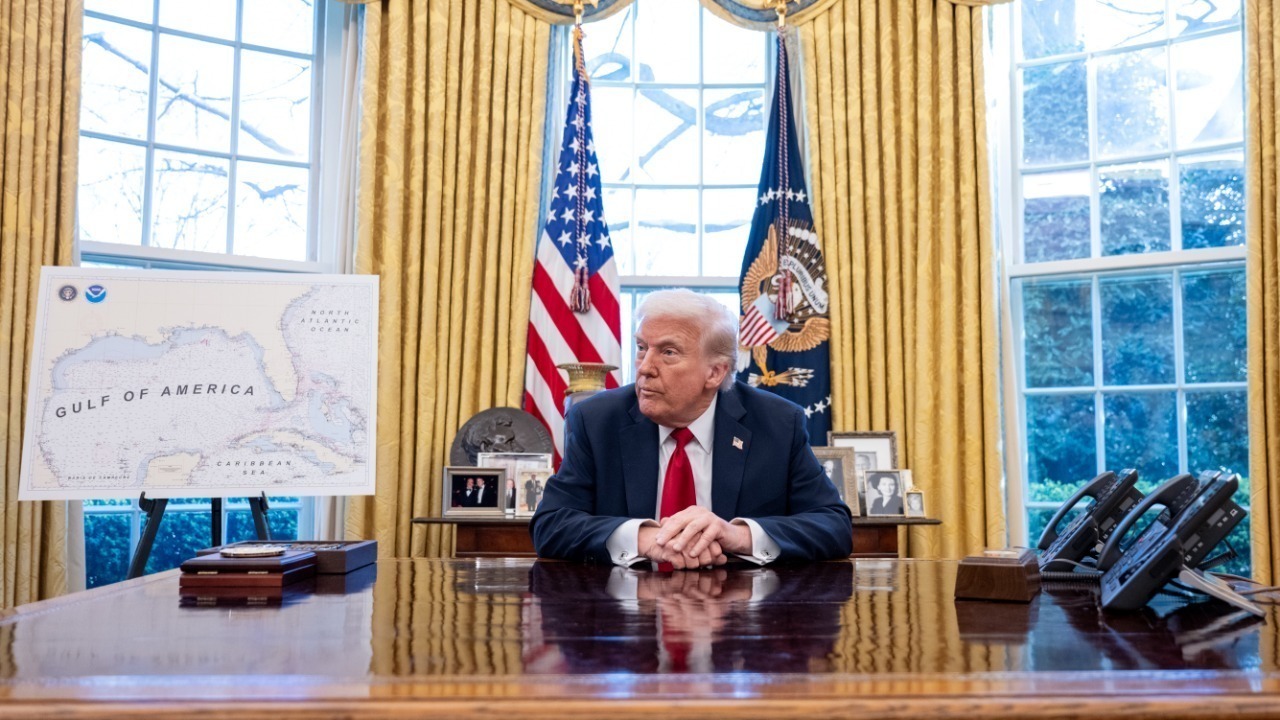
The Supreme Court is on the verge of deciding how far President Donald Trump can go in using tariffs as a unilateral tool, and the stakes extend far beyond trade. If the justices endorse his emergency tariff strategy, legal experts say it could effectively hand the White House a broad power to levy taxes on imports without new acts of Congress. That prospect has markets, businesses and policymakers gaming out what a more expansive presidential tax authority would mean for everything from consumer prices to the balance of powers in Washington.
At the center of the fight is whether existing trade statutes let the president treat tariffs as a flexible policy lever rather than a narrow response to specific threats. A ruling in Trump’s favor would not only validate his past actions, it could also set a precedent that future administrations of either party could use to reshape tax policy at the border, and possibly beyond, with limited oversight.
The Supreme Court test of presidential tariff power
The Supreme Court is weighing a challenge that goes directly to the scope of presidential authority over trade, with The Supreme Court expected to rule as soon as Friday on whether Trump’s emergency tariffs were lawful. The case, described by Jan Lawrence Tjan as a test of presidential power, turns on how far the executive can stretch statutory language that was originally framed around national emergencies and unfair trade practices. If the justices side with the president, they will be blessing a reading of the law that allows sweeping action first and legal parsing later, a shift that could reverberate across future disputes over executive power in economic policy, according to Jan Lawrence Tjan.
The legal fight is not just about abstract constitutional theory, it is also about money already collected and money that could be collected in the future. If the tariffs are struck down, importers that paid those duties are preparing to seek refunds, potentially triggering a complex administrative and legal process to unwind years of payments. If the tariffs are upheld, the ruling would effectively ratify Trump’s view that he can deploy emergency powers to adjust trade barriers quickly, then defend those moves in court later, a dynamic that could embolden future uses of similar statutes far beyond the current dispute.
From tariffs to de facto taxes
What makes this case so consequential is that tariffs, once validated, can function like broad-based taxes that do not require fresh legislation. Analysts quoted by Jan Some have argued that if the Supreme Court sides with Trump’s tariff plan, the president would have wide-ranging ability to impose new levies on imports, potentially targeting specific sectors or countries as a way to raise revenue or pressure trading partners. Because these charges are collected at the border, they can be implemented quickly and adjusted frequently, giving the White House a nimble fiscal tool that bypasses the usual tax-writing process in Congress, as highlighted in Jan Some.
President Donald Trump’s advisers have already framed tariffs as a way to shift the tax burden from domestic income toward foreign producers, but in practice, import duties often flow through to consumers in the form of higher prices on goods like smartphones, washing machines and cars. If the Court endorses a broad reading of Trump’s authority, future administrations could treat tariffs as a standing option to raise revenue or reward favored industries, effectively turning trade law into a parallel tax code. That is why some legal scholars warn that the decision could blur the line between Congress’s constitutional power to tax and the president’s power to manage foreign commerce, a concern underscored in analysis by Jake Angelo, who notes that experts see the potential for such taxes without Congressional approval.
Refund fights, Customs bottlenecks and business uncertainty
Even before the justices rule, companies are already positioning themselves for a messy aftermath. An executive order signed in March directed U.S. Customs and Border Protection to modernize its manual payment system, a move that was partly aimed at handling the surge of refund claims that could follow a decision invalidating the tariffs. Customs and Border Protection has been told to streamline how it tracks and returns duties, and firms that paid the contested charges face a deadline in early February to reconcile their accounts with Customs, according to reporting on the new Customs and Border Protection procedures.
For businesses, the uncertainty cuts both ways. If the tariffs are upheld, importers will have to keep absorbing the extra costs or pass them on to customers, while exporters may face retaliation abroad. If the tariffs are struck down, companies that paid millions in duties will scramble to file refund claims, a process that could take months or years and tie up working capital. Consumer advocates have asked whether successful refund suits would translate into lower prices on store shelves, but legal experts quoted by Money and Getty Images caution that the link between refunds and retail prices is indirect, since many firms treat tariffs as sunk costs. That skepticism is reflected in analysis of companies suing Trump for tariff refunds, which notes that even if The Supreme Court invalidates Trump’s tariffs, the path from legal victory to cheaper goods is far from straightforward, as detailed by Money and Getty Images.
Markets, the Fed and the 500
Financial markets have treated the tariff case as one more variable in a crowded risk landscape, but traders are watching closely for any signal that the Court might constrain or expand presidential discretion. The benchmark ETSPDR S&P 500 ETF, known by its ticker SPY, along with VOO and IVV, has been sensitive to headlines suggesting either a rollback of trade barriers or a new wave of protectionist measures. Investors have been told that a decision could come at any time, and some analysts argue that tariffs are increasingly viewed as a regulatory mechanism that can be dialed up or down in response to political pressure, a dynamic captured in coverage of the looming 500 and related ETFs.
Monetary policymakers are also watching the case, because tariffs can complicate the Federal Reserve’s efforts to manage inflation and financial stability. If the Fed must intervene dramatically in Treasury markets while inflation remains elevated, it faces a legitimacy crisis, especially if fiscal and trade policy from the White House are pulling in the opposite direction. Higher tariffs can push up prices, forcing If the Fed to choose between tighter policy that risks recession and looser policy that risks unmooring inflation expectations, a tension explored in commentary on the transmission belt between tariffs, Treasury markets and central bank credibility, as outlined in If the Fed.
Section 338, permanent protectionism and the politics ahead
Behind the courtroom drama is a dense web of statutes that give presidents tools to respond to foreign trade practices, some of which date back nearly a century. Section 338 of the Tariff Act of 1930 authorizes tariffs up to 50% on imports from countries that have discriminated against U.S. commerce, a provision that has rarely been used at full strength but looms large in current debates. Commentators have pointed out that if the Supreme Court signals deference to the executive on emergency tariffs, future presidents could be tempted to lean more heavily on Section 338 and similar authorities, effectively turning them into standing instruments of economic statecraft, a possibility raised in analysis of Section 338 of the Tariff Act of and its 50% ceiling.
Politically, Trump has embraced this moment as part of what his allies call The Push for Permanent Protectionism, arguing that sustained tariffs are necessary to rebuild domestic manufacturing and counter what he describes as unfair trade practices abroad. The current confrontation began in earnest during the summer of 2025, when the administration escalated its use of emergency authorities and framed the resulting tariffs as a cornerstone of a new industrial strategy. Supporters say this approach has helped deliver market records and stronger bargaining power, while critics warn that normalizing permanent protectionism in the American economy risks entrenching higher prices and inviting retaliation, themes that run through coverage of The Push for Permanent Protectionism.
Business reactions and what comes next
Corporate America is split between those that see the tariffs as a manageable cost of doing business and those that view them as a serious drag on investment. Some executives quoted in Jan coverage have argued that stripping the tariffs would not move the market significantly in the short run, because companies have already adjusted supply chains and pricing models to account for the duties. Others, particularly in import-heavy sectors like retail and autos, warn that continued uncertainty over presidential tariff power makes it harder to plan multi-year investments, since a single executive order can alter the economics of a product line overnight, a tension captured in reporting that notes “It’s a fascinating situation because it’s super important. But, in the short run, economically, this doesn’t matter a lot,” as summarized in analysis of how markets and U.S. businesses are bracing for impact But.
Whatever the Supreme Court decides, the ruling will clarify how much unilateral room President Donald Trump and his successors have to use tariffs as a de facto tax instrument. A broad endorsement of emergency powers would strengthen the hand of any future president who wants to reshape trade and tax policy without waiting for Congress, while a narrow reading would push the debate back to the legislative arena and potentially trigger a wave of refund litigation. For now, companies, investors and policymakers are left waiting on The Supreme Court, knowing that a few lines in a judicial opinion could redefine the balance between elected branches on one of the most sensitive levers in the modern economy.
More From TheDailyOverview

Julian Harrow specializes in taxation, IRS rules, and compliance strategy. His work helps readers navigate complex tax codes, deadlines, and reporting requirements while identifying opportunities for efficiency and risk reduction. At The Daily Overview, Julian breaks down tax-related topics with precision and clarity, making a traditionally dense subject easier to understand.

