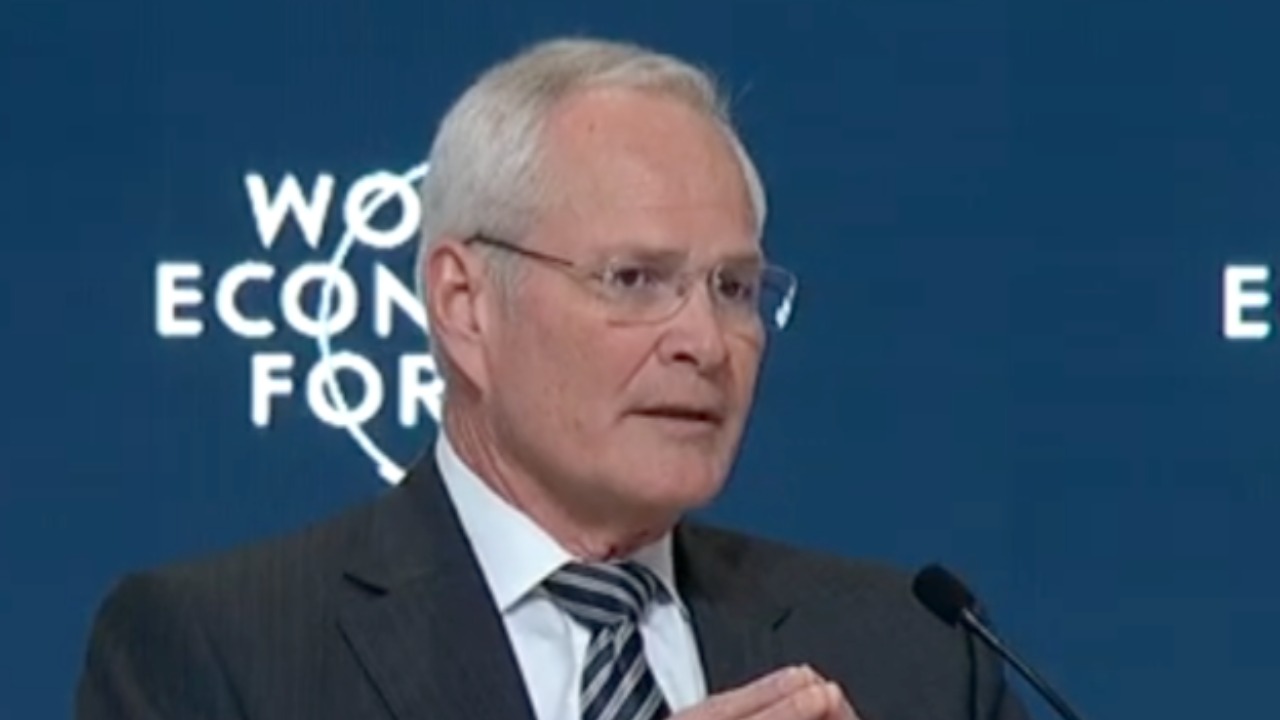
The chief executive of ExxonMobil used a closed-door White House session on energy policy to deliver a blunt verdict on one of the world’s most oil-rich nations, telling President Donald Trump that Venezuela is “uninvestable” under current conditions. His remark crystallized the gap between the administration’s push to ramp up production there and the deep skepticism that still defines how major oil companies view the country’s legal and commercial risks.
Behind that single word lies a collision of priorities: a White House eager to tap vast foreign reserves to bolster supply and lower prices, and corporate leaders who remember expropriations, arbitration fights, and broken contracts. I see the exchange as a stress test of Trump’s strategy for engaging the Venezuelan government and a revealing snapshot of how far Caracas still has to go to regain the trust of global capital.
The Oval Office pitch meets boardroom caution
When the ExxonMobil CEO sat across from President Trump in Jan, the message from the corporate side was not subtle. According to accounts of the meeting, the CEO of ExxonMobil told President Donald Trump that, if he looks at the legal and commercial framework in place in Venezuela today, the country is “uninvestable,” a word that captured the industry’s fear that contracts and property rights could again be upended without warning. That assessment came even as Trump pressed executives from ExxonMobil and ConocoPhillips to consider new projects, underscoring how the administration’s political calculus is running ahead of boardroom risk models that still flag unresolved disputes and opaque regulation as red lines, not footnotes, for any serious capital commitment, as reflected in the description of Exxon CEO.
The exchange did not happen in a vacuum. Earlier this year, Trump convened a group of Big Oil leaders to explore whether friendlier ties with the Venezuelan government could unlock new flows of crude to the United States, part of a broader effort to expand supply options beyond traditional partners in the Middle East. In that session, the CEOs of ExxonMobil and ConocoPhillips laid out a consistent theme: without credible guarantees on contract stability, protection from future expropriation, and resolution of outstanding claims from past arbitration cases, they could not justify large-scale investment, a stance detailed in coverage of What the Big. I read that as a clear signal that political enthusiasm in Washington will not, on its own, reopen the corporate checkbook.
Why Venezuela’s oil giant status is not enough
On paper, Venezuela should be irresistible to companies like ExxonMobil. The country sits atop the largest proven oil reserves on the planet, a geological jackpot that dwarfs many of its peers and once made it a central player in global energy markets. Yet its actual output and export role are far smaller than in past decades, a collapse driven by chronic underinvestment, mismanagement, and sanctions that have left pipelines, refineries, and fields in disrepair, as shown in data on Venezuela’s oil. When I weigh those fundamentals, I see a classic paradox: extraordinary resource wealth trapped behind extraordinary above-ground risk.
That risk is not just a matter of old headlines. For global investors, the country’s recent history of nationalizations, currency controls, and shifting legal regimes still looms large, and the broader political and economic environment remains fragile. Even as the Venezuelan government signals a desire to attract foreign capital again, the memory of past losses and the uncertainty over how any new agreements would be enforced keep many boardrooms wary. The result is that a nation that should be a cornerstone supplier is instead treated as a marginal, high-risk option, a perception that is evident in the cautious tone of international coverage of Venezuela. From an investor’s perspective, geology alone cannot compensate for a system that still struggles to guarantee basic commercial predictability.
Chevron’s lonely foothold and the licensing puzzle
One of the most telling details in the current landscape is that Chevron is the only major U.S. oil company still operating in Venezuela under a special license granted by the U.S. government. That carve-out has allowed Chevron to maintain a limited presence while its peers exited or froze activity, a reminder that Washington’s sanctions architecture, and the exceptions carved into it, now shape who can drill and who must stay away. In the White House meeting, Trump reportedly pointed to Chevron’s continued role as evidence that opportunities exist for others, even suggesting that if some companies hesitate, rivals could “take your place,” a line that reflects the administration’s willingness to use access as leverage, as described in reporting that notes how Chevron is the major U.S. operator still on the ground.
From a corporate risk standpoint, Chevron’s position cuts both ways. On one hand, it shows that carefully structured licenses and joint ventures can survive even in a highly politicized environment, offering a template that Trump and the Venezuelan government might hope to replicate with ExxonMobil and ConocoPhillips. On the other, the fact that only one major U.S. company has accepted that balance of risk and reward underscores how narrow the path still is. When I look at that contrast, I see Chevron’s foothold less as a green light for a broader rush back into the country and more as a controlled experiment, one that other firms are watching closely before they commit their own capital.
Exxon’s public stance and Trump’s assurances
Even as the ExxonMobil CEO used the word “uninvestable” in private conversation with Trump, the company has taken care to frame its public position in more diplomatic terms. In a Jan statement, ExxonMobil said it is “confident that with this Administration and President Trump working hand‑in‑hand with the Venezuelan government” there is a path to improve the financial situation in the country and create conditions that could eventually support investment. That language, which emphasizes collaboration between the Administration and President Trump and the Venezuelan authorities, suggests Exxon is leaving the door open to future deals if the legal and commercial framework can be strengthened, as outlined in the company’s own description of its perspective on the country.
Trump, for his part, has tried to reassure skeptical executives that any new arrangements with Caracas would be backed by robust protections. In discussions about a potential oil plan involving Venezuela, he has pressed companies to consider how durable those protections could be and argued that a renewed energy partnership would be “great for the United States,” positioning the effort as both an economic and strategic win. Yet the very question he raised, “How durable are the protections,” captures the core concern that still holds companies back, a concern highlighted in coverage of how Exxon calls Venezuela uninvestable as Trump pushes his oil plan. I read that tension as a reminder that political guarantees, no matter how emphatic, must be matched by enforceable legal mechanisms on the ground before corporate risk committees will sign off.
What “uninvestable” really means for Venezuela’s future
When the ExxonMobil chief used the term “uninvestable,” he was not simply offering a rhetorical flourish. In a separate public appearance in Jan, he elaborated that if executives look at the legal and commercial constructs and frameworks in place in Venezuela today, the country is, in his words, “uninvestable,” stressing that the problem lies in the durability and clarity of the rules rather than in the quality of the resource itself. That framing, captured in video of his comments on Venezuela, signals that the path to change is not about geology or even short term politics, but about building institutions that can convince global investors their capital will be protected over decades.
For Venezuela, the stakes could not be higher. Without a credible shift in how contracts are written, enforced, and honored, the country risks remaining a cautionary tale of squandered potential, sitting on vast reserves that do little to stabilize its economy or improve living standards. From my vantage point, the Exxon CEO’s blunt assessment should be read less as a permanent verdict and more as a conditional warning: if the Venezuelan government, working with the Administration and President Trump, can deliver a transparent, reliable framework, the label “uninvestable” can eventually be retired. Until then, the world’s biggest oil companies are likely to keep their distance, leaving Chevron’s narrow license as the exception that proves the rule.
More From TheDailyOverview

Grant Mercer covers market dynamics, business trends, and the economic forces driving growth across industries. His analysis connects macro movements with real-world implications for investors, entrepreneurs, and professionals. Through his work at The Daily Overview, Grant helps readers understand how markets function and where opportunities may emerge.

