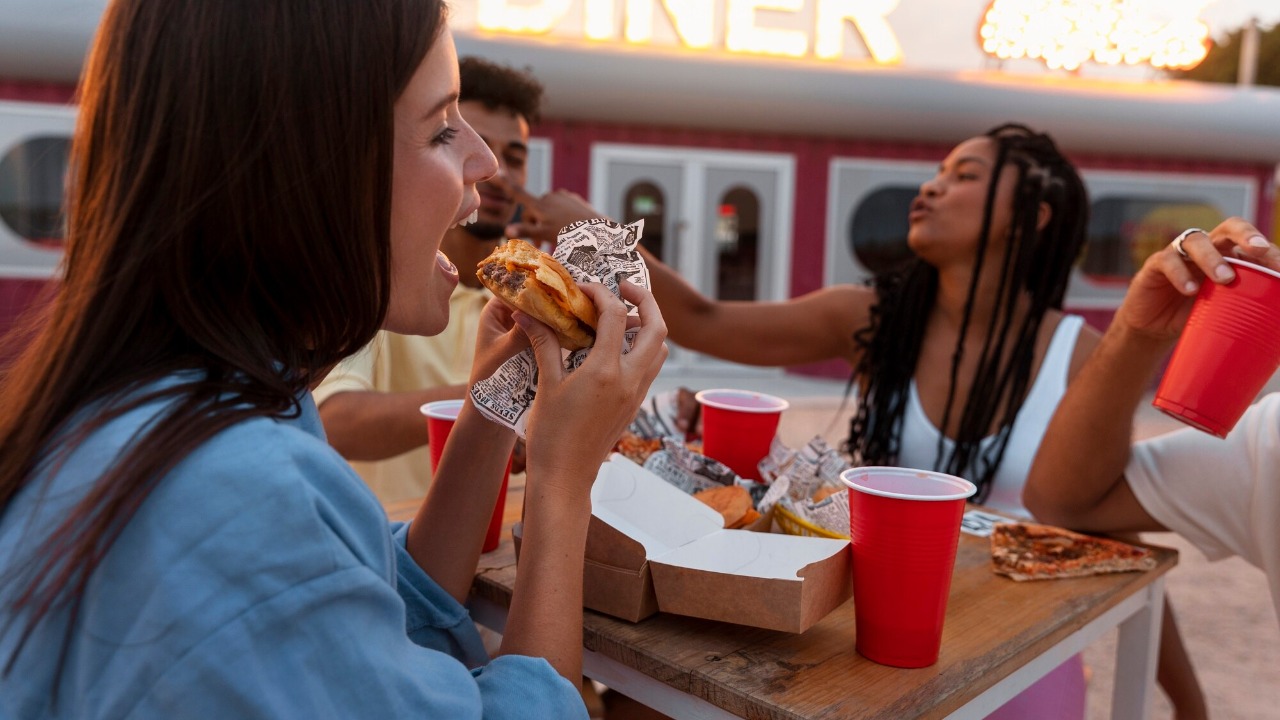
For decades, fast food functioned as the pressure valve in the American food budget, the place families could turn when groceries ran short and paychecks ran late. That bargain is breaking down. As menu prices climb and wages at the bottom fail to keep pace, low income diners are discovering that the drive thru no longer guarantees a cheap, filling meal.
The shift is reshaping how people eat, where they spend, and which brands win or lose. It is also exposing a deeper contradiction in the economy, where official measures of growth look solid while the very customers fast food chains once relied on are quietly cutting back.
The new math of a “cheap” meal
The core problem is simple: the cost of a basic combo has risen faster than the money in many workers’ wallets. I see that tension in survey data showing that 62% of Americans say they are eating fast food less often because it is too expensive, and 78% say dining this way has become a luxury rather than a default. Those are not the responses of people who feel they have endless room in their budgets, especially when the same research ties fast food spending to the rising cost of other living expenses and a sample size of 2,000 adults.
Behind those strained budgets sit familiar forces. Menu prices have been pushed higher by Inflation and increased labor costs, especially as chains adjusted to higher minimum wages in many states. At the same time, ingredients from meat to bread and even property costs have climbed, a trend summed up by the blunt observation that Just about everything that goes into a burger or taco now costs more. For low income households, where rent, gas and utilities already eat most of the paycheck, there is little slack left to absorb a pricier Big Mac.
From dollar menus to disappearing deals
For years, the industry’s answer to affordability was the value menu, a tightly curated list of items that promised a full stomach for pocket change. That model has eroded. At After numerous attempts beginning in 1991, McDonald’s built a reputation around low priced items, but the classic one dollar tier has largely vanished as costs rose. Industry analysts now talk openly about whether fast food dollar menus are a thing of the past, noting that the economics of selling full meals for a buck no longer add up when every input is more expensive.
That shift is visible on the ground. A Reddit user captured the mood with a blunt line, writing, “Yeah I think Chili’s prices are on par with like McDonalds now.” When a sit down chain like Chili is perceived as roughly equivalent in price to a drive thru burger, the old hierarchy of “cheap fast food, pricier casual dining” starts to blur. That perception is backed by reporting that McDonald’s and other fast food chains are charging more, creating an opening for Applebee and other casual brands to pitch themselves as better value for only a few dollars more.
Low income diners are quietly walking away
The people feeling this most acutely are the very customers fast food built its business on. I see that in coverage of how lower income diners are pulling back from McDonald’s and its peers even as President Trump touts affordability and strong economic numbers. Executives acknowledge that traffic from households with the least disposable income is weakening, a sign that official statistics about growth and employment are not translating into a sense of security at the drive thru window.
That disconnect is echoed in broadcast segments where anchors like Angelica Coronado of LA Time Studios spell out that low income customers can no longer afford fast food chains at the same pace. When a quick burger becomes a budget decision instead of an impulse, the social role of these restaurants changes. What was once the cheapest way to feed a family on a busy night now competes with home cooking, food banks and discount grocers, especially in neighborhoods where wages have not kept up with rent and transportation.
Apps, “value” menus and the new gatekeeping
In response, chains are not simply cutting prices across the board, they are restructuring how discounts work. Many are steering the best deals into loyalty programs and mobile apps, a strategy that lets them target promotions while nudging customers to spend more. One analysis notes that Almost every fast food chain now has an app, and that When people use those apps, they are often enticed into larger orders despite the advertised savings. For someone with a prepaid phone plan or limited data, that digital gatekeeping can make the cheapest prices effectively inaccessible.
At the same time, influencers and deal hunters are teaching followers how to work the system. One viral guide frames a delivery promotion as a “food hack,” arguing that Fast food apps and aggregator platforms like Uber Eats now hide exclusive discounts that savvy customers can leverage to save money. Yet those savings often come with strings attached, such as minimum order sizes or limited time bundles that encourage people to buy more than they planned, a pattern that hits hardest when every dollar counts.
Rivals rush into the “value” vacuum
As traditional fast food raises prices, competitors are racing to claim the value mantle. Casual chains are leaning into limited time bundles and pop culture tie ins, with reporting that from McDonald’s to Applebee and IHOP, established brands are chasing fandom and discount driven loyalty to win back cost conscious diners. The pitch is simple: if a burger and fries at a drive thru now cost close to a sit down meal, why not choose the place with table service, drink refills and a broader menu.
Fast casual operators are also flooding the zone with targeted discounts. Chains are pushing deals on their own loyalty apps, They are cutting prices on aggregator sites and even sending out old fashioned coupons to lure back lapsed guests. Meanwhile, Taco Bell is trying to hold onto its reputation as a budget option, with one report noting that Meanwhile, Taco Bell is leaning in on its value menu and promoting 10 items for $3 or less. On its own site, Taco Bell highlights mix and match boxes and budget friendly tacos, while McDonald’s leans on app exclusive deals and limited time bundles to keep price sensitive customers from drifting away.
When fast food stops feeling affordable
The cultural shift is as important as the economic one. When a majority of diners say fast food feels like a splurge, it undercuts the old narrative that these chains are the safety net of the food system. In one LendingTree analysis, reporter Mary Cunningham notes that 60 M consumers are rethinking their relationship with drive thru meals as prices rise alongside rent, car payments and credit card balances. That reevaluation is not just about taste or health, it is about whether a family can justify twenty or thirty dollars on burgers when the same money might cover a utility bill or a bag of groceries.
In that context, the line between fast food and casual dining keeps blurring. Applebee’s and Chili’s now market two for twenty style deals that directly compete with combo meals, while social media users insist that Chili’s prices are on par with McDonald’s. For low income Americans, the message is stark: the old promise of a quick, cheap meal on every corner is fading, replaced by a maze of apps, limited time offers and “value” menus that often feel anything but. Until wages catch up or prices come down, fast food will remain what many already say it has become, not a budget staple, but an occasional treat.
More From TheDailyOverview

Cole Whitaker focuses on the fundamentals of money management, helping readers make smarter decisions around income, spending, saving, and long-term financial stability. His writing emphasizes clarity, discipline, and practical systems that work in real life. At The Daily Overview, Cole breaks down personal finance topics into straightforward guidance readers can apply immediately.