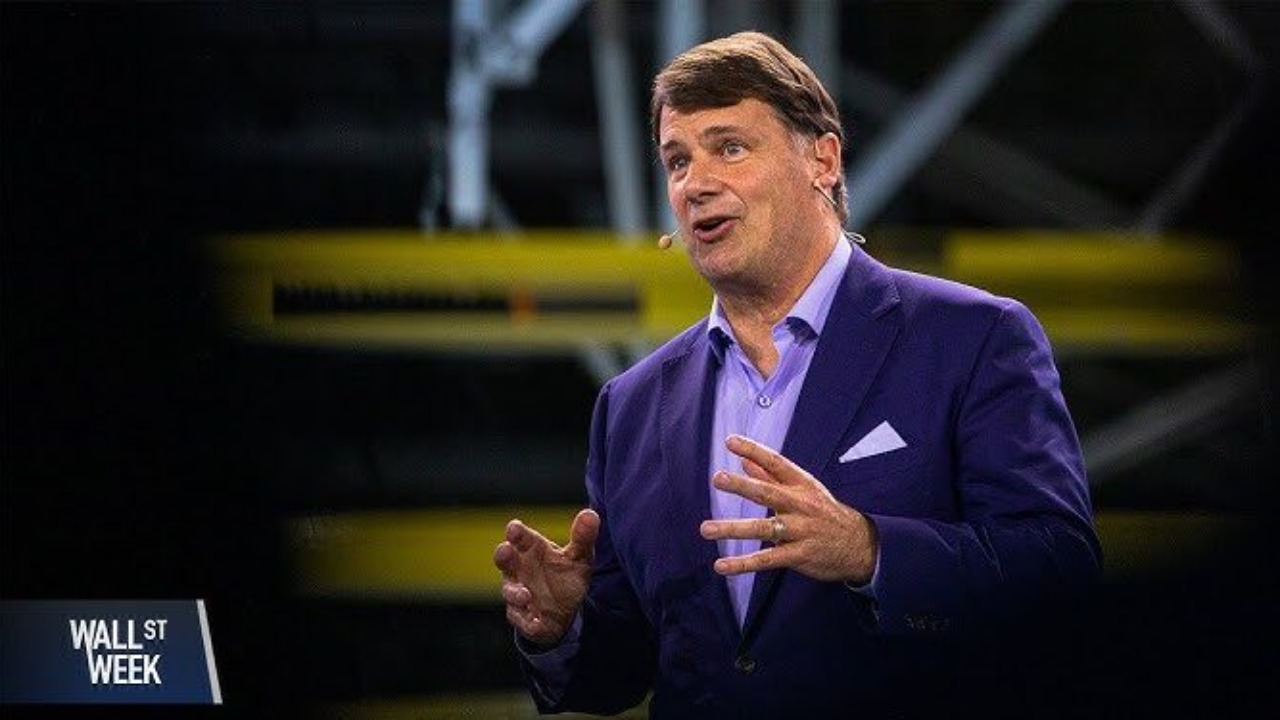
Ford’s top executive is sounding an alarm that goes far beyond one company’s hiring woes. While political debates fixate on inflation and interest rates, a quieter crisis is unfolding in the country’s industrial backbone: thousands of high-paying skilled jobs are sitting empty, even as workers say they are desperate for better pay.
At the center of that contradiction is a blunt warning from Ford CEO Jim Farley, who says the automaker cannot fill roughly 5,000 six-figure mechanic roles and that “we are in trouble in our country” if it cannot staff the very jobs that keep modern vehicles on the road. His concern is not just about Ford’s service bays, but about whether America can still train, attract, and retain the skilled workers that a high-tech manufacturing economy requires.
Farley’s stark warning and the 5,000-job red flag
When a chief executive talks about a labor shortage, it is usually code for higher costs or slower production. When Ford CEO Jim Farley says he has around 5,000 open mechanic jobs that pay roughly $120,000 a year and still cannot find enough qualified people, it lands as something else entirely: a red flag about the country’s ability to match workers with opportunity. Farley has framed the situation as a national problem, arguing that if a marquee industrial employer cannot fill stable, high-wage roles, then something fundamental in the education-to-work pipeline is breaking down.
Farley has been explicit that these are not hypothetical positions on a spreadsheet, but real openings in Ford dealerships and service centers that remain vacant despite the promise of six-figure pay. He has described the roughly 5,000 mechanic jobs paying $120K as evidence that the country is “in trouble,” and he has repeated that warning in multiple public appearances. The fact that a veteran industrial leader is talking less about quarterly earnings and more about whether America can still produce enough skilled mechanics is a measure of how serious he believes the situation has become.
What a modern Ford mechanic actually does
It is tempting to picture a dealership mechanic as someone with a wrench and a grease-stained rag, but the work Farley is trying to staff looks much closer to a hybrid of software technician and electrical engineer. Today’s Ford vehicles, from the F-150 to the Mustang Mach-E, are rolling computers packed with sensors, advanced driver-assistance systems, and complex battery management software. Diagnosing a problem in a late-model pickup or an electric crossover often starts with a laptop and a diagnostic interface, not a socket set.
That shift means the “mechanic” roles Ford is advertising demand a blend of traditional mechanical skill and fluency with electronics, coding-style diagnostics, and high-voltage safety procedures. Farley has stressed that these are not entry-level oil-change jobs, but specialized positions that require extensive training and the ability to keep up with rapidly advancing vehicle technology. Reporting on the company’s struggle to fill mechanic jobs in a high-tech service environment underscores how the role has evolved into a skilled trade that sits at the intersection of software and steel.
Why six-figure jobs are going unfilled
On paper, a $120,000 salary for a skilled trade should be an easy sell, especially in an era of high housing costs and persistent anxiety about job security. The fact that Ford CEO Jim Farley still has around 5,000 open positions suggests that pay alone is not enough to close the gap. The barrier is not just whether people want the jobs, but whether they have the training and credentials to do them, and whether they even see this path as attractive compared with white-collar alternatives.
Farley and others have pointed to a shortage of qualified applicants, not a lack of interest from Ford itself in hiring. The company is signaling that it is willing to pay six figures for the right talent, yet the pipeline of workers who can handle complex diagnostics, electric drivetrains, and software-heavy systems is too thin. That mismatch between the skills employers need and the preparation many workers receive is at the heart of why these six-figure roles remain vacant, even as public debate often focuses on low-wage service jobs instead of the skilled positions that quietly go begging.
The education and training gap behind the shortage
Behind Farley’s warning is a blunt assessment of the country’s training infrastructure. He has argued that part of the problem is a long-running neglect of vocational education, which has left too few young people with the hands-on skills needed for modern manufacturing and automotive work. In his view, the United States spent decades steering students toward four-year degrees while underinvesting in the trade schools, apprenticeships, and community college programs that could have produced the technicians Ford now needs.
Farley has linked the shortage of mechanics directly to a lack of education and training, noting that, despite the pay on offer, the company cannot simply hire its way out of a skills deficit that has been building for years. He has described how trade schools and community colleges are not keeping up with the pace of technological change in the auto industry, leaving graduates underprepared for the realities of high-voltage systems and software-driven diagnostics. When he says “we are in trouble in our country,” he is pointing as much at classrooms and training centers as at empty service bays.
How America fell out of love with skilled trades
The shortage of Ford mechanics is not happening in a vacuum. For years, cultural and policy signals have nudged young Americans toward four-year universities as the default path to success, often framing skilled trades as a fallback rather than a first choice. That hierarchy has consequences: fewer students enroll in automotive technology programs, fewer high schools maintain robust shop classes, and fewer parents encourage their children to consider a career that involves tools instead of laptops, even when the pay can rival or exceed many office jobs.
Farley’s frustration reflects that broader shift. When he talks about unfilled mechanic roles, he is also talking about a generation that was told to chase software engineering or finance while overlooking the fact that a master technician can earn a six-figure income without taking on the debt of a four-year degree. The persistent stigma around blue-collar work, combined with the rapid technological evolution of vehicles, has left the skilled trades with an image problem at the very moment they require more sophistication than ever. The result is a cultural mismatch in which the country celebrates innovation but undervalues the people who physically keep that innovation running.
Comparisons with China and the global skills race
Farley has not limited his concern to domestic policy. He has drawn a sharp contrast between the United States and China, warning that America is “in deep trouble” when it comes to the relative strength of its skilled workforce. In his view, China has been more deliberate about building a pipeline of technicians and manufacturing specialists who can support its industrial ambitions, while the United States has allowed its own training systems to erode.
That comparison is not just rhetorical. Farley has framed the shortage of mechanics as part of a larger competitive challenge, arguing that a country that cannot field enough skilled workers will struggle to lead in advanced manufacturing, electric vehicles, and other strategic industries. His comments about being “in deep trouble when you compare us to China” highlight how a gap in vocational education can translate into a gap in national competitiveness. Reporting on his warning about China and the critical shortage of skilled workers underscores that he sees the issue as a strategic vulnerability, not just a staffing headache.
What unfilled bays mean for Ford customers and dealers
For Ford drivers, the shortage of mechanics is not an abstract macroeconomic story. It shows up in longer wait times for repairs, difficulty booking service appointments, and the frustration of seeing vehicles sidelined for days while dealerships scramble to find qualified technicians. Farley has described how “those jobs are out there” in Ford dealerships, with 5,000 openings in service bays that should be generating revenue and keeping customers loyal.
For dealers, every unstaffed bay is lost income and a potential hit to the brand’s reputation. A modern Ford store relies on service revenue from vehicles like the F-150, Bronco, and Explorer to smooth out the ups and downs of new-car sales. When there are not enough mechanics to keep those bays humming, dealers lose both immediate repair dollars and long-term customer trust. Farley’s emphasis on the number of open positions is a way of quantifying that risk: each vacancy is a reminder that even the most advanced vehicle lineup is only as strong as the technicians who can diagnose a check-engine light or safely service a high-voltage battery pack.
Why Farley calls this “America’s” problem, not just Ford’s
Farley’s language has been strikingly national in scope. He has not framed the shortage of mechanics as a quirk of Ford’s HR strategy, but as a symptom of deeper structural issues in the American economy. When he says America is “in trouble,” he is pointing to a labor market where high-paying skilled jobs go unfilled while workers in other sectors struggle with low wages and precarious employment. That disconnect raises uncomfortable questions about how effectively the country is aligning its education system, its cultural expectations, and its economic needs.
His warning also lands in a political context where both parties talk about rebuilding manufacturing and strengthening the middle class, yet the nuts and bolts of vocational training often receive less attention than headline-grabbing subsidies or tax incentives. The fact that a major industrial employer is publicly lamenting its inability to hire enough mechanics suggests that policy efforts to revive American industry will falter if they are not matched by equally serious investments in people. Farley’s repeated references to the 5,000 mechanic jobs paying $120K/year that remain unfilled are his way of putting a hard number on that gap between rhetoric and reality.
What it would take to close the gap
Solving the shortage of Ford mechanics will require more than a few signing bonuses. It will mean rebuilding a culture that respects skilled trades, expanding access to high-quality vocational programs, and making sure those programs are tightly aligned with the technologies actually used in modern service bays. That could involve deeper partnerships between automakers and community colleges, more paid apprenticeships that let students earn while they learn, and clearer pathways for high school students to move directly into well-paid technical careers without being told they are settling for less.
Farley’s warnings, and the stubborn reality of thousands of unfilled six-figure jobs, suggest that the stakes are larger than one company’s staffing chart. If America cannot train enough people to maintain its vehicles, operate its factories, and service its infrastructure, then its ambitions in areas like electric vehicles, advanced manufacturing, and supply chain resilience will remain constrained by a simple fact: there are not enough skilled hands to do the work. The 5,000 empty mechanic positions at Ford are a vivid snapshot of that challenge, and a test of whether the country is willing to rethink how it values and cultivates the people who keep its economy running.
More From TheDailyOverview
- Tennessee loses $2.6B megafactory and faces major layoffs
- Retired But Want To Work? Try These 18 Jobs for Seniors That Pay Weekly
- What to do with your pennies after the U.S. stops minting them
- Home Depot CEO warns of a troubling customer trend in stores

Grant Mercer covers market dynamics, business trends, and the economic forces driving growth across industries. His analysis connects macro movements with real-world implications for investors, entrepreneurs, and professionals. Through his work at The Daily Overview, Grant helps readers understand how markets function and where opportunities may emerge.

