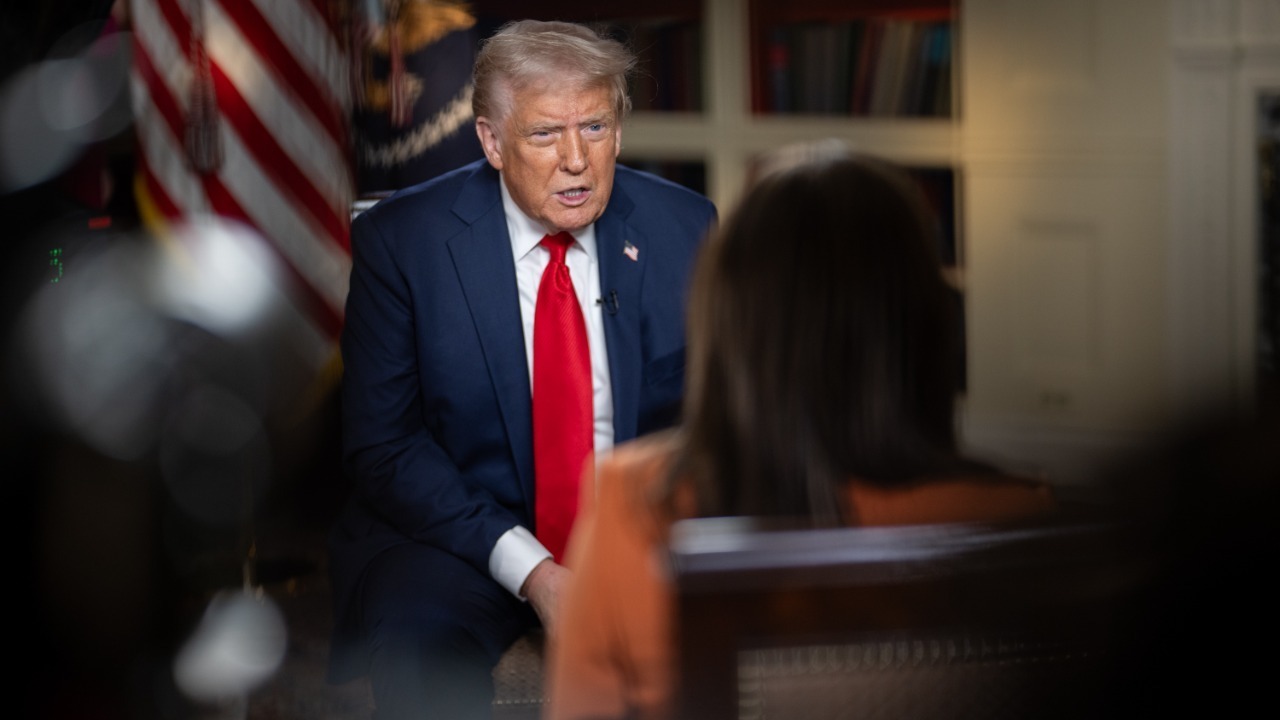
When Fox News cut away from one of Donald Trump’s live appearances to correct his claims in real time, it marked a striking moment in the long, complicated relationship between the president and the television networks that helped define his political rise. The image of a control room deciding to pull the plug as Trump insisted the race was already decided captured a broader shift: the era when his declarations aired unfiltered, even when he said “it’s over,” is giving way to a more cautious, sometimes confrontational, approach.
What looks like a single jarring cutaway is really the product of years of mounting tension over how to handle Trump’s false statements about elections and power. From the first time major anchors interrupted his premature victory speech to the internal battles that later erupted inside Fox News, each on-air decision has chipped away at the old assumption that a president’s words must always run live and uninterrupted.
From unfiltered rallies to live fact-checks
The most vivid recent example of this new posture came in South Carolina, when Fox News producers decided to step in as Trump spoke to supporters. During that rally, he again leaned on familiar themes about his political strength and the state of the race, only to have the network abruptly cut away and explain to viewers that his characterization of the electoral landscape did not match the facts. That Moment Fox News decision, reported on Feb 23, 2024, underscored how even a channel long associated with his base is now willing to interrupt him when his narrative diverges from reality in key battleground states.
That South Carolina move did not come out of nowhere. Earlier that same weekend, another broadcast from the state showed how far the network was prepared to go. During his speech ahead of the GOP primary against Nikki Haley, Trump again asserted that the 2020 elections were rigged and folded those grievances into a broader attack on inflation, energy prices, and his successor’s record. In the middle of that familiar script, Fox News cut off the live feed for fact-checking, a choice that highlighted how producers now treat his recurring claims about the 2020 election as assertions that must be challenged rather than simply carried. The decision to step away during that During his speech ahead rally on Feb 24, 2024, signaled that even friendly outlets now see a cost in airing his election narrative without immediate correction.
The first time networks said “stop”
The instinct to pull away from Trump mid-sentence first crystallized on election night in 2020, when he walked into the White House briefing room and tried to claim victory while millions of votes were still being counted. As he spoke, he insisted that he had already won and that any further counting would somehow be illegitimate. On Nov 4, 2020, CNN anchor Jake Tapper responded bluntly that “Almost everything President Trump said in his declaration of victory was not true,” a line that captured the new willingness to call out a sitting president’s falsehoods in real time. That moment, described in coverage of how Almost everything President Trump said was challenged on air, marked a turning point in how networks framed his claims about the vote.
Other anchors went further, cutting away entirely as Trump continued to speak from the White House. One network host told viewers, “We’re listening to the President speaking at the White House, but we’ve got to dip in here because there have been several statements that are just frankly not true,” before explaining that there was no evidence the election was being rigged or stolen by the Democrats. That decision, also reported on Nov 4, 2020, showed that producers were prepared not only to rebut Trump but to deny him the uninterrupted platform he had long enjoyed. The choice to “dip in” and correct the president’s words in real time, as detailed in accounts of how We’re listening to the President but must fact-check him, set a template that would later be applied to his post-presidency rallies and statements.
Election week and the split-screen coverage of Trump’s claims
Those early cutaways fed into a broader debate inside newsrooms about how to handle Trump’s false statements as the 2020 count dragged on. Some outlets continued to carry his remarks live, then layered on heavy fact-checking afterward, while others decided that the risk of amplifying misinformation outweighed the news value of airing him in full. On Nov 5, 2020, one detailed account described how Fox and CNN both covered a speech filled with false claims about the vote, while MSNBC pulled away, creating a split-screen moment in which viewers of different channels saw radically different treatments of the same event. The coverage decisions represented a clear divide over whether the remarks of the U.S. president, considered the most powerful person in the world, should be broadcast in full when they were “falsehood-laden,” a phrase used in reporting on how The coverage decisions represented a new standard for live political coverage.
International outlets were grappling with the same dilemma. As Trump spoke again from the White House, repeating allegations that the election was being stolen, several major U.S. networks and global broadcasters cut away or overlaid his remarks with on-screen corrections. One report on Nov 5, 2020, noted that Donald Trump’s speech at the White House was not broadcast in full by a number of major U.S. TV networks, which cited false statements about the integrity of the vote as the reason. Those producers framed their decision as a duty to prevent viewers from being misled, even as they acknowledged the extraordinary nature of interrupting a sitting president. The account of how Key points included networks cutting away from Donald Trump at the White House captured the sense that the media was, in effect, telling viewers that his time as the unchallenged narrator of American politics was over.
Inside Fox News, a civil war over Trump’s narrative
While viewers saw only the on-air decisions, internal messages later revealed that Fox News was deeply divided over how to handle Trump’s election claims. Legal filings in the Dominion Voting System defamation case pulled back the curtain on private exchanges among some of the network’s biggest stars and executives. On Mar 8, 2023, reporting on those documents described how texts and emails captured by Dominion Voting System showed hosts privately acknowledging that the chances of a Trump victory were remote, even as some segments continued to entertain allegations of widespread fraud. Those internal communications, detailed in coverage of how These exchanges exposed a civil war inside the network, help explain why later producers were quicker to cut away when Trump repeated the same claims.
The tension was not only about facts but also about audience expectations. After Fox projected Joe Biden the winner in key states, some viewers rebelled, and the network faced pressure from both its base and its own talent. On Nov 7, 2020, one analysis noted that Fox had stood by its call that Joe Biden was elected president, even as the overall tone from the network remained largely supportive of Trump. The same reporting emphasized that there was no real indication that this support would change, despite the internal recognition that his path to victory was effectively closed. That paradox, captured in accounts of how Fox has stood by that call while still backing Trump, set the stage for the later, more assertive fact-checks: the network was trying to balance loyalty to a powerful political figure with the legal and reputational risks of repeating his falsehoods.
When conservative TV starts looking away
By 2024, the cumulative effect of these clashes was visible in the way conservative-leaning outlets treated Trump’s appearances. Instead of carrying every rally from start to finish, some networks began dipping in and out, focusing on shorter clips and panel reactions rather than giving him an open mic. On Aug 20, 2024, one report described how Trump, who is typically animated and energetic at rallies and campaign appearances, struck a starkly different tone on television as his legal problems in New York mounted, and how conservative TV networks were giving him less sustained attention. That shift, outlined in coverage of how Trump was losing the attention of conservative TV networks, suggested that the calculation had changed: his presence no longer guaranteed ratings that outweighed the editorial and legal headaches.
At the same time, Fox’s own history with Trump’s election claims made it harder to revert to the old model of uncritical coverage. The network had already faced a costly lawsuit tied to false statements about voting technology, and its internal messages showed that executives were acutely aware of the risks of repeating unfounded allegations. Against that backdrop, the decision to cut away from Trump in South Carolina, to correct him when he implied that the race was already decided or that the 2020 election was stolen, looked less like a sudden break and more like the logical endpoint of years of bruising battles. When a control room now decides to interrupt the president and tell viewers that his version of events is not accurate, it is drawing on a pattern that stretches from the first time anchors said his declaration of victory was “not true” to the more recent moments when even his allies on television quietly decide that, for them, it really is over.
More From TheDailyOverview
- Dave Ramsey says these two simple questions show whether you’re rich or poor
- Retired But Want To Work? Try These 18 Jobs for Seniors That Pay Weekly
- IRS raises capital gains thresholds for 2026 and what’s new
- 12 ways to make $5,000 fast that actually work

Grant Mercer covers market dynamics, business trends, and the economic forces driving growth across industries. His analysis connects macro movements with real-world implications for investors, entrepreneurs, and professionals. Through his work at The Daily Overview, Grant helps readers understand how markets function and where opportunities may emerge.

