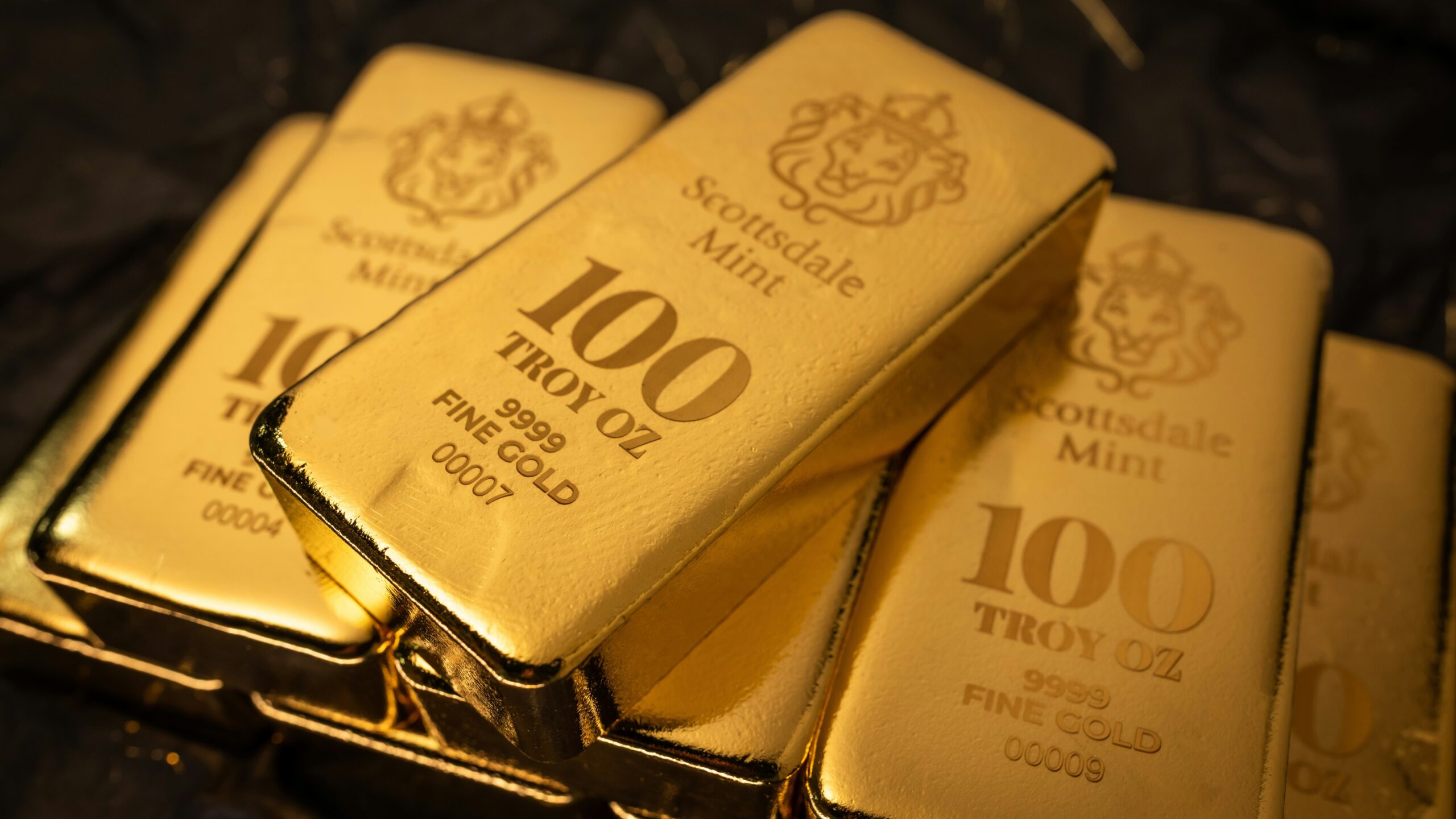
Gold has smashed through the psychological ceiling of $5,000 an ounce, turning a long‑running bull market into a flashing warning light for the global economy. The move caps a two‑year climb that has transformed the metal from a quiet portfolio hedge into a front‑page barometer of fear about debt, inflation and political risk. For investors and policymakers alike, the question now is not just how high gold can go, but what this price is saying about the health of the financial system built around government bonds and paper money.
The surge is historic in scale and speed. After starting 2025 slightly above $2,600 and then racing past $4,000 per ounce, gold has now vaulted beyond $5,000 and even briefly traded above $5,100 per ounce, levels that would have sounded fanciful only a few years ago. That kind of move is rarely just about jewelry demand or speculative froth; it usually signals deep unease about what comes next for growth, currencies and government finances.
From quiet hedge to $5,100 shock
The first milestone was psychological as much as financial: spot and futures prices for Gold burst through $5,000 per ounce, setting a new all‑time high and confirming that the metal’s breakout that began in late 2025 had turned into a full‑blown stampede. One detailed review of the market notes that the gold price set a new record in 2026 of over US$5,000, underscoring how far it has run from the era when it traded around $1,280 per troy ounce. For context, analysts who, in Nov, were explaining Why a $5,000 target was plausible now find themselves describing reality rather than a bull‑case scenario.
The rally has not stopped at that round number. Market data show that the price of gold blasted past $5,100 per ounce on Monday, with one analysis of Gold and Silver describing $5,100 as a new all‑time high and part of a pattern of New Record Highs. Separate reporting from Jan, citing Gold marching to record levels above $5,100 on Monday, ties that spike directly to safe‑haven demand as investors look for shelter from international tensions and financial stress. In other words, this is not a quiet grind higher; it is a rush.
The “perfect storm” driving the rush into bullion
Behind the price action sits a convergence of forces that I see as a classic “fear trade.” Analysts tracking the move describe a perfect storm of geopolitical risk, inflation worries and central‑bank buying that has pushed Gold prices past $5,000 per ounce in Jan 2026, with one breakdown of the Driving the Surge highlighting how $5,000 per ounce has become a magnet for nervous capital. Another overview of the Gold Price Record High 2026 stresses that What is Driving the $5,000 Surge is not a single shock but a layering of concerns about growth, currencies and conflict that has turned the metal into a default refuge.
Monetary policy and the dollar are amplifying those pressures. Reporting on the latest spike notes that Demand has been fueled by a weaker US currency, higher‑than‑expected inflation and predictions the Fed will further cut interest rates, all of which make it more attractive to bet on precious metals instead of cash or low‑yielding bonds. One detailed look at how Demand has shifted points directly to expectations around the Fed, while another analysis of the 2026 outlook notes that Gold started 2025 slightly above $2,600 before soaring to above $4,000 per ounce, and that Reliance on gold as a hedge has only deepened as rates fall. That same Gold snapshot shows how quickly the metal has repriced the new macro environment.
Safe‑haven panic and the bond‑market warning
What makes this episode especially ominous is where the money is coming from. Analysts tracking flows say Gold smashed through $5,000 as investors grow nervous about global debt, with one report quoting Analysts who argue that shaky public finances and rising borrowing costs are pushing savers out of government paper. A closer look at the move, under the headline that Gold tops $5000 in a warning for government bonds, frames the surge as a direct challenge to the perceived safety of Treasurys and other sovereign debt, a view echoed in coverage that urges readers to Follow Huileng Tan on how bond markets are reacting.
Safe‑haven demand is also being stoked by political brinkmanship. One detailed account of the futures market notes that the price of Gold topped $5,000 as traders weighed the risk of a U.S. government shutdown and the broader implications of fiscal standoffs, a dynamic that has left stock indexes “barely nudged up 1%” while bullion has surged. That same analysis of how Gold Surges Past $5,000 for the First Time underlines how quickly political risk can spill into commodity markets. When investors start treating bullion as a better store of value than the obligations of major governments, it is hard to avoid the conclusion that confidence in the system is eroding.
Geopolitics, central banks and the new gold order
Geopolitical tension is the other accelerant. Coverage of the latest spike repeatedly ties the move to international strains, with one Jan report explaining that Gold continues to hit record highs as conflicts and trade frictions push investors toward assets that are nobody’s liability. A detailed feature asking Gold breaks $5,000: What fuels the rally, where will it end? notes that What is driving the rally is not only fear but also structural shifts, including central banks in emerging markets adding to their reserves and new categories of investors entering the market, a pattern echoed in a separate Gold analysis that highlights how new investors are being drawn in.
On the ground, the safe‑haven rush is visible from trading floors to refineries. One vivid report describes how One‑ounce gold bullion bars lie ready for stamping during production at ABC Refinery in Sydney in Oct, a snapshot of physical demand that accompanies the price spike. That same account notes that Gold surged past $5,000 an ounce on a wave of safe‑haven buying, a story mirrored in another piece on how Gold blasts past $5,000 to a record high on safe‑haven rush. When investors are willing to pay record prices for metal stamped at ABC Refinery rather than hold cash or bonds, it signals a deeper shift in how they perceive political and financial risk.
Bubble risk, forecasts and what $5,000 says about the future
With prices at these levels, the debate has shifted from whether gold is undervalued to whether it is in a bubble. One seasoned market observer, writing under the banner Investors’ bearishness is often overdone, By Mark Hulbert There is widespread concern about a bubble, captures the mood of a market that has seen repeated record highs. His work, collected in a profile of Investors, suggests that while sentiment can overshoot, the underlying drivers of this rally are real. At the same time, a structured scenario analysis labeled Moderate Bull Case If geopolitical risks increase, inflation stays elevated and central banks remain active buyers argues that gold may push even higher, with some forecasters having raised their targets to reflect that possibility, as laid out in a Moderate Bull Case scenario.
Concrete forecasts are catching up with the tape. Analysts at Metals Focus, cited in a piece asking What’s next?, forecast gold prices to peak about 500 in 2026 on a dollar basis, and in the same discussion of What comes after $5,000 they sketch out scenarios that include a dollar gold price around $7,325 if conditions worsen. That forward‑looking What analysis sits alongside more cautious takes that remind readers that past spikes have been followed by long periods of stagnation. For now, though, the combination of a record high above $5,000, a recent trade above $5,100 and forecasts that still point higher suggests that the terrifying message from the gold market is less about short‑term froth and more about a long‑term loss of faith in the promises embedded in government bonds and fiat currencies.
More From TheDailyOverview
*This article was researched with the help of AI, with human editors creating the final content.

Grant Mercer covers market dynamics, business trends, and the economic forces driving growth across industries. His analysis connects macro movements with real-world implications for investors, entrepreneurs, and professionals. Through his work at The Daily Overview, Grant helps readers understand how markets function and where opportunities may emerge.

