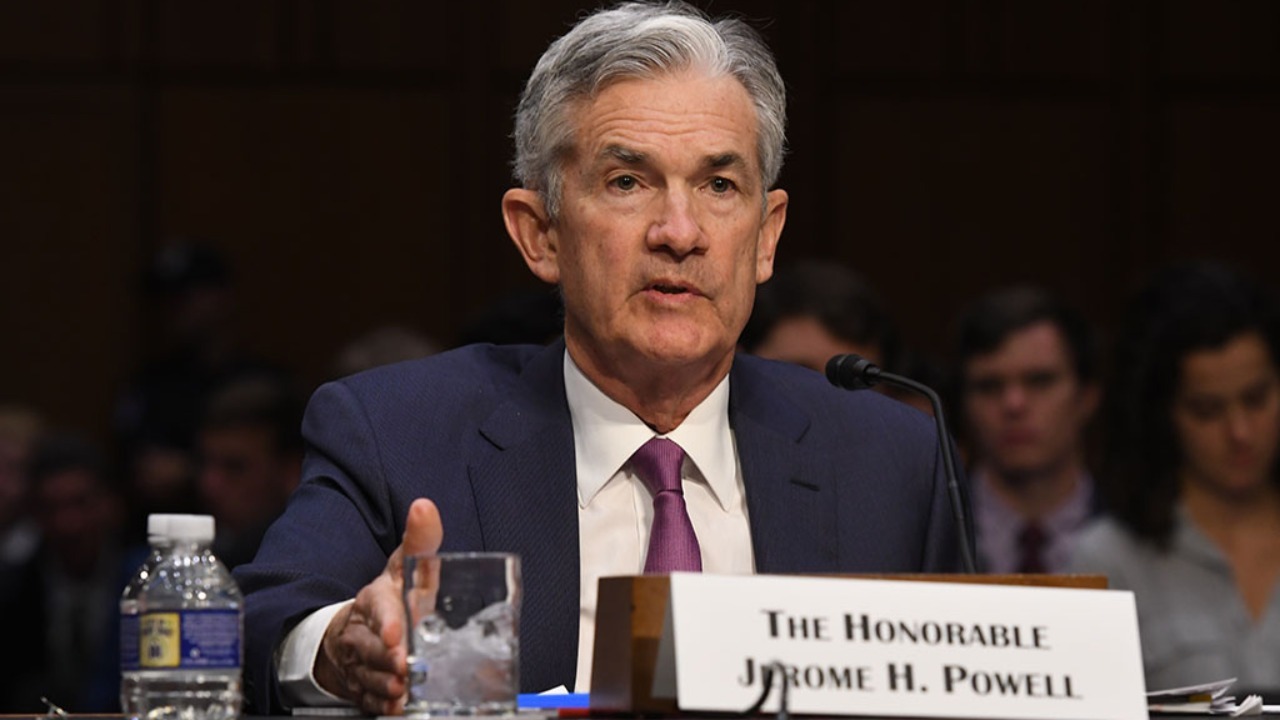
Gold’s vertical climb has turned a sleepy hedge into the loudest signal on traders’ screens, even as Jerome Powell insists it is not a verdict on the Federal Reserve. With bullion smashing through levels that once looked like distant tail risks, the move is too large, too fast and too globally synchronized for markets to dismiss as a quirky sideshow. If the Fed chair shrugs, investors who ignore what gold is saying about confidence, currencies and policy credibility do so at their own risk.
The shock is not just the price, but the context: a world of record public debt, a sliding dollar and mounting doubts about how long the current policy mix can hold. I see the surge as a referendum on the intersection of politics, deficits and monetary strategy, and the message is far more complicated than a simple bet on inflation.
Gold’s parabolic move is a macro warning, not a niche story
Gold is no longer grinding higher, it is repricing. Spot bullion has vaulted above $5,500, a level that would have sounded fanciful even to committed gold bugs a few years ago. Earlier this week, Spot gold rallied nearly 2% to around $5,069 during one session, underscoring how quickly the market has shifted from steady gains to a full-blown melt-up. Even after a bout of profit taking, the gold price today is only “slipping” from record highs, with traders treating the pullback as a pause after a historic January spike rather than the end of the move, according to one account of the Jan action.
What makes this surge systemically important is that it is not confined to Western futures markets or a handful of speculative funds. International benchmarks show the metal up roughly 20% at the beginning of 2026, with Customers in places like Qionghai City of south China’s Hainan Provin crowding into jewelry shops as household demand joins institutional flows. When a supposedly inert store of value starts behaving like a high beta tech stock, and it does so across continents, I read that as a macro signal about trust in the monetary and political regime, not a niche commodity story.
Powell’s cool dismissal clashes with the market’s crisis-of-confidence trade
Jerome Powell has been at pains to play down the message in the metal. Asked directly whether the United States is “losing credibility” as gold and silver hit record highs, the Fed chair surprised some observers by brushing off the idea that bullion is a barometer of confidence, insisting instead that inflation expectations remain consistent with the 2% target, according to one detailed account of Fed Chair Powell’s remarks. In a separate exchange, he again downplayed the rally even as gold hit another record high and silver reached a multiyear peak, a stance that one report described as “a dismissal” of the idea that precious metals are flashing a warning about policy or the dollar, capturing the tension with the phrase Another record high, a dismissal from the Fed chair.
Markets, however, are trading as if something deeper is at work. Analysts have framed the move above $5,000 as part of a “crisis of confidence in the Trump administration” that is rattling global markets, with investors treating gold as an “alternative” to a destabilized dollar and to Washington’s fiscal trajectory, according to one account of the crisis of confidence narrative. Another analysis argues that markets should care about gold’s surge even if the Fed does not, warning that prices are sending a message about policy credibility and risk appetite that investors ignore at their peril, a point underscored in a piece bluntly titled that Markets should care about gold’s surge.
Deficits, the dollar and the Trump factor behind the rally
Under the surface, the drivers of this move look less like a simple inflation hedge and more like a referendum on U.S. fiscal and political risk. Analysts point to the combination of large and persistent budget gaps, the policy agenda of President Donald Trump and concerns about the long term value of the dollar as key ingredients in the rally above $5,500. One detailed breakdown explicitly links “Trump, US Deficits, and the Future of Gold” to the structural erosion of confidence in paper assets, arguing that the administration’s fiscal plans, including the so called One Big Beautiful Bill Act, have reinforced the appeal of hard assets for investors worried about long term debt sustainability.
The currency backdrop is amplifying that story. The dollar has slipped to a four year low even as gold and silver have surged to further record highs, a move that unfolded after Fed Chair Powell again downplayed the metal rally, according to one account of how the dollar slipped. That combination, a weaker greenback and a central bank that appears relaxed about a soaring gold price, is precisely the sort of environment in which investors start to question whether the traditional hierarchy of safe assets still holds. When the world’s reserve currency looks less solid and the fiscal anchor is in doubt, the yellow metal tends to reclaim its role as a parallel vote on policy.
Central banks, ETFs and the institutionalization of gold demand
What distinguishes this cycle from past gold spikes is how deeply institutional the demand has become. Research from one major bank notes that gold prices already soared in 2025, driven by tariff uncertainty and strong demand from ETFs and central banks, and that this year’s surge builds on that foundation of structural buying, as outlined in a broad review of Gold markets. The same research highlights that, while the rally has been dramatic, gold still plays a familiar role as a hedge in times of geopolitical stress, a point reinforced in a separate passage that emphasizes how the metal tends to outperform during episodes of market anxiety and policy uncertainty, captured in the observation that Looking at history, gold rallies cluster around such periods.
Institutional forecasts are now racing to catch up with the tape. UBS has publicly adjusted its expectations, with UBS Raises Gold Price Forecast for 2026, signaling strong confidence that the forces driving the metal higher are not about to vanish. Another detailed analysis of the current rally describes it as “historic” and stresses that, while investors often flock to precious metals as a safe haven, the present move is also being shaped by structural shifts in demand that could influence gold’s trajectory into 2026, a point made explicitly in a review of how Key Takeaways from the market are changing. When central banks, sovereign funds and large ETFs are all leaning in at once, the metal’s behavior becomes a direct input into broader asset allocation decisions, not just a curiosity on the commodities page.
Why other markets cannot afford to ignore the signal
For equities, credit and even crypto, the temptation is to treat gold’s spike as a side effect of idiosyncratic flows. I think that is a mistake. One detailed argument warns that, even if Powell does not see the rally as a verdict on the Fed, investors should not assume the price is disconnected from inflation fears or policy risk, stressing that the metal is reflecting a mix of factors that could matter for other assets, a view laid out in an analysis that insists Powell’s shrug does not mean investors should follow suit. Some economists, including analysts at the Bank for International Settlements, have argued that retail investors have pushed into gold and silver as a hedge against perceived policy mistakes, a point that underscores how sentiment toward institutions is bleeding into asset prices, as highlighted in a report that opens with the observation that Some economists agree with that interpretation.
More From TheDailyOverview
*This article was researched with the help of AI, with human editors creating the final content.

Grant Mercer covers market dynamics, business trends, and the economic forces driving growth across industries. His analysis connects macro movements with real-world implications for investors, entrepreneurs, and professionals. Through his work at The Daily Overview, Grant helps readers understand how markets function and where opportunities may emerge.

