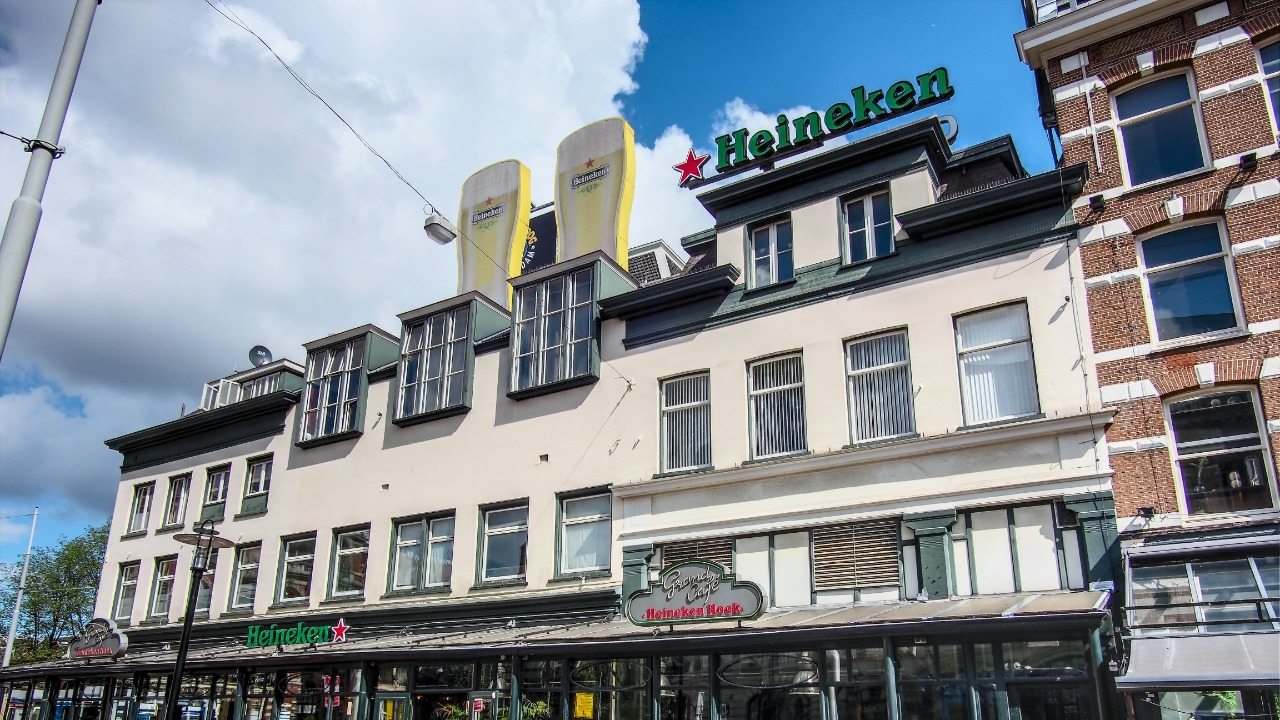
Heineken chief executive Dolf van den Brink is preparing to cut up to 6,000 jobs worldwide after warning that people are drinking less beer and that demand is slowing in key markets. The Dutch brewer, which owns brands from its green-bottled flagship lager to Strongbow cider and Birra Moretti, is launching a sweeping cost-saving plan that will reshape offices, breweries and support teams across Europe and beyond. Reports say the restructuring is designed to protect profits as beer sales lose momentum, and that it could become one of the biggest shake-ups in the global drinks industry in years.
Business coverage of the decision suggests the company has accepted that earlier growth forecasts for mainstream lager were too optimistic and that its workforce is now too large for the new reality. Analysts say this is not a short-term response to a single bad year but a long-term reset of how Heineken operates, from head office to local depots. The plan is also seen as a test of whether a heritage brewer can remove thousands of roles and still invest enough in new drinks, digital sales and marketing to stay relevant with younger, more health-conscious drinkers.
Heineken’s drastic headcount cut
Heineken is preparing to remove as many as 6,000 jobs across its global operations, putting the move among the largest recent restructurings in the consumer-goods sector. Reports say the company wants to hit annual savings targets by the end of the decade, and that job cuts are the main tool to achieve this. The brewer has already started reviewing overlapping roles in finance, marketing, regional management and some parts of production, with a focus on reducing layers of management and speeding up decision-making.
Business journalists at The Guardian link the plan directly to weakening beer volumes and to pressure on margins as drinkers shift to other options. Their reporting stresses that this is not a simple hiring freeze or a pause in expansion but a structural change to the size of the workforce. Internal targets cited in coverage suggest that the brewer wants to cut its cost base by hundreds of millions of euros, and that up to 6,000 roles is the number management believes will deliver that scale of savings while keeping core brewing capacity intact.
A turning point in beer demand
Behind the headline figure is a wider change in how people drink. In many mature markets, beer consumption per person has been flat or falling for years, as health concerns, changing social habits and stricter drink-driving rules all play a role. Younger adults are also more likely to mix beer with spirits, wine, cocktails or non-alcoholic drinks, which makes demand less predictable for any one category. Heineken’s decision to act now suggests that management believes this softer demand is not a passing phase tied to one economic cycle.
Sector analysts quoted in detailed coverage describe beer demand as “slowing” rather than collapsing, but say that even a small drop in volume can hurt profits when a company has built factories, warehouses and sales teams for constant growth. One early-morning report by Joanna Partridge, published at 07.42 EST, explains how Heineken’s volumes have flattened in several regions and how this has forced a rethink of earlier expansion plans. Her account portrays the restructuring as a structural adjustment to a new era in which beer is no longer guaranteed to grow every year, even in markets that once looked safe.
Inside the “brutal” cost-cutting drive
The language used around the restructuring has been stark. Some reports describe the plan as “brutal,” reflecting the shock for staff who have already lived through years of disruption in hospitality and retail. Cutting up to 6,000 roles means the company is not just trimming overtime or closing a few vacancies. Instead, it is likely to merge departments, centralise back-office work and reduce local decision-making in favour of larger regional hubs. For employees, that can mean relocation, new reporting lines or the end of long careers.
Analytical coverage by Karen Jacobs places the move in a wider pattern of global brands reacting to weaker demand with aggressive efficiency drives. She notes that investors often reward companies that promise clear savings targets, and that Heineken’s plan fits this playbook. The brewer is expected to rely on natural attrition, voluntary exits and some compulsory redundancies, with the goal of reaching its savings target by around 2028. Internal documents cited in commentary suggest management is aiming for a leaner structure that can still support innovation in areas such as alcohol-free beer and flavoured drinks.
What slower beer sales actually mean
When reports say that people are drinking less beer, they are describing several overlapping trends. One is a shift from high-volume, low-margin lagers to premium speciality drinks or alcohol-free options. A second is that some drinkers are cutting back on how often they drink, or how much they consume in each session, often for health or cost reasons. A third is the rise of “occasion-based” drinking, where people choose different drinks for home, bars, festivals or meals, which makes it harder for one big brand to dominate every setting.
For a company like Heineken, these trends change both volume and value. If a customer buys fewer pints of standard lager but pays more for a craft-style beer or a zero-alcohol bottle, revenue may hold up even as litres sold fall. However, breweries, packaging lines and logistics networks are built around volume. Coverage that ties the job cuts to softening beer demand argues that the company has decided it cannot wait to see if volumes bounce back. Instead, it is resizing its workforce now to match a future in which growth is slower and more uneven across brands and regions.
Regional flashpoints, from Europe to the UK
Heineken has not given a detailed regional breakdown of the 6,000 roles at risk, but attention has turned quickly to Europe, where it has many breweries and offices, and to the UK, where it owns major brands and pubs. Local reports say that sites in Hereford and London are under scrutiny as part of a Europe-wide review of costs. Staff at these locations are waiting to hear whether their roles will be moved, merged or removed as the company reshapes its operations to fit lower growth expectations.
The Independent has highlighted the risk to UK jobs by mapping Heineken’s footprint in specific towns and by speaking to local business groups about possible knock-on effects. Its coverage treats the 6,000 figure as a global ceiling but warns that even a small share of that number could hit communities where the brewer is a major employer. In some areas, a reduction of 99 or 107 roles could be enough to affect suppliers, pubs and transport firms that depend on Heineken’s presence, especially where there are few large alternative employers.
Who is telling this story
The public picture of Heineken’s plan is shaped by a small group of business journalists and market analysts. Joanna Partridge, whose byline appears on one of the most detailed early pieces, links the decision to cut up to 6,000 jobs directly to the fact that people are drinking less beer. In her reporting, she explains how van den Brink, now several years into the top job, has decided that a large restructuring is necessary even though the company is still profitable.
On the analytical side, commentators such as Karen Jacobs focus on what the move says about the global beer market and about investor expectations. They compare Heineken’s cuts with earlier restructurings at other consumer brands, arguing that the brewer is following a familiar script: accept that growth has slowed, promise a clear savings number and deliver headcount reductions to match. Together, these accounts set the frame for how employees, unions, local officials and shareholders interpret the company’s intentions and judge whether the plan is fair and realistic.
Challenging the “no alternative” narrative
Many early reactions treat the job cuts as an almost automatic response to weaker demand, as if a fall in beer consumption must lead to thousands of redundancies. That view can make it seem as though there were no other options. In reality, a group of Heineken’s size has choices. It could, for example, move some staff into growth areas such as alcohol-free drinks, premium brands or digital direct-to-consumer sales. It could also invest more in training and technology so that existing teams can support new products without large-scale layoffs.
Focusing only on the 6,000 headline number also hides important questions about who is most affected. If cuts fall mainly on head-office roles, the impact on product quality and local relationships might be limited. If they hit technical staff, regional sales teams or quality-control experts, the damage could be deeper and longer lasting. Critics argue that a company which sells itself on heritage and local knowledge should be cautious about losing people who understand specific markets and long-term customers. They also warn that rapid cuts can hurt morale among the 60,464 or so employees who remain, making it harder to deliver the innovation and service that the new strategy will require.
Predictions: where Heineken goes next
Looking ahead, analysts expect Heineken to pair its cost-cutting drive with a stronger push into drinks that fit health-conscious and moderate drinking habits. That likely means more focus on alcohol-free beer, low-alcohol options and flavoured drinks that can be marketed as lighter choices. The company has already expanded its zero-alcohol range in several markets, and observers think some of the savings from the restructuring will be used to support further launches, marketing campaigns and new packaging formats aimed at younger drinkers.
Another area to watch is how Heineken treats its remaining workforce. Local officials and unions in affected countries are likely to press for retraining, redeployment and support for people whose roles disappear. If beer demand is slowing rather than collapsing, there is a case for treating this as a transition period in which staff move from shrinking lines to growing ones. The detailed account by Joanna Partridge notes that management is under pressure to hit savings targets quickly, which could limit the room for gradual changes. The balance between short-term financial goals and long-term resilience will shape how the company emerges from this process.
What this signals for the wider beer industry
Heineken’s decision is already echoing across the beer industry. Other large brewers are watching closely to see how investors react to such a large headcount cut and whether customers notice any change in service or product range. If the market rewards Heineken for moving fast and delivering clear savings, rivals may feel pushed to copy the approach rather than experiment with slower, more flexible responses. That could lock the industry into a pattern where cutting jobs is the default answer to any sign of weaker demand.
The move also sends a signal down the supply chain, from barley farmers to can makers and logistics firms. When a leading brewer openly links job cuts to the fact that people drink less beer, every partner has to rethink its own exposure and growth plans. Some may decide to diversify into other drinks or even non-food products that can use the same production and transport skills. Others may try to deepen ties with Heineken by offering more specialised services or more efficient packaging. In either case, the restructuring marks a turning point: the era of automatic volume growth for mainstream beer is over, and the whole ecosystem around it must adapt.

Grant Mercer covers market dynamics, business trends, and the economic forces driving growth across industries. His analysis connects macro movements with real-world implications for investors, entrepreneurs, and professionals. Through his work at The Daily Overview, Grant helps readers understand how markets function and where opportunities may emerge.

