For two centuries, mainstream economics has promised that abstract models and free markets would deliver prosperity, stability and even peace. Instead, the world is living with spiraling inequality, ecological breakdown and a politics warped by financial power. The story of how a stylized theory of trade and human behavior escaped the seminar room and captured governments is now central to understanding why so much feels off, and how we might finally break that spell.
At the heart of that story is what I see as a long intellectual detour, from David Ricardo’s elegant equations to the neoclassical faith in frictionless markets. The idea that the global economy can be steered by assumptions that ignore power, ecology and real human psychology has shaped everything from trade deals to climate policy. Escaping that dreamlike logic will require not just better models, but a different vision of what economics is for.
From David Ricardo to a dream that left the ground
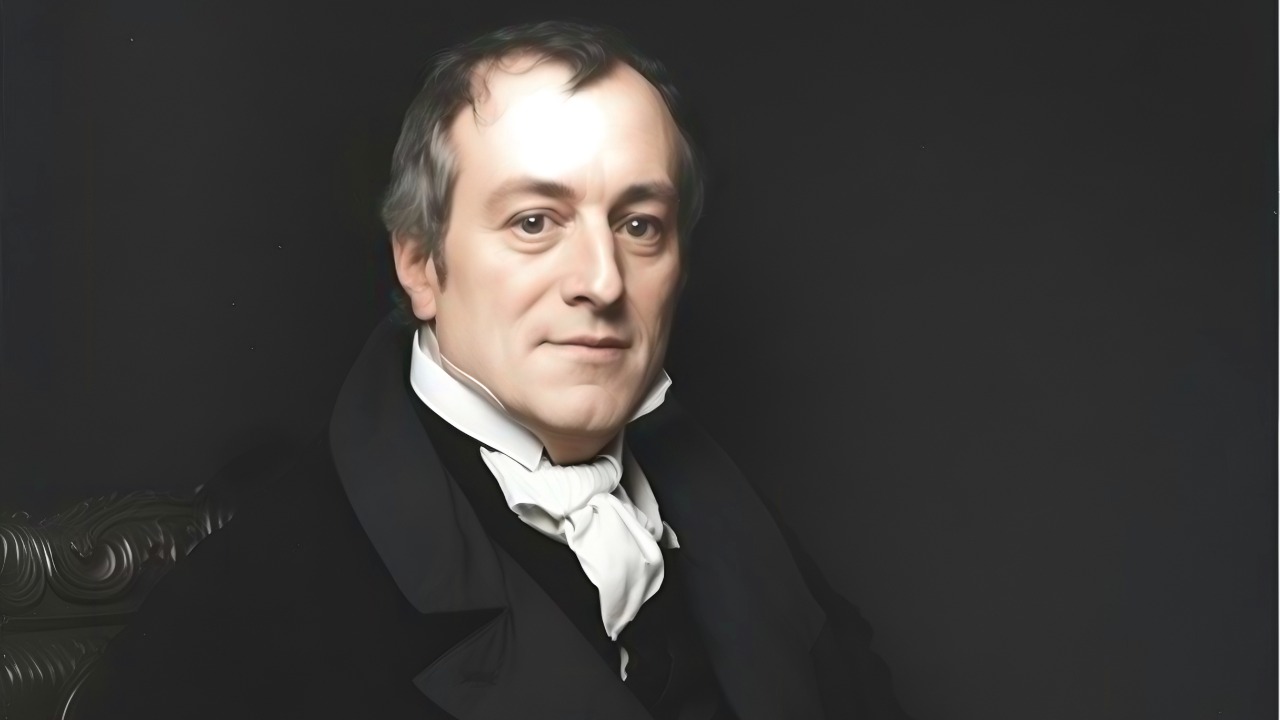
Modern critics increasingly trace the discipline’s blind spots back to the way David Ricardo’s theories were elevated into a kind of founding myth. In the new book Ricardo’s Dream, Nat Dyer follows Ricardo, described as Adam Smith’s only real rival as the “founder of economics”, to show how his abstract model of comparative advantage became a template for thinking about trade and wealth. That model treated countries as if they were simple production units swapping goods, with distributional conflicts and political power largely stripped out. Over time, the elegance of Ricardo’s equations mattered more than the messy realities they were meant to illuminate.
What began as a stylized thought experiment hardened into a worldview that encouraged policymakers to treat trade liberalization as an almost automatic route to shared prosperity. A Google-linked overview of Ricardo’s Dream frames the book as an investigation into how economists forgot the real world and led us astray, underscoring how a narrow reading of Ricardo’s insights helped detach theory from lived experience. By turning a historically specific argument about British trade relations into a universal law of globalization, the profession built a dreamlike edifice that often ignored who wins, who loses and what is destroyed along the way.
How economists forgot the real world
The charge that economics lost touch with reality is no longer confined to fringe critics. In a detailed review, Ivan Radanović argues that in Ricardo’s Dream Nat Dyer offers essential reading for understanding the thinking that shapes our economies today, precisely because it shows how theory drifted away from empirical grounding. The book traces how later economists built on Ricardo to construct increasingly formal models that treated markets as self-correcting systems, even as financial crises, wage stagnation and ecological damage told a different story. The result was a discipline that often defended policy choices first, then retrofitted the math.
Other scholars have documented how this abstraction was not accidental, but a deliberate project. Work collected by Erich Pinzón-Fuchs notes that Their main purpose, so De Marchi says, was to make of economics a quantitative science, which could be expressed in falsifiable propositions, inherited from Robbins and the Austrian School, 141. That push for formal precision helped economics gain prestige, but it also encouraged the use of simplified agents and frictionless markets that rarely resemble actual societies. When models are built to be mathematically neat rather than descriptively accurate, it becomes easier to ignore the workers, ecosystems and communities that do not fit the equations.
Homo economicus and the addiction to unreal theories
One of the most powerful devices that kept this dream intact is the figure of Homo economicus, the rational, self-interested calculator who populates so many textbooks. In a conversation with Nat Dyer, evolutionary thinker David Sloan Wilson describes how the title of the book refers to David Ricardo and connects his legacy to the neoclassical economists of today, who still rely on this stripped down model of human behavior. The discussion, framed as an effort at curing economics’ addiction to unreal theories, highlights how often we are told that Homo economicus is nothing like flesh and blood humans, yet the assumption persists because it keeps the math manageable.
By treating people as isolated utility maximizers, mainstream models downplay cooperation, norms and power, even though these forces shape everything from workplace dynamics to climate negotiations. In a podcast episode on trade, Nick and Goldy talk with Nat Dyer about how this narrow view of human nature feeds into a broader story of how economists forgot the real world and led us astray. When policymakers internalize the idea that people are little more than price-sensitive consumers, it becomes easier to justify policies that erode social protections and environmental safeguards in the name of efficiency.
Neoliberal class war and the unaccountability machine
The intellectual drift of economics did not stay in the classroom, it underwrote a political project that critics describe as a neoliberal class war. One analysis of global turmoil argues that a revolution in ideas about markets and the state helped fuel a period when the world seemed to stop making sense, as deregulation, privatization and austerity reshaped societies. The author explicitly references a concept called The Unaccountability Machine in a discussion of what a progressive alternative to Elon Musk’s disruption might look like, arguing that the real revolution was the one that quietly removed checks on corporate and financial power.
In this reading, the dream of self-regulating markets became a shield for policies that shifted wealth upward while hollowing out democratic oversight. Earlier this year, another essay on how economics wrecked the world argued that something has seriously and fundamentally gone wrong in this so-called science, pointing to the way elegant models were used to justify trade deals and financial liberalization that destabilized communities. The piece, which centers on how we might escape from Ricardo’s Dream, argues that the damage is not an accident but the predictable outcome of a framework that treats distributional conflict as a footnote rather than the main story.
Revisiting Adam Smith and the corporate system
One way out of this cul-de-sac is to revisit the thinkers whose names are often invoked to defend the status quo, starting with Adam Smith. In the same discussion of how economics wrecked the world, the author explains that they try to update Adam Smith’s mercantile system by calling it a corporate system, to explain how the global system that works today is structured. This reinterpretation, which appears in a reflection on the historical reality of trade and the difference with Brazilian gold, suggests that Smith was more attuned to corporate capture and imperial extraction than many modern admirers admit.
By foregrounding Smith’s concern with monopolies and political power, this line of argument challenges the idea that free trade is simply about tariffs and prices. It reframes globalization as a system organized around large firms and financial institutions that use state power to secure their interests, often at the expense of workers and the environment. That perspective dovetails with Nat Dyer’s effort on his own site to show how Ricardo’s Dream connects the history of economic thought to present day crises, arguing that recovering a richer reading of classical thinkers could help loosen the grip of narrow, corporate friendly interpretations.
Digital capitalism and the datafied consumer
The dream of frictionless markets has found a new home in digital capitalism, where platforms promise perfect information and personalized prices. Google’s own description of its Shopping Graph explains how Product information is aggregated from brands, stores and other content providers to build a vast real time map of what is for sale. In theory, this kind of data infrastructure brings consumers closer to the textbook ideal of full information, narrowing the gap between what people want and what markets can supply.
Yet the same systems also concentrate power in the hands of a few intermediaries who control visibility, rankings and access to customers. When algorithms decide which listings appear first for a 2025 Toyota Prius or a refurbished iPhone 14, they are quietly shaping competition and steering demand, often in ways that are opaque to regulators and users. The underlying economic models still treat individuals as rational shoppers, but the reality is a complex web of nudges, targeted ads and platform rules that look far more like the corporate system Adam Smith worried about than the level playing field celebrated in introductory courses.
Can economics help save the world instead?
Despite this bleak history, there is a growing movement to reclaim economics as a tool for survival rather than a justification for extraction. A European initiative framed around the question of How economics can save the world starts from the blunt premise that with our current economic system, we are consuming huge amounts of resources and destroying the web of life on earth. Instead of treating environmental damage as an externality, this approach insists that planetary boundaries and social foundations must be built into the core of economic analysis, from investment decisions to trade rules.
That shift also requires a different kind of storytelling about the discipline itself. Booksellers describe Ricardo’s Dream as excellently researched and beautifully written, with Avner Offer of the University of Oxford saying it transformed his understanding of Isaac Newton’s engagement with economics. That kind of cross disciplinary curiosity, which connects physics, history and political economy, points toward a richer, more humble economics that is willing to learn from other fields and from the people whose lives are shaped by its theories.
Escaping Ricardo’s spell
To escape what critics call Ricardo’s dream, I have to start by recognizing how deeply its assumptions are woven into everyday policy debates. Trade negotiators still talk as if comparative advantage guarantees mutual gain, even when supply chains leave workers in Bangladesh or Mexico with little bargaining power. Central bankers still lean on models that treat financial markets as efficient, despite repeated crises that expose how fragile and politically constructed those markets are. The first step is to treat these frameworks as historical artifacts rather than natural laws, open to revision when they collide with evidence.
That is why works like the recent critique of Ricardo’s Dream and the broader ecosystem of scholarship around Nat Dyer’s project matter. They invite readers to see economics not as a neutral science, but as a contested field whose dominant stories have helped wreck the world we live in. The task now is to build alternative stories, grounded in cooperation, ecological limits and democratic accountability, that can guide policy away from the cliff edge. If Ricardo’s equations helped launch the dream, it will take a new generation of economists, activists and citizens to finally wake us up.
More From TheDailyOverview

Grant Mercer covers market dynamics, business trends, and the economic forces driving growth across industries. His analysis connects macro movements with real-world implications for investors, entrepreneurs, and professionals. Through his work at The Daily Overview, Grant helps readers understand how markets function and where opportunities may emerge.

