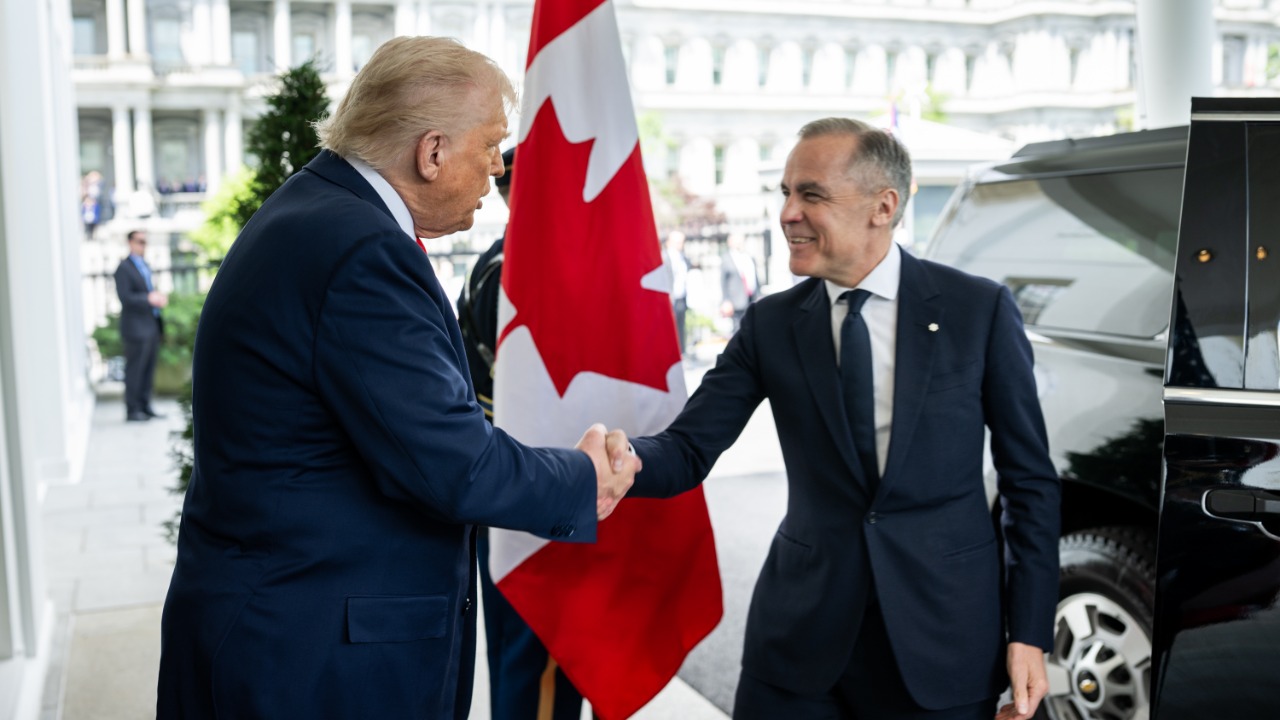
Canada has quietly turned a niche procurement file into a rare strategic advantage over its most powerful ally. By leaning into “icebreaker diplomacy” with Finland and the United States, Ottawa has positioned itself as an indispensable Arctic partner at the very moment President Donald Trump is rattling the region’s security architecture. What began as a technical pact on shipbuilding has become a geopolitical lever that gives Canada unexpected room to maneuver against Washington.
The shift is striking because it runs against the usual script of North American defence politics, where Canada typically trails the United States. Instead, a mix of industrial planning, trilateral coordination and Trump’s own threats toward Arctic governance has left Washington more dependent on Canadian capacity than the other way around. I see that dependence reshaping how both capitals talk about sovereignty, sanctions and security in the Far North.
The ICE Pact that changed the Arctic balance
The turning point is the Icebreaker Collaboration Effort, a trilateral framework that turned a shared capability gap into a joint industrial project. The Icebreaker Collaboration Effort, known as the ICE Pact, is described in a Canadian government News release as a trilateral agreement between Canada, Finland and the United States to advance collaboration on design, construction and maintenance of new polar ships. A separate set of Quick facts underline that The Icebreaker Collaboration Effort Pact is explicitly framed as a way for Canada, Finland and the US to strengthen their fleets after a long period of underinvestment from 2012 to 2025. By locking in shared standards and workshare, Ottawa has ensured that any American or Finnish push to catch up in the Arctic runs through Canadian yards and expertise.
Officials from the US, Canada and Finland have since used high level meetings in Washington to “double down” on this Joint Icebreaker Effort, presenting it as a way to revitalize shipyards in all three countries and reinvigorate the US icebreaker fleet. That ambition is spelled out in a Meeting summary that describes how The US aims to further revitalize its shipbuilding base while relying on partner capacity. For Canada, that means new orders, technology transfer and a central role in setting the rules of the Arctic game, rather than simply reacting to American plans.
Trump’s Arctic threats turn cooperation into leverage
What might have remained a technical partnership has been transformed by President Donald Trump’s own rhetoric. Reporting on the pact notes that Canada’s icebreaker deal “looked great” until Trump started threatening the Arctic, with U.S. President Donald Trump’s threats explicitly aimed at reshaping control over regions surrounding the North Pole. Those threats, detailed in a Canada focused analysis, have alarmed allies who see the Arctic as a zone where rules and restraint are already under strain. Instead of simply welcoming US investment, Ottawa now has to weigh how far it wants to be associated with a White House that talks about the Arctic as a place to be dominated rather than managed.
At the same time, Trump’s posture has inadvertently increased Canada’s bargaining power. The same reporting notes that Canada is a party to an agreement to work with the US and Finland on icebreakers just as Trump is raising the temperature over Arctic sovereignty. A separate Live and On segment highlights how Trump’s language is colliding with long standing Canadian sensitivities about their own Arctic sovereignty. I see that collision giving Ottawa a clearer rationale to insist on environmental safeguards, Indigenous consultation and multilateral rules as conditions for the very icebreaker access Washington now needs.
Finland, Stubb and the industrial engine behind the pact
Finland’s role is not just symbolic. Finnish President Alexander Stubb has been explicit that the icebreaker cooperation is a “huge strategic decision” by Trump because “we all know that the Arctic is important strategically.” In a detailed account of the negotiations, Stubb is quoted praising Trump’s choice to work with Finnish yards on a package of 11 Arct icebreakers as part of the US Coast Guard’s fleet upgrade, a deal described in an Oct report. By bringing in Helsinki’s world class icebreaker designers, the pact gives Canada access to technology it could not develop alone, while also tying Trump’s Arctic ambitions to European partners who care deeply about rule based governance.
On the North American side, the industrial engine is being primed in Washington and Ottawa. Speaking at DHS headquarters in Washington, Ms. Noem described the joint Icebreaker Collaboration Effort, better known as the ICE Pact, as a way to accelerate the US Coast Guard’s recapitalization, with the first two ships already under construction as part of the deal. That framing appears in a detailed account of Noem’s remarks at Speaking at DHS, which underscores how deeply the US Department of Homeland Security is now invested in the pact. For Canada, that investment translates into long term contracts and a say in how quickly, and under what conditions, the US can expand its Arctic presence.
Canada’s shipyards, scorned then indispensable
The irony is that Canadian yards were not always central to Trump’s plans. Earlier in his presidency, Canadian shipbuilders were described as “scorned by Trump” after being sidelined in favour of a smaller basket of American goods and services. A detailed naval industry report notes how Canadian firms responded by showcasing their icebreaker skills, highlighting the Coast Guard Cu and other projects to prove they could deliver complex hulls on time and on budget. That pushback is captured in a piece titled Scorned by Trump, Canadian shipbuilders flash their icebreaker skills, which credits By Elisabeth Gosselin and Malo with documenting how Mar 6, 2025 became a turning point for the sector.
That industrial resilience is now paying off. When US, Canada and Finland officials met in Washington to double down on their Joint Icebreaker Effort, they stressed that the partnership would channel work to shipyards in all three countries and reinvigorate the country’s icebreaker fleet. The same US, Canada, and account notes that In October 2025, the US had already signalled its intent to rely on allied capacity after a thin 2012 to 2025 period. I see that as a quiet vindication for Canadian yards that were once dismissed, and now find themselves holding a key to Trump’s Arctic ambitions.
Delayed US cutters and Canada’s “upper hand” moment
Canada’s leverage is magnified by the simple fact that the US icebreaker program is behind schedule. A new class of 23,000-ton polar security cutters was expected to be completed by 2024, but that has been delayed repeatedly and no ship has yet entered service. That figure, “23,000-ton,” appears verbatim in a detailed assessment of US polar capabilities that notes how design and construction problems have slowed the program to a crawl. The same Feb report underlines that US officials are now looking to allies for help designing and building the ships, a reversal that hands Canada unexpected influence over timelines and specifications.
Those delays are why some analysts now argue that icebreaker diplomacy finally gives Canada the upper hand in its Arctic relationship with Washington. Estimated figures for major polar icebreakers, government owned, show that Canada’s fleet and pipeline of projects compare favourably to the US inventory, especially once the ICE Pact orders are factored in. The same Estimated breakdown, published in Feb, makes clear that the US is now counting on partners to close its capability gap. For a country that has long fretted about being overshadowed by its southern neighbour, that is a remarkable reversal.
More From TheDailyOverview
*This article was researched with the help of AI, with human editors creating the final content.

Grant Mercer covers market dynamics, business trends, and the economic forces driving growth across industries. His analysis connects macro movements with real-world implications for investors, entrepreneurs, and professionals. Through his work at The Daily Overview, Grant helps readers understand how markets function and where opportunities may emerge.

