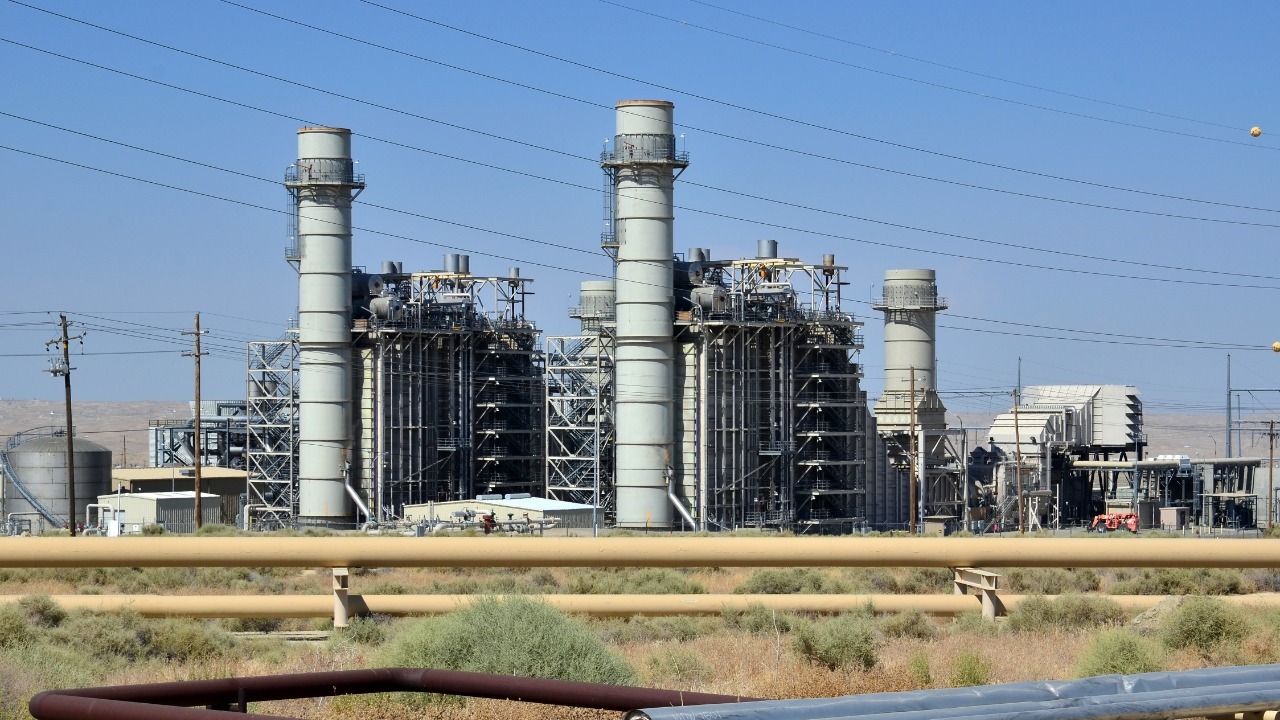
California’s energy debate has shifted from theory to countdown. Senate Minority Leader Brian W. Jones, Governor Gavin Newsom and Republican Congressman Vince Fong are all pointing to the same looming event: Valero’s plan to shut at least one California refinery and prepare to leave the state by 2026. Their fight is no longer about abstract climate goals. It is about whether drivers could soon face gasoline at $5, $8.43 or even $12 a gallon, and whether those prices would weaken both family budgets and national security.
Jones is warning that refinery closures could trigger a 75% jump in pump prices. Newsom is betting that a new price law can keep oil companies in check while the state cuts emissions. Fong argues that shrinking in‑state fuel supplies could put military readiness at risk. Behind their clash is a basic math problem: California still runs on gasoline today, even as it tries to move away from fossil fuels. The question is whether the state can manage this “messy middle” without causing the kind of shock that ripples across the country.
Refinery exits and the 75% spike warning
Brian W. Jones, the Senate Republican leader from San Diego, has issued one of the sharpest alerts about what refinery closures could mean for drivers. In a formal statement, he said California gas prices could jump 75% to $8.43 per gallon as local refining capacity disappears and Valero winds down operations in 2026. His office points to a scenario in which in‑state production falls, demand stays high and the gap is filled by imported fuel that is more expensive and easier to disrupt. A move from mid‑$4 gasoline to $8.43 would turn long commutes into hard choices for many workers.
He connects this spike directly to the planned exit of Valero, one of the last major refiners still active in the state. His staff has circulated projections that prices could “skyrocket 75% to $8.43 per gallon” as refineries close in, tying the risk to the year after Valero shuts down its California operations. Jones presents this as an avoidable policy error, not a natural disaster. His warning also sets up a larger national argument over how fast states can restrict oil and gas without triggering price spikes that critics will blame on climate rules and refinery regulations.
Valero’s 2026 exit and shrinking supply
The Jones warning is backed by industry documents. Valero has notified the California Energy Commission that it plans to shutter at least one of its refineries in the state, according to commission filings. That notice shows a concrete step, not just a threat in a political fight. When a long‑time refiner decides to close a complex facility in a market as large as California, it signals that the mix of rules, costs and future demand no longer justifies new investment.
Separate reporting goes further and describes the shift as a full exit, with projections that Valero will leave California in 2026 and that gas prices could reach $12 per gallon if supply tightens sharply. One analysis warns that as Valero exits the, the loss of local refining could push prices toward that $12 mark in a severe crunch. Once a refinery closes, it is rarely brought back, and new plants are not being built in California. The direction of travel is clear: fewer in‑state barrels, more dependence on fuel shipped from other regions and a thinner safety margin when something goes wrong.
Newsom’s price law and its limits
Governor Gavin Newsom is trying to blunt the political blow of high prices with a new law aimed at refinery profits. The statute, known as AB X2‑1, gives state officials more power to review refinery margins, demand detailed data and, in extreme cases, cap profits. Supporters say this transparency will help stop companies from using California’s special fuel blend and tight supply as an excuse to overcharge drivers. Newsom’s team has framed the law as a way to keep oil firms from turning every outage into a windfall, a point echoed in news coverage of.
Critics, including Jones and other Republicans, argue that AB X2‑1 cannot change the basic balance between supply and demand. If Valero and other refiners close units or leave the state, no reporting rule can create new barrels of gasoline. As described in the same reporting, the law focuses on how prices behave, not on keeping refineries open or adding capacity. That gap between the promise to “prevent gas prices from spiking” and the physical reality of fewer refineries making California’s unique fuel blend may become more obvious as 2026 approaches. The clash between profit controls and shrinking supply is likely to shape the next legislative battles in Sacramento.
From gas lines to national security
Vince Fong, a Republican congressman from Bakersfield, is pushing the debate into national security territory. He argues that California’s shrinking oil and gas supply is not just a local pocketbook issue but a risk to the country’s readiness in a crisis. In a recent interview, Fong warned about and criticized the Biden administration’s energy approach, saying a state that hosts key military bases cannot afford to depend on long and fragile fuel chains.
Other lawmakers have drawn even sharper lines. One warned that “we’re talking about military preparedness being affected, and we’re talking about gas lines,” arguing that refinery shutdowns could slow the movement of troops and equipment in an emergency. That quote appears in a report that describes how California refinery closures. The Newsom administration disputes this view and says the state can protect both drivers and national interests by moving to more fuel‑efficient vehicles and cleaner energy. The split reflects a deeper question: is energy security better served by keeping refineries running or by cutting gasoline use as fast as possible?
The $5, $8.43 and $12 scenarios
Several distinct price paths now shape the public debate. At the low end, energy analyst Andy Lipow expects California gas to move above $5 per gallon in 2026, up from prices that already run far above the U.S. average. As president of Lipow Oil Associates, he told one outlet that “California residents are not likely to enjoy reprieve at the pump any time soon,” citing refinery closures, tougher environmental rules and steady demand. That view appears in an analysis explaining why statewide prices may, and it treats that level as a new normal rather than a brief spike.
Jones raises the bar with his 75% spike warning, which would push prices to $8.43 per gallon if his projections prove right as refineries close and Valero departs. A separate analysis tied to Valero’s exit sketches an even more dramatic path: gas could reach $12 per gallon in a tight‑supply shock as local capacity disappears. These are not precise forecasts but stress tests for a system with fewer in‑state refineries and limited ability to quickly import replacement fuel. Together, they suggest that $5 gas is likely, $8.43 is a serious risk if closures pile up, and $12 is an extreme but not impossible outcome if several things go wrong at once.
Household strain and who gets hit first
Californians already pay some of the highest fuel prices in the country, and the scenarios above would widen that gap. A shift to more than $5 per gallon, as described by Lipow’s price breakdown, would mean that families driving older pickup trucks or SUVs could see monthly fuel bills rise by hundreds of dollars compared with drivers in cheaper states. The hit would not be equal. Workers in inland regions who commute long distances, such as from Bakersfield to warehouse hubs or from Central Valley towns to coastal job centers, would feel the squeeze long before urban professionals with access to transit or electric cars.
If prices climbed toward $8.43 or even $12, the effect would spread far beyond individual drivers. Delivery services, farms and small contractors that depend on gasoline‑powered fleets would have to raise prices or cut routes. Those higher costs would show up in grocery aisles, online shipping fees and home repair bills, amplifying the original fuel shock. The sources do not assign a precise inflation number to these effects, and any attempt to do so here would be guesswork. What they do make clear is that “California residents are not likely to enjoy reprieve at the pump any time soon,” and that long‑term high prices, month in and month out, would test the patience of even climate‑minded voters.
Security risk or managed transition?
Some coverage frames California’s refinery pullback as either a looming disaster or a clean‑energy victory. The reporting suggests a more complicated picture. Lawmakers who warn that “we’re talking about military preparedness being affected” are pointing to a real weak point: a state with fewer refineries and strict fuel rules will depend heavily on outside supply during emergencies. At the same time, the Newsom administration’s rebuttal, highlighted in accounts that describe how state officials dispute, rests on the idea that more efficient vehicles and alternative power can cut demand faster than supply shrinks.
What is missing from both sides is a clear public plan that lines up refinery exit dates with hard numbers on how many gasoline cars will still be on the road, how much imported fuel the ports can handle and how military and emergency services will secure priority access. Based on the available sources, two cautious predictions stand out. First, unless there is a major shift in policy or market trends, California gas prices are likely to sit above $5 per gallon for long stretches after 2026, with spikes toward $8.43 possible during outages or disruptions and extreme cases that analysts peg as high as $12. Second, without a more detailed transition blueprint, the security debate will intensify as Valero’s 2026 exit nears, with growing pressure on state and federal leaders to show that California can move away from oil without repeating the gas lines and supply scares that still shape public memory.
More From The Daily Overview
*This article was researched with the help of AI, with human editors creating the final content.

Alex is the strategic mind behind The Daily Overview, guiding its mission to uncover the forces shaping modern wealth. With a background in market analysis and a track record of building digital-first businesses, he leads the publication with a focus on clarity, depth, and forward-looking insight. Alex oversees editorial direction, growth strategy, and the development of new content verticals that help readers identify opportunity in an ever-evolving financial landscape. His leadership emphasizes disciplined thinking, high standards, and a commitment to making sophisticated financial ideas accessible to a broad audience.

