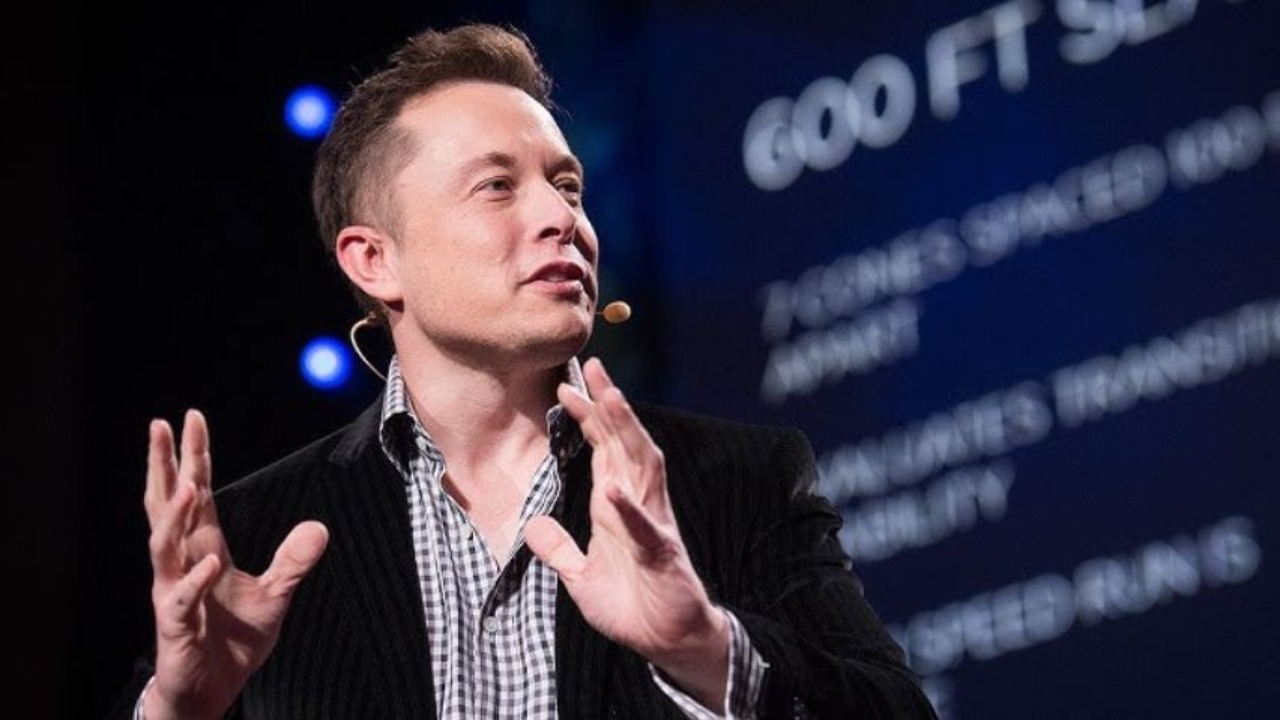
Elon Musk is no longer just predicting that artificial intelligence will shake up office work; he is sketching a future where six-figure careers vanish and money itself stops mattering. In his telling, AI and advanced robotics will be so productive that traditional salaries, savings and even the idea of “having a job” could become relics of the industrial age. I see his latest warnings as less a sci-fi thought experiment and more a provocation aimed squarely at professionals who assume their income bracket is safe.
The leap from six-figure comfort to economic shock
For workers earning $100,000 or more, Musk’s message is blunt: the ladder they climbed may soon be gone. He has argued that as AI systems match or exceed human performance in knowledge work, the premium on specialized expertise will erode, pulling the rug out from under many six-figure roles. In a recent video, Elon Musk explicitly tied the rise of automation to the disappearance of six-figure salaries, warning that human labor and traditional wages will be sidelined as machines take over more tasks. That is a direct challenge to the assumption that “high skill” automatically equals “high pay” in the age of generative models and autonomous systems.
His critique goes further than a generic fear of layoffs. Musk has framed the coming shift as a structural reset in which the very logic of earning and saving breaks down once AI can do almost any job better and cheaper than people. One report captured this by noting that even those who have “worked your way up the ladder to a comfortable six-figure salary” or “squirreled away hundreds of thousands of dollars” could see that advantage evaporate as AI makes such incomes irrelevant. In that account, he suggested that money itself may “disappear” as a meaningful measure of security, a claim echoed in a Dec analysis of his comments that framed six-figure earners as directly in the firing line.
From “optional work” to “universal high income”
Musk’s argument does not stop at job loss; he is also sketching a radically different social contract. He has repeatedly claimed that AI and robotics will make work “optional,” not just for a lucky few but across the economy, because machines will handle most production. In one detailed discussion, he described a world where advanced systems generate such abundance that people choose to work only if they want to, likening future employment to hobbies such as gardening. That vision of work as a lifestyle choice rather than an economic necessity underpins his claim that AI and robotics are the “only” technologies capable of delivering what he calls a kind of universal prosperity, a point he tied to the idea of “universal high income” in a Dec interview where Musk said AI and ROBOTICS ARE the forces that could make saving money unnecessary.
In that same line of thinking, Musk has argued that if AI and robotics reach the scale he expects, money will “stop being relevant” because the marginal cost of many goods and services will collapse. He has described a future in which AI, AND ROBOTICS, ARE so capable that traditional work becomes optional over time, a theme that surfaced again when he said future advances in artificial intelligence and robotics could eventually make traditional work optional over time. That idea of work-optional abundance, which he has linked to existential questions about meaning, was highlighted in a Dec post that emphasized his concern about how people will find purpose when machines handle most jobs.
Existential upside, existential risk
When Musk talks about AI making money irrelevant, he is not only cheerleading for abundance; he is also warning about what he calls “existential” stakes. He has described the coming transition as an “Existential” change in how societies function, arguing that the logistics of a work-optional world are complicated but solvable, while the deeper challenge is figuring out whether human life retains meaning when economic survival is no longer the main driver. In one conversation, he painted a vivid picture of people choosing to work “because they like growing vegetables” rather than because they need a paycheck, a scenario that was detailed in a Nov report that highlighted his belief that AI, robotics will make work optional and money irrelevant.
At the same time, Musk has been explicit that this transformation could go badly if societies do not prepare. In a widely discussed Twitter Spaces conversation, he cautioned that artificial intelligence could soon replace most traditional employment, saying “The question will really be one of meaning, of how do we find meaning in life if you have a magic genie that can do everything you want?” and stressing that the issue is “universal high income, not basic income.” That framing, captured in a Nov clip, underlines his view that the risk is not just unemployment but a vacuum of purpose if societies do not rethink education, culture and civic life around a world where AI handles the grind.
The first jobs on the chopping block
Although Musk often speaks in sweeping terms, he has also pointed to specific roles he believes are most vulnerable in the near term. He has said that at least one job category could “soon vanish” due to AI, arguing that the global labor market is heading toward a point where some professions disappear at the same pace that new ones emerge. In one account, titled “Elon Musk Says One Job Could Soon Vanish Due to AI,” he was quoted warning that the first wave of displacement will not be limited to factory floors but will hit white-collar roles that rely heavily on pattern recognition and information processing, a concern detailed in a Dec report that emphasized how quickly certain jobs could disappear.
He has also drawn a straight line from these early casualties to the broader erosion of six-figure security. In his view, once AI proves it can outperform humans in one high-paid niche, investors and executives will push to replicate that success across other lucrative functions, from legal research to financial analysis. That is why he has repeatedly warned that even comfortable professionals should not assume they are insulated, a message that surfaced again when he said AI and robotics will make money “irrelevant” and predicted a future where money will stop being relevant as machines take over more work, a point summarized in a Nov account that linked his comments to the future of work and even to gardening as a metaphor for optional labor.
Preparing for a world where money “goes obsolete”
If Musk is even directionally right, the implications for policy and personal planning are enormous. He has floated the idea that governments will need to rethink social safety nets around some form of universal high income, funded by the productivity of AI and robotics, rather than traditional wage taxes. In one detailed write-up, he was quoted saying that AI will make work optional and money irrelevant, and that societies will have to decide how to distribute the benefits of that abundance fairly, a theme captured in a Nov analysis that emphasized his belief that AI Will Make Work Optional And Money Irrelevant and described him explicitly as Billionaire Elon Musk.
On a more immediate level, he has urged individuals to think beyond narrow job skills and toward adaptability, creativity and meaning. In another summary of his remarks, he argued that work will be “optional” and money “irrelevant” in the near future due to AI, and that people should focus on what they genuinely want to do when survival is no longer the main constraint, a point highlighted in a Nov brief labeled NEED TO KNOW that quoted Elon Musk directly. Taken together with the earlier Dec warning to six-figure earners and the Nov description of Existential changes, his message is consistent: the era of equating income with security is ending, and the real preparation is not just financial hedging but deciding what a meaningful life looks like when money, as he puts it, goes obsolete.
More From TheDailyOverview

Grant Mercer covers market dynamics, business trends, and the economic forces driving growth across industries. His analysis connects macro movements with real-world implications for investors, entrepreneurs, and professionals. Through his work at The Daily Overview, Grant helps readers understand how markets function and where opportunities may emerge.

