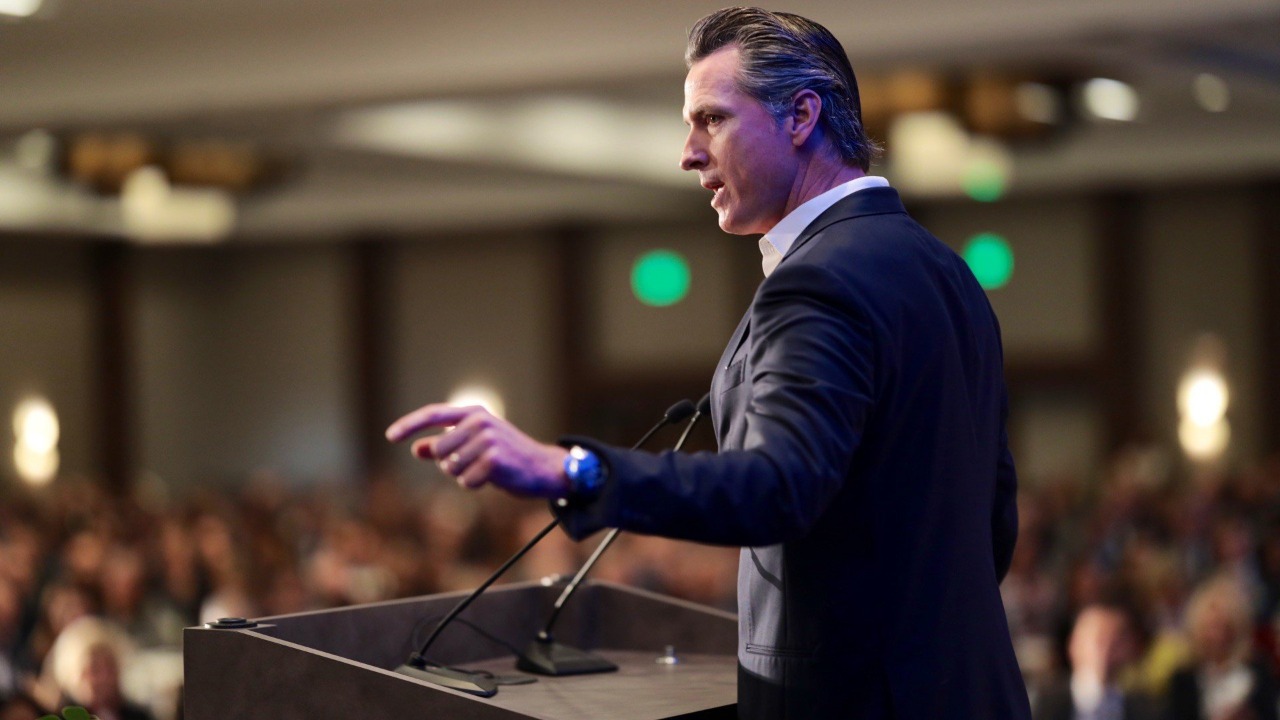
California’s fiercest tax fight in years now pits a 5 percent levy on billionaires’ wealth against a governor who says the idea “makes no sense,” even as organizers race to collect roughly 900,000 signatures to put it before voters. The clash is not just about one ballot measure, but about whether the state should lean harder on its richest residents or protect them in the name of long term economic stability. As the 2026 election cycle takes shape, the billionaire tax has become a stress test for California’s identity as both a progressive laboratory and a place where fortunes are built.
At the center is Governor Gavin Newsom, who has broken with many on the left by warning that a wealth levy could backfire, while labor unions and progressive advocates argue that the ultra rich must shoulder more of the burden. The result is a high stakes showdown over who pays for California’s ambitions, and whether voters are willing to risk driving some of the world’s wealthiest people out of the state.
What the 5 percent billionaire tax would actually do
The proposal at issue, formally known as the Billionaire Tax Act, Initiative No. 25-0024, would create a new statewide tax on the net worth of the richest Californians. According to a detailed review of the Billionaire Tax Act, the measure targets individuals with wealth of at least $1 billion, applying a 5 percent annual charge on their assets rather than on income alone. That structure is designed to reach fortunes built on stock holdings, private companies, and other appreciating assets that often escape traditional income taxes. Supporters frame it as a way to tap into the immense balance sheet of the ultra rich at a moment when California faces expensive demands for housing, climate resilience, and social services.
The state’s own fiscal experts have underscored just how concentrated that wealth is. An official analysis notes that California Is Home to Many Billionaires and that Several of the wealthiest people in the world live in California, with “Wealth” defined as the value of assets minus debts. Independent estimates suggest the tax could raise about $10 billion a year in ongoing revenue, plus tens of billions more in one time collections as previously untaxed gains are brought onto the books, figures that align with broader assessments of a New California Wealth 2026 and What is Happening Now in the debate. For backers, those numbers justify a bold move that they say would finally match California’s tax code to its rhetoric about inequality.
Newsom’s sharp break with the left
Governor Gavin Newsom has chosen to oppose the measure in unusually blunt terms, signaling a clear break with many progressives in his own party. In public comments highlighted by multiple reports, the California Gov has said the 5 percent levy “Makes No Sense,” arguing that a standalone wealth tax risks destabilizing the state’s finances by prompting the richest residents to leave. He has warned that the proposal could face “overwhelming opposition” at the ballot box, even as backers of the Billionaire Tax As Backers Chase Signatures push toward their goal of roughly 900,000 signatures to qualify the initiative, a dynamic captured in coverage of how California Gov Gavin Newsom Says Of the Billionaire Tax As Backers Chase Signatures.
Newsom’s opposition is not just rhetorical. Earlier this month, he described private calls with anguished wealthy Californians who told him they felt targeted and were weighing whether to move their assets or themselves out of state. In one appearance, California Gov Gavin Newsom stood alongside San Francisco Mayor Daniel Lurie at Friendship House Asso and recounted those conversations, while making clear he did not name the individuals involved, a scene detailed in reporting on how California Gov Gavin Newsom has continued opposing the billionaire tax. For a governor who has often embraced progressive causes, the choice to side with anxious billionaires over a union backed tax measure marks a notable recalibration.
Why supporters say the tax is worth the risk
Backers of the Billionaire Tax Act argue that California’s inequality is so extreme that incremental tweaks are no longer enough. They point to the sheer scale of fortunes held by tech founders and investors, and to the state’s persistent struggles with homelessness, underfunded schools, and climate driven disasters. One detailed explainer notes that the wealth tax would apply to billionaires’ global assets, with revenue earmarked for priorities such as housing, education, and even artificial intelligence and new technology investments, a structure described in coverage of Newsom against the billionaire tax in California and the Keys to the fiscal battle. For unions and community groups, that tradeoff is straightforward: tap a small slice of vast private fortunes to stabilize public services.
Some wealthy Californians have even broken ranks to endorse the idea. Billionaire Tom Steyer, a prominent Democratic donor and climate activist, has said His support for the wealth tax is rooted in a belief that the current system is riddled with loopholes and that the rich are not paying their fair share. His backing deepens the divisions among Democrats and progressives over how to approach the tax, which was proposed by a union as part of a broader push to close those loopholes and decrying the rich, as detailed in reporting that notes how His support deepens the divisions among Democrats and progressives. For supporters, the presence of at least one billionaire on their side undercuts the narrative that the tax is purely punitive.
Fears of a billionaire exodus and economic blowback
Opponents, led by Newsom, counter that the tax could trigger exactly the kind of exodus that would leave California poorer and more vulnerable to budget shocks. Analysts have warned that the proposal would cost the state’s wealthiest residents about $100 billion if a majority of voters support it on the November ballot, a staggering figure cited in a newsletter that argued a tax on billionaires could drive wealth out of California and noted that the tax proposal would cost the state’s wealthiest residents about $100 billion. For critics, that number is not just a revenue estimate, but a flashing warning sign that the state is putting too much of its fiscal future on the backs of a small, mobile group of taxpayers.
There is already evidence that some of the most famous names in tech are hedging their bets. Reports have documented how The Google founders Sergey Brin and Larry Page have both moved assets out of state in recent months, while the Palantir founder Peter Thiel has long been a symbol of Silicon Valley wealth relocating to friendlier tax climates. Those moves have been cited in analysis of how The Google founders Sergey Brin and Larry Page, along with the Palantir founder, have shifted assets as California debates its next tax move. Newsom and other skeptics argue that layering a 5 percent wealth levy on top of already high income taxes could accelerate that trend, shrinking the very tax base the measure is meant to tap.
A Democratic Party split and an uncertain electorate
The fight over the billionaire tax has also exposed a deep rift inside the Democratic Party, both in California and nationally. One analysis framed the moment as Gavin Newsom’s anti Zohran moment, a reference to internal party debates over how aggressively to tax the rich, and noted how Business Editor Nick Lichtenberg described the measure as a test of whether Democrats will embrace a European style wealth tax or stick with more traditional income based approaches. That piece, by Nick Lichtenberg, underscored how the California billionaire tax that splits the Democratic Party down the middle could shape Newsom’s own national ambitions if voters approve it in November, a dynamic captured in coverage by Nick Lichtenberg, Business Editor, who has chronicled the party’s internal struggle.
More From TheDailyOverview
*This article was researched with the help of AI, with human editors creating the final content.

Grant Mercer covers market dynamics, business trends, and the economic forces driving growth across industries. His analysis connects macro movements with real-world implications for investors, entrepreneurs, and professionals. Through his work at The Daily Overview, Grant helps readers understand how markets function and where opportunities may emerge.

