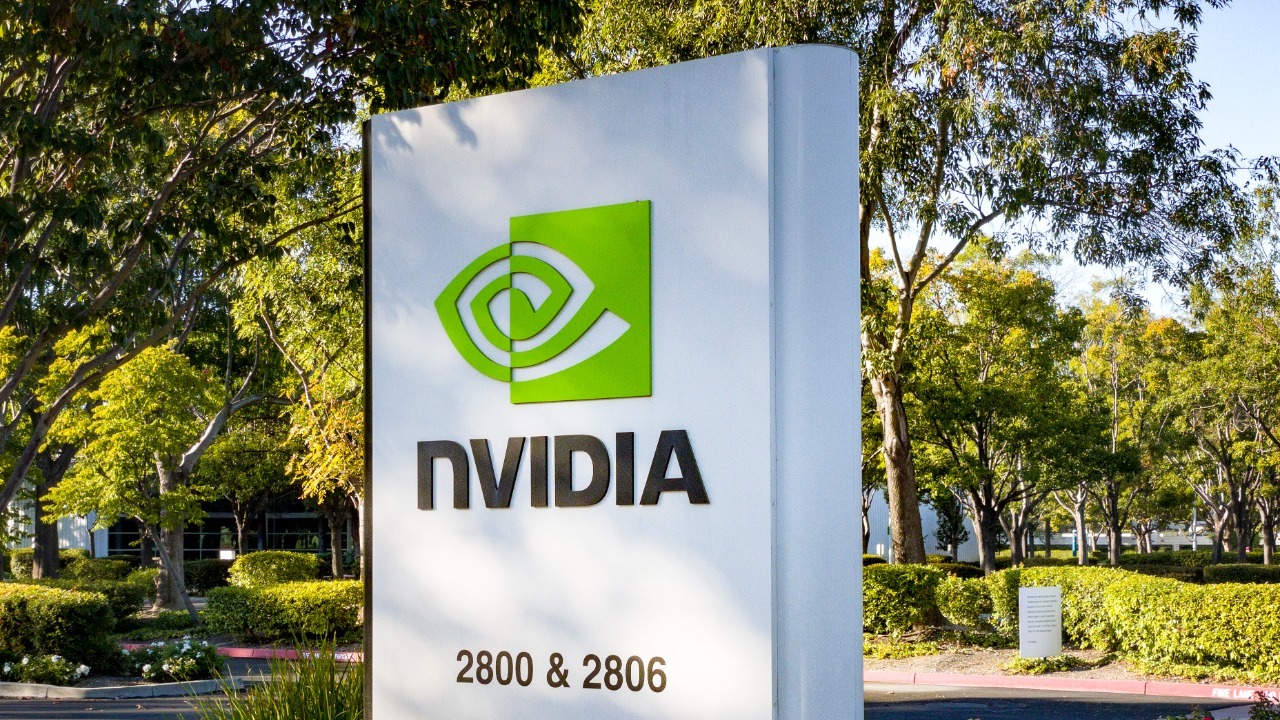
Nvidia is trying to slam the brakes on talk that the artificial intelligence boom is a speculative mirage. As critics warn of an “AI bubble” and social media conspiracists compare the chip giant to Enron, the company is mounting a full-throated defense of both its business model and its accounting. The stakes are enormous, not just for Nvidia’s shareholders but for the broader tech market that has hitched its fortunes to accelerated computing.
At the center of the pushback is Nvidia CEO Jensen Huang, who insists the current surge in demand for AI infrastructure is grounded in real workloads, not financial engineering. At the same time, Nvidia is privately reassuring Wall Street that its balance sheet looks nothing like the energy-trading house that collapsed in scandal two decades ago, even as it acknowledges that a single company now sits uncomfortably close to the heart of the global AI economy.
Huang’s case against an AI bubble
Jensen Huang is not just brushing off bubble talk, he is arguing that investors are misreading the nature of this cycle. In public remarks in Nov, Nvidia CEO Jensen Huang said the company sees “something very different” from the kind of speculative frenzy that defined past manias, pointing instead to a structural shift in how data centers are built and how software is written. His argument is that hyperscalers, enterprises and even governments are re-architecting computing around accelerated chips, a transition he frames as a multi-year infrastructure buildout rather than a short-lived trade, a view he laid out when he rejected AI bubble fears.
Huang’s confidence rests in part on Nvidia’s grip on the market for AI accelerators, where the company has become the default choice for training and running advanced models. Industry analysis in Nov found that Nvidia holds approximately 80% of the AI chip segment, making it the dominant player in a market that is still expanding as more workloads move from CPUs to GPUs. That level of share, combined with a pipeline of customers building everything from autonomous driving systems in a 2025 Tesla Model Y to recommendation engines inside TikTok and Netflix, underpins Huang’s claim that the demand is broad based rather than concentrated in a handful of speculative projects, a point echoed in research that noted Nvidia holds approximately 80% of AI chips.
Viral Enron claims and Nvidia’s “we’re not fraud” memo
If bubble talk is familiar territory for a fast-growing tech company, being likened to Enron is another level of reputational risk. Over a recent weekend, a conspiracy theory post that should have faded into obscurity instead went viral, accusing Nvidia of using opaque accounting and channel stuffing to inflate its results. The claims, which spread quickly across X and Reddit, rattled some investors enough that Nvidia felt compelled to respond directly, sending a memo to financial analysts that bluntly stated it is not like Enron and that its reported numbers are backed by real shipments and customer deployments, a response that followed a weekend conspiracy theory post.
The internal message went further, with executives stressing that Nvidia’s partners are not shell entities but large cloud providers and system builders that act like extensions of Nvidia itself in the AI ecosystem. In a separate account of the same saga, analysts noted that the Enron comparison is not entirely off-base as a metaphor, but misapplied in practice, since Enron used special purpose vehicles with speculative valuations while Nvidia’s relationships are rooted in physical chips and data center capacity. That distinction is central to the company’s argument that its growth is tied to tangible infrastructure, not mark-to-model accounting, a nuance highlighted in coverage explaining that The Enron comparison is not entirely off-base but misapplied.
Inside the leaked memo: “The only thing standing between America and recession is us”
The leaked memo to Wall Street did more than rebut fraud allegations, it revealed how central Nvidia believes it has become to the broader economy. In the same meeting where executives dismissed the Enron analogy, one senior leader reportedly told analysts that “the only thing standing between America and recession is us,” a line that captures both the company’s swagger and the concentration risk that worries regulators. The memo also underscored that Nvidia expects revenue to climb to $57 billion this quarter, a figure it framed as the product of unprecedented demand for AI infrastructure rather than creative bookkeeping, details that emerged when Nvidia says it’s not like Enron in a leaked memo.
I read that line about “America and recession” as both a sales pitch and a warning. On one hand, Nvidia is arguing that AI-driven productivity gains, from copilots in Microsoft 365 to generative design tools in Adobe Creative Cloud, are cushioning the economy against a slowdown. On the other, the statement implicitly acknowledges that a single supplier now sits at the center of capital spending plans for cloud giants, automakers and drug companies. If Nvidia were to stumble, the memo suggests, the ripple effects would be felt far beyond Silicon Valley, a dynamic that helps explain why the company is so eager to distance itself from any hint of Enron-style fragility.
Market jitters, upgrades and the Google–Meta overhang
Even as Nvidia talks up its indispensability, the stock has shown how sensitive investors remain to any sign that its dominance could erode. In trading on a recent Tuesday in Nov, Nvidia shares pulled back after reports that Google and Meta were exploring a chip deal that could lessen their reliance on Nvidia hardware. The move came even though Nvidia (NVDA 2.59%) was still up on the year, underscoring how quickly sentiment can swing when the market imagines a future in which hyperscalers design more of their own silicon for training and running advanced AI models, a scenario that weighed on Nvidia (NVDA 2.59%) stock on Tuesday.
Yet the same week also brought a reminder of how strong Nvidia’s underlying position still looks to many professional investors. Research in Nov reported that Nvidia (NVDA, Financial) had been upgraded to “Buy,” with analysts citing AI market strength and the company’s central role in AI model development and training as key reasons for the more bullish stance. That upgrade, framed under “Key Takeaways” and “Market Strength,” suggested that even as some traders fret about customer concentration and competition from custom chips, others see Nvidia’s software stack, developer ecosystem and manufacturing partnerships as durable advantages, a view captured when Nvidia (NVDA) was Upgraded on AI Market Strength.
Answering Michael Burry and the skeptics
Beyond anonymous posts and rumor-driven selloffs, Nvidia is also facing criticism from high-profile bears who see echoes of past bubbles in the AI trade. One of the most prominent is Michael Burry, the investor famous for betting against subprime mortgages before the 2008 crisis, who has questioned whether Nvidia’s valuation and the broader AI boom can be justified by fundamentals. Nvidia has not ignored him, instead issuing a detailed rebuttal that walked through its view of demand, capacity and the economics of training large models, a response that drew attention when Nvidia answered Michael Burry’s criticism.
In that rebuttal, Nvidia argued that the cost to train and run AI systems is not a one-off spike but an ongoing expense that will keep driving demand for its chips and software. I see this as the crux of the debate between bulls and skeptics: are today’s massive GPU clusters a permanent fixture of the digital economy, akin to the buildout of fiber networks, or are they closer to the server farms of the dot-com era that ended up underutilized when the hype faded. By insisting that workloads like recommendation engines, language models and robotics will only grow more compute hungry, Nvidia is effectively betting that its current dominance in AI infrastructure will translate into a long, profitable runway rather than a short, Enron-like flameout.
More From TheDailyOverview
- Dave Ramsey says these two simple questions show whether you’re rich or poor
- Retired But Want To Work? Try These 18 Jobs for Seniors That Pay Weekly
- IRS raises capital gains thresholds for 2026 and what’s new
- 12 ways to make $5,000 fast that actually work

Grant Mercer covers market dynamics, business trends, and the economic forces driving growth across industries. His analysis connects macro movements with real-world implications for investors, entrepreneurs, and professionals. Through his work at The Daily Overview, Grant helps readers understand how markets function and where opportunities may emerge.

