Oil’s latest slide has been driven less by barrels and more by words. Crude futures dropped about 4% after President Donald Trump signaled he was stepping back from threats of an immediate America military strike on Iran, abruptly cooling a risk premium that had built up over fears of a wider conflict in the Gulf. The move wiped out gains from earlier in the week and underscored how tightly benchmark prices are tethered to the president’s rhetoric on Tehran.
The pullback came as traders reassessed the likelihood that Iranian exports or transit through key shipping lanes would be disrupted, shifting focus back to fundamentals such as inventories and demand. I see the episode as a textbook example of how quickly geopolitical anxiety can inflate, and then deflate, the cost of Oil when a single actor at the center of power changes tone.
From strike talk to de‑escalation: how Trump moved the market
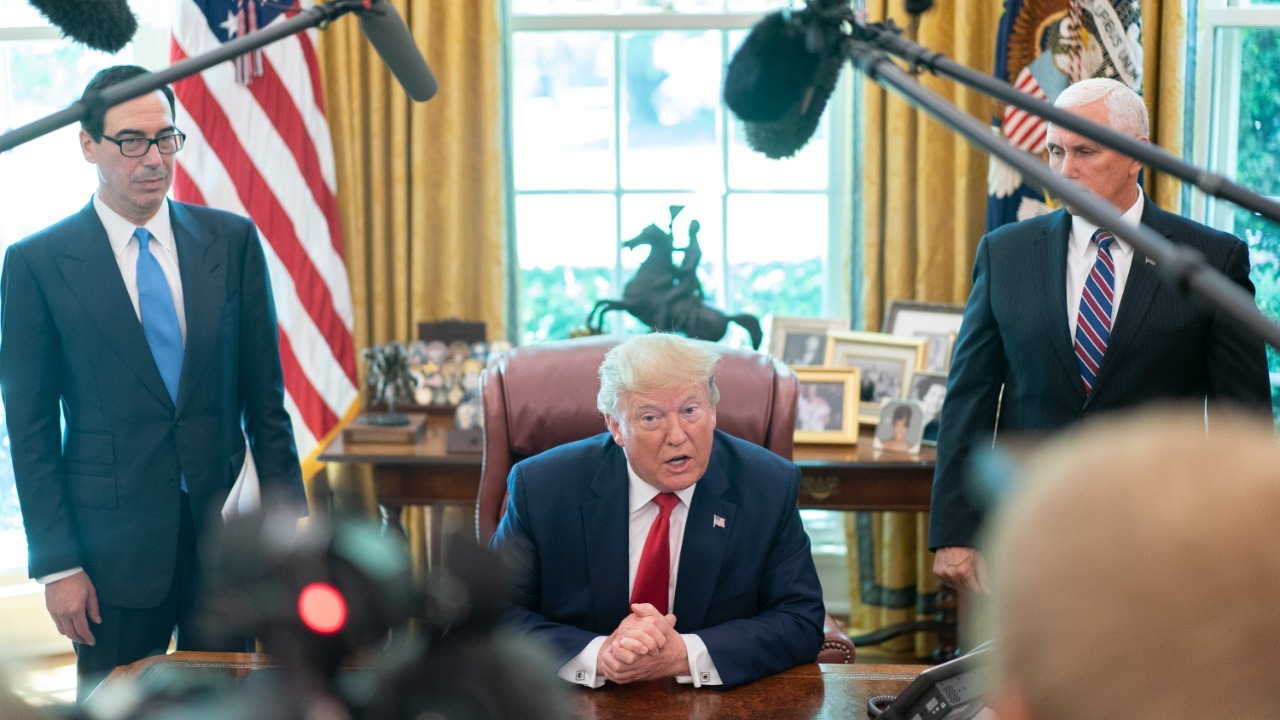
In the days leading up to the selloff, crude had been buoyed by speculation that President Donald Trump might authorize direct action against Iran, potentially targeting its energy infrastructure or military assets. That narrative began to crack when the president, speaking in the Oval Office of the White House in Washington, used more cautious language about attacking Iran and suggested he could hold off, a shift that traders read as a sign that immediate escalation was less likely, as reflected in early price weakness reported after his Wednesd remarks. That initial dip set the stage for a much sharper reaction once he went further, saying that “the killing has stopped” and indicating that crackdowns on protesters in Iran were easing, which investors interpreted as a broader signal that Washington was not on the verge of launching new strikes.
By Thursday, that change in tone had translated into a full scale reversal in sentiment, with Oil prices falling more than 4% in a single session as traders concluded that the odds of an America attack on Iranian targets had dropped significantly. Futures that had been pricing in a sustained disruption premium suddenly had to adjust to a world where supply from Iran, and from the wider region, looked more secure, a dynamic captured in reports that Oil prices fell once his comments filtered through the market. The speed of that swing underlines how central the president’s messaging has become to short term energy pricing, with traders effectively treating his statements as a real time barometer of war risk.
Brent, WTI and the unwinding of the Iran risk premium
The impact of the shift in rhetoric was visible across benchmarks, with both Brent and WTI giving back ground that had been built on fears of supply disruption from Iran. Earlier in the week, Brent had pushed toward $66.82 per barrel, its highest level since September, as investors weighed the possibility that a clash between Trump and Iran could choke off exports or damage infrastructure, a move documented in analysis of Brent and WTI trading. Once the president’s comments suggested that the immediate threat of strikes was receding, that premium evaporated quickly, dragging both contracts sharply lower as speculative longs rushed to exit.
On Thursday, the selloff accelerated as market participants digested not only the softer tone from Trump but also fresh data on inventories and product stocks. Reports highlighted that Oil prices fell more than 4% on Thursday after remarks from President Donald Trump eased market speculation that an America attack on Iran was imminent, with the Brent crude price particularly hard hit as the geopolitical bid faded, a pattern captured in coverage of the Brent crude price. At the same time, the EIA reported a sharp rise in United States crude and gasoline inventories, reinforcing the idea that the market was better supplied than headline risk alone might suggest and giving bears additional ammunition to push prices lower.
Traders, analysts and the anatomy of a 4% plunge
From a trading perspective, the 4% drop was the product of both fundamental reassessment and positioning that had become crowded on the bullish side as tensions with Iran escalated. I see the reaction as a classic case of a market that had overpaid for insurance against a worst case scenario suddenly realizing that the immediate danger had been overstated, prompting a rush to unwind bets that had been built on the assumption of imminent conflict. That dynamic was evident in commentary noting that Oil prices tumbled more than 4% as Trump’s remarks eased investor worries of a United States strike against Iran, with Senior Business Reporter Ines Ferr highlighting how quickly sentiment flipped once the president’s tone changed, a shift captured in her analysis of Ines Ferr and her role as Senior Business Reporter.
Other observers pointed out that the move also reflected a broader reassessment of Iranian supply risk, with some analysts arguing that the market had been too quick to price in a worst case scenario for exports. Coverage of how Oil settles down 4% as Trump comments ease Iranian supply concerns emphasized that traders were recalibrating their view of how much Iranian crude was actually at risk, with PHOTO evidence from REUTERS reinforcing the sense that flows remained intact despite the political drama, a perspective summarized in reporting on Iranian supply. That reassessment dovetailed with technical factors, including profit taking after a strong run up and the triggering of stop loss orders as key support levels gave way, amplifying the scale of the decline.
Iran’s internal turmoil, Hormuz risk and the limits of calm
Even as prices fell, the underlying geopolitical backdrop remained fraught, particularly inside Iran, where protests and political upheaval have raised questions about the stability of one of the world’s largest producers. Analysts have warned that, Given the potential political upheaval in Iran, Oil prices are likely to experience greater volatility as markets digest the potential for supply disruptions, with some expecting crude to keep hovering between $57 and $67 as traders toggle between fear and relief, a range highlighted in assessments that Given the domestic strains. That tension between calmer rhetoric from Washington and ongoing instability in Tehran means the current bout of relief could prove fragile if events on the ground deteriorate.
The fragility of that calm was underscored by BREAKING reports that the Iranian parliament has voted to close the Strait of Hormuz, a chokepoint through which about 20% of global oil passes and a location that has long been seen as a potential flashpoint for confrontation between Iran and its rivals. The suggestion that the Strait of Hormuz could be shut, flagged in social media posts that urged readers to look at the Strait HERE for a sense of the stakes, highlights how quickly the narrative can swing back toward disruption risk if Tehran chooses to leverage its geographic position, as seen in the alert that referenced the BREAKING decision. For traders, that means any sense of security derived from Trump’s latest comments must be balanced against the structural vulnerability of a market that still depends heavily on a narrow waterway controlled by a government under intense internal and external pressure.
After the selloff: equities, regional markets and what comes next
The shock to crude did not leave equity markets untouched, although the reaction was uneven across sectors and regions. Shares of major integrated producers such as Exxon and Chevron came under pressure as Oil Sinks 4% and Iran Tensions Ease, but some analysis noted that Exxon and Chevron Stocks Drop Less Than You Might Think, suggesting that investors were already braced for volatility and saw the move as a partial normalization rather than a structural collapse in energy prices, a nuance captured in coverage of how Exxon and Chevron traded. In the Gulf, the picture was more nuanced, with Stock markets in the United Arab Emirates closing higher on Friday as investors focused on lingering supply fears that continued to support regional producers, a divergence highlighted in reports that UAE benchmarks rose about 1.3%, as noted in analysis of Stock markets in the United Arab Emirates.
More From TheDailyOverview

Grant Mercer covers market dynamics, business trends, and the economic forces driving growth across industries. His analysis connects macro movements with real-world implications for investors, entrepreneurs, and professionals. Through his work at The Daily Overview, Grant helps readers understand how markets function and where opportunities may emerge.

