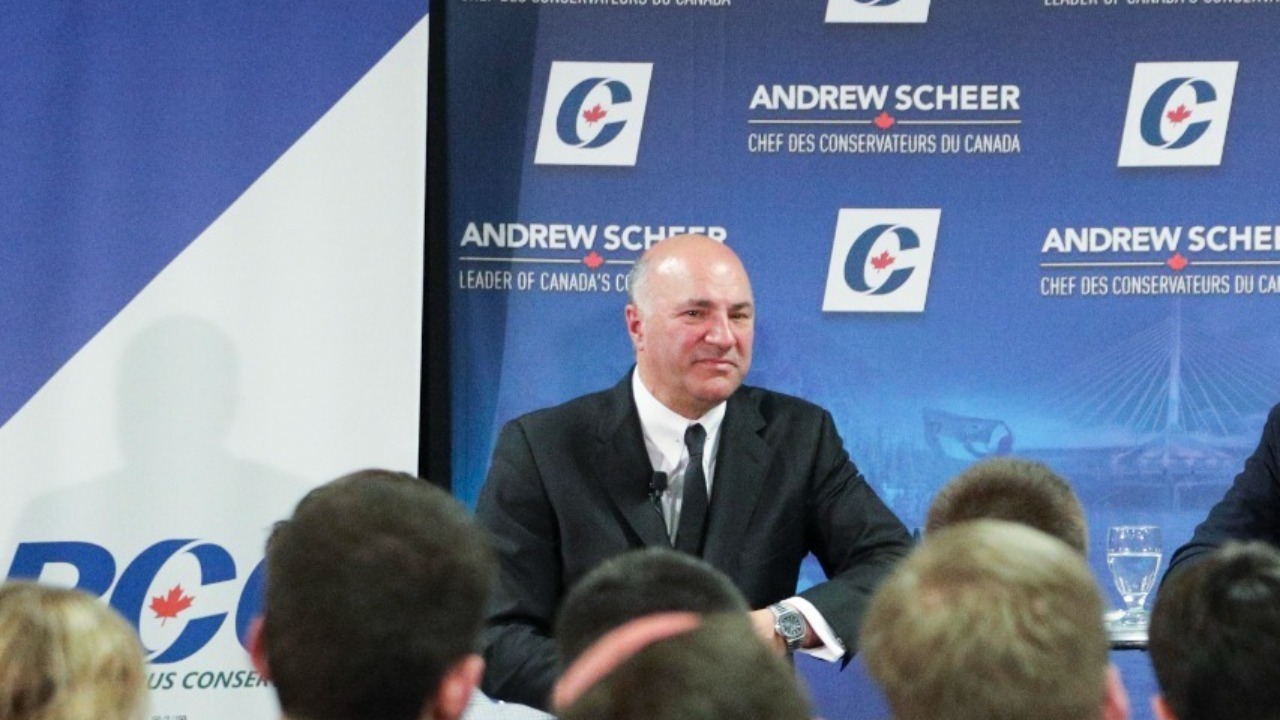
Investor and television personality Kevin O’Leary has publicly condemned California’s proposed one-time 5% wealth tax on billionaires, calling the ballot initiative “insane” and urging the state’s residents to remove the political leaders backing it. The measure, filed as A.G. File No. 2025-024, would impose a 5% levy on the total net worth of Californians whose wealth exceeds one billion dollars, excluding real estate and retirement accounts. With the initiative now under formal fiscal review and potentially heading to voters, O’Leary’s broadside has sharpened a debate over whether the tax would deliver a needed revenue windfall or drive the ultra-wealthy out of the state entirely.
What the Ballot Initiative Actually Proposes
The measure, titled “New tax on the wealth of billionaires,” would create a one-time 5% tax on the total net worth of California residents who cross the billion-dollar threshold. According to the Legislative Analyst’s Office, the tax would not apply to real estate holdings or retirement accounts. That distinction matters because it narrows the taxable base to liquid and semi-liquid assets such as stock portfolios, private business equity, and other financial instruments, while shielding the two asset classes most commonly held by middle-income households. In effect, the initiative is designed to focus on concentrated financial wealth rather than the main forms of savings used by typical homeowners and retirees.
The mechanics of the threshold itself are worth examining. A separate analysis by UC Berkeley economists, presented in an expert report, confirms that the tax is 5% of total net worth for taxpayers with billion-dollar fortunes, rather than a graduated schedule that rises with wealth. The one-time nature of the levy is meant to limit it to a single collection event rather than an annual obligation, which supporters argue makes it more politically palatable and less disruptive. But that framing also raises a practical question: if the state needs recurring revenue for education, housing, and social services, a one-shot tax creates a fiscal cliff the moment the money runs out, forcing lawmakers to either cut spending or find new sources of funding later.
O’Leary’s “Insane” Label and the Political Fallout
O’Leary, best known as a panelist on ABC’s “Shark Tank” and as chairman of O’Leary Ventures, did not mince words in his criticism. He described the wealth tax as “insane” and called on California voters to “fire” the state leaders responsible for advancing it, framing the proposal as evidence that policymakers are hostile to private capital. His argument centers on a familiar but forceful claim: that taxing wealth rather than income punishes capital formation and signals to high-net-worth individuals that their home state views them as a revenue target rather than an economic engine. For O’Leary, the initiative is less a technical policy debate than a warning sign about governance and the long-term reliability of California as a place to invest and build companies.
That framing resonates with a segment of the business community that has grown increasingly vocal about California’s tax burden. The state already levies a top marginal income tax rate of 13.3%, and critics argue that layering a wealth tax on top of that rate creates a compounding disincentive for billionaires to remain. O’Leary’s call to “fire” leaders is not a casual quip but a direct appeal to voters to treat the November 2026 ballot as a referendum on whether the state’s fiscal strategy is sustainable or self-defeating. His comments also feed into a larger narrative that California’s political class is willing to experiment with aggressive tax tools without fully accounting for behavioral responses from the small group of taxpayers who contribute a large share of income-tax receipts.
Tens of Billions in Revenue, but at What Cost
The nonpartisan Legislative Analyst’s Office estimates that the tax could generate tens of billions of dollars in temporary revenue, depending on asset values at the time of implementation and how many billionaires are subject to the levy. That figure is striking on its face. California’s annual general fund budget typically runs well above $200 billion, so a one-time infusion of tens of billions would represent a meaningful but short-lived boost. The LAO’s fiscal review notes that several of the wealthiest people in the world live in California, which helps explain why the projected haul is so large. Wealth is the value of assets, and California’s billionaire class holds enormous concentrations of equity in technology, entertainment, and real estate development firms whose valuations have soared over the past decade.
Yet the same analysis warns of potential ongoing income-tax revenue declines if wealthy residents leave the state in response. That risk is not hypothetical. High-profile relocations by tech executives and hedge fund managers to lower-tax states such as Texas, Florida, and Nevada have already trimmed California’s top-bracket income tax receipts in recent years, and a new wealth tax could add to the perceived incentive to move. The LAO also flags administrative costs associated with valuing illiquid assets like private company stakes, art collections, and venture capital holdings. Assessing the net worth of a publicly traded stock portfolio is straightforward; valuing a founder’s stake in a pre-IPO startup is not. Those compliance costs would fall on both the state, which must build capacity to audit complex valuations, and the taxpayers themselves, who may need teams of appraisers and tax professionals to document their positions.
The Billionaire Migration Question
Most coverage of wealth taxes treats the migration risk as either overblown or inevitable, but neither extreme holds up under closer scrutiny. The LAO’s projection of possible ongoing income-tax revenue declines acknowledges that some departures are likely, yet the office stops short of modeling an exact number of billionaires who would leave or how quickly they might move. That restraint reflects genuine uncertainty about how a one-time levy, as opposed to a recurring annual tax, would alter residency decisions. A billionaire who expects to pay 5% once might calculate differently than one facing the same rate every year, particularly if their wealth is tied up in enterprises that are difficult to relocate physically, like film studios or regionally anchored infrastructure firms.
Still, the structural incentives are clear. California imposes no exit tax on net worth, so a billionaire who relocates before the tax takes effect would owe nothing on the assets they take with them. The initiative’s architects appear to be betting that most billionaires are anchored to the state by business operations, social networks, and quality-of-life considerations, and that a single 5% hit is a tolerable price for remaining. O’Leary’s counter-argument is that the tax sets a precedent: if the state legislature and voters can impose a one-time wealth tax once, nothing prevents future ballot measures from doing it again, effectively turning a “one-time” levy into a recurring threat that erodes trust. That concern may weigh heavily on entrepreneurs considering whether to launch their next venture in California or elsewhere.
How the Tax Hits Different Asset Classes
The exclusion of real estate and retirement accounts from the taxable base is a deliberate design choice, but it creates uneven effects across different types of billionaire wealth. A tech founder whose net worth is concentrated in publicly traded stock faces the full 5% on nearly all of their wealth, because those shares are clearly within the scope of financial assets the initiative targets. By contrast, a real estate magnate with billions tied up in property holdings could see a significantly smaller effective rate because those assets fall outside the tax, even if their overall economic influence is similar. That disparity means the initiative would disproportionately hit founders and investors in Silicon Valley, biotech, and venture capital, the very sectors California promotes as drivers of its innovation economy and future job growth.
The UC Berkeley expert report confirms that the tax applies at a flat 5% of total net worth for those at or above the billion-dollar line, with no graduated brackets or phase-in as wealth increases. That simple structure may ease administration, but it also creates a sharp cliff effect at the threshold. A Californian with $999 million in net worth owes nothing; one with $1.01 billion owes roughly $50 million. Critics like O’Leary argue that this kind of binary trigger discourages wealth creation near the threshold and incentivizes aggressive asset restructuring to stay below it, including shifting ownership to out-of-state entities or family members. Proponents counter that the number of people affected is so small that the broader economic distortion would be minimal, and that the clarity of a flat rate avoids the complexity and loophole-hunting that often accompany multi-tiered tax systems.
What Voters Will Decide in 2026
If the initiative qualifies for the ballot, California voters will face a stark choice. On one side is the promise of tens of billions in new funding for education, housing, and other priorities at a time when the state faces persistent budget pressures and rising demands for services. On the other is the risk that the tax accelerates a trend of wealthy residents leaving, shrinking the income-tax base that funds the majority of state programs and potentially leading to future cuts or new taxes on a broader population. The LAO’s analysis lays out both possibilities without endorsing either, leaving the political argument to campaigns and commentators like O’Leary, who will likely use the measure as a proxy for wider debates about California’s business climate and fiscal management.
Voter registration and turnout will be crucial variables in determining the measure’s fate. California’s online portal at registertovote.ca.gov makes it relatively easy for residents to sign up or update their information, and turnout in gubernatorial-year elections tends to be higher than in off-cycle contests, amplifying the voices of casual and infrequent voters. The question is whether the initiative energizes populist support among the state’s large base of renters and working-class residents, who may view a billionaire tax as a way to rebalance economic power, or whether opposition from business groups and high-profile figures like O’Leary shifts the conversation toward economic risk and job creation. Ballot measures in California often hinge on which side frames the debate more effectively in the final weeks before election day, especially in a media environment where a few memorable advertisements or viral clips can shape perceptions statewide.
A Precedent That Reaches Beyond California
Whatever happens at the ballot box, the initiative has already changed the national conversation about wealth taxation. Federal proposals to tax unrealized capital gains or impose nationwide wealth levies have repeatedly stalled in Congress, in part because of constitutional questions and intense lobbying by affected interests. A state-level wealth tax that clears California’s ballot qualification process and survives legal scrutiny, even if it ultimately fails at the polls, would demonstrate that the idea can advance further than many skeptics assumed. If voters approve the measure, it would provide a real-world test case of how billionaires respond to a sizable one-time hit on their fortunes and how effectively a state can administer such a complex tax.
Other high-tax, high-income states will be watching closely. Lawmakers in places like New York, Massachusetts, and Washington have floated various forms of wealth or capital-gains surcharges in recent years, often citing similar goals of funding education, housing, and climate initiatives. A successful California experiment would give them a template, while a backlash-driven repeal or evident exodus of wealthy residents could serve as a cautionary tale. For investors and entrepreneurs, the stakes go beyond a single 5% levy: the outcome will signal whether the political appetite for taxing concentrated wealth is rising or receding, and whether O’Leary’s warning about an “insane” policy environment becomes a broader narrative about where capital feels welcome in the United States.
More From The Daily Overview
*This article was researched with the help of AI, with human editors creating the final content.

Grant Mercer covers market dynamics, business trends, and the economic forces driving growth across industries. His analysis connects macro movements with real-world implications for investors, entrepreneurs, and professionals. Through his work at The Daily Overview, Grant helps readers understand how markets function and where opportunities may emerge.

