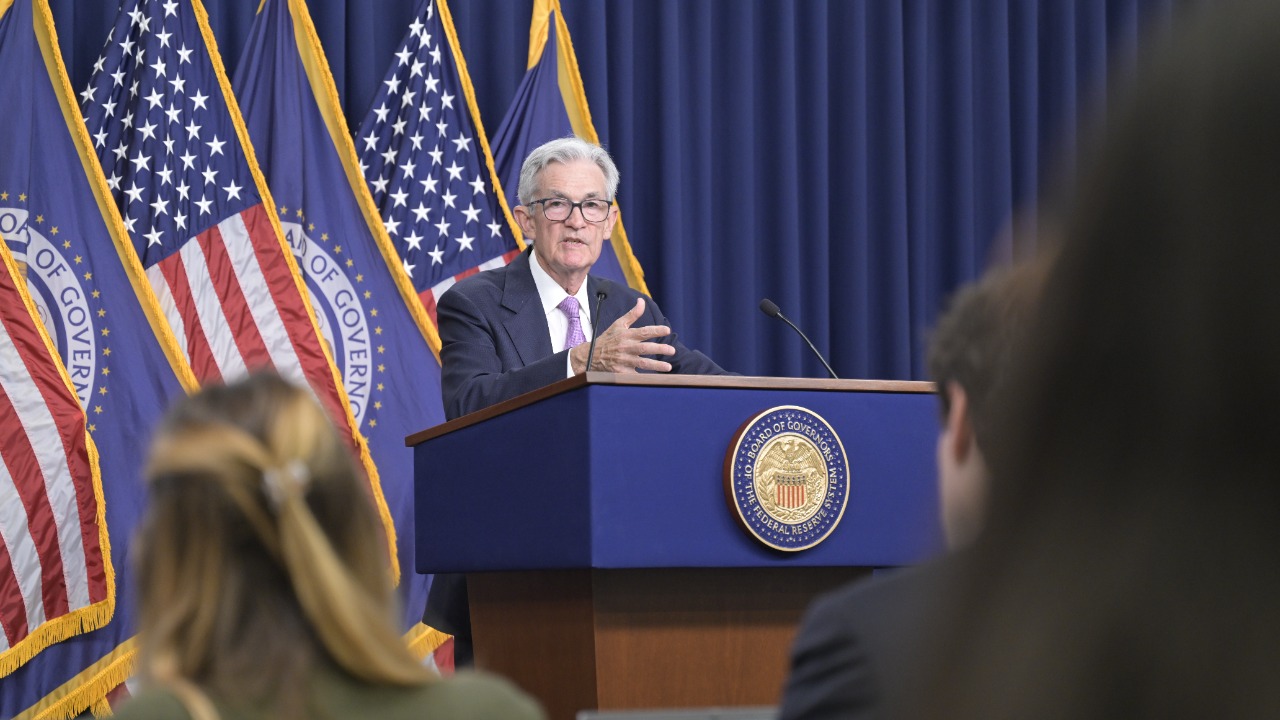
The Federal Reserve is cutting interest rates even as prices remain stubbornly high, a combination that captures how strange the current expansion feels for households and markets alike. I see an economy where inflation has cooled from its peak but is still being propped up by policy choices, especially tariffs, that keep everyday goods more expensive than they otherwise would be.
That tension is shaping every major decision at the central bank, from how fast to lower borrowing costs to how bluntly officials talk about the political forces behind higher prices. It is also forcing consumers, businesses, and traders to navigate a landscape in which growth looks resilient on paper while the cost of living still bites.
The Fed cuts rates into sticky inflation
Fed officials have now moved into a new phase, easing policy even as they acknowledge that inflation has not fully returned to their comfort zone. The Federal Reserve on Dec rate decision announced a quarter point cut to the federal funds rate, a shift that reflects both relief that price pressures have moderated and concern that keeping policy too tight could undercut growth. I read that move as a bet that the worst of the inflation shock is behind the United States, but not so far behind that the Fed can relax.
That same judgment is visible in how officials describe the tradeoffs they face. In live coverage of the meeting, Fed Chair Jay Powell was quoted warning that there is “no risk-free path,” a phrase that captures the central bank’s view that any choice now carries costs for jobs, wages, or prices. The coverage also highlighted the figure 42, underscoring how closely markets are parsing every data point and remark from Powell and his colleagues. When I see that level of scrutiny, it tells me investors understand that the Fed is trying to steer between the risk of rekindling inflation and the risk of choking off an expansion that still looks fragile beneath the surface.
Powell’s outlook: growth ahead, but with caveats
Even as he leans into rate cuts, Powell has been careful to frame the coming year as one of cautious optimism rather than unbridled relief. In one segment of the same meeting coverage, Fed Chair Jay Powell laid out 3 reasons Powell sees the US economy improving in 2026, aligning his view with forecasters on Wall Street who expect solid growth next year. I read that as a signal that the Fed believes it can bring inflation closer to target without triggering a deep downturn, provided that supply chains remain stable and financial conditions do not tighten unexpectedly.
The central bank’s own projections back up that narrative. In materials released alongside the December meeting, participants in the Federal Open Market Committee, or FOMC projections, laid out their expectations for growth, unemployment, and inflation from 2025 to 2028 and over the longer run. Those tables show a path in which inflation gradually edges closer to the Fed’s goal while output continues to expand, a combination that would validate Powell’s argument that the economy can absorb lower rates without reigniting the price surge that defined the last few years.
Tariffs as a persistent inflation engine
What makes the current environment so difficult to read, in my view, is that some of the most important drivers of prices are political choices rather than purely economic forces. Powell has been unusually direct about one of them, saying during his latest press conference that “It is really tariffs that are causing most of the inflation overshoot,” a remark captured in live coverage that also showed Cargo containers stacked at a Georgia port as a visual shorthand for the trade frictions at work. When the Fed chair singles out tariffs so bluntly, it is a clear acknowledgment that higher import taxes are feeding directly into the prices consumers pay.
Independent analysis backs up that assessment. Researchers at The Budget Lab, or The Budget Lab (TBL), estimate the effects of all US tariffs and foreign retaliation implemented in recent years, including how prices adjust after imports shift to new suppliers. Their Key Takeaways describe how post substitution, after imports move away from the most heavily taxed sources, the burden of tariffs still shows up in higher costs for businesses and households. When I connect that research to Powell’s comments, the picture that emerges is of a price level being held aloft by policy rather than by overheating demand, which complicates the Fed’s usual playbook.
Inflation is lower, but not low enough
On the surface, headline inflation looks far less alarming than it did at the peak of the price surge, yet the details show why the Fed is not declaring victory. According to one widely followed gauge, the annual inflation rate for the United States was 3.0% for the 12 months ending in September, compared to 2.9% the previous period, a reminder that progress is uneven. I see that slight uptick as a warning that even modest shocks, including tariff changes or supply disruptions, can still nudge prices higher than the Fed would like.
Official data tell a similar story. The Consumer Price Index for All Urban Consumers, often shortened to The Consumer Price Index for All Urban Consumers or CPI-U, increased 3.0 percent on a not seasonally adjusted basis over the same span, confirming that price growth has cooled but remains above the central bank’s target. Not seasonally adjusted CPI measures can be volatile from month to month, yet the persistence around 3 percent suggests that underlying pressures, including those linked to trade policy, are still at work. When I line up those figures with Powell’s tariff comments, it reinforces the idea that the Fed is fighting an inflation problem that is partly imported and partly homegrown.
How rate cuts filter through to households
For consumers, the most immediate question is how the Fed’s shift will show up in their monthly bills. The Federal Reserve cut its benchmark rate by a quarter point at its last meeting of the year, a move that typically feeds into lower costs for adjustable-rate mortgages, credit cards, and some auto loans. I expect that relief to be gradual rather than dramatic, especially for borrowers locked into fixed-rate products that were set when inflation was higher.
The committee that approved the cut was not unanimous, which underscores how fraught the decision still is. Coverage of the meeting described a Divided group within the Fed, with some policymakers worried that easing too quickly could reignite price pressures while others fear that keeping rates too high for too long will squeeze credit and hiring. From my perspective, that split reflects the unusual mix of forces at play: an economy that looks solid in aggregate data but feels fragile to households still wrestling with elevated rents, car payments, and grocery bills.
Traders, forecasts, and the path ahead
Financial markets are trying to read all of these signals at once, and the result is a constant recalibration of expectations for both inflation and growth. One recent analysis of the US inflation outlook noted that slowing price growth could open the door to more rate cuts in 2026, asking What that would mean for traders who have spent years adjusting to higher volatility. I see that debate as a sign that markets are no longer fixated solely on how high rates might go, but are instead weighing how quickly they might fall and what that would do to asset prices.
At the same time, Powell has been explicit that tariffs are a key reason inflation has not fallen faster, telling reporters that Tariffs are keeping inflation high and shaping the Fed’s price outlook. That puts the central bank in the unusual position of having to respond to a price shock that is partly the result of trade policy set by elected officials. When I consider how traders interpret that message, it suggests that future inflation will depend as much on political decisions in Washington as on the Fed’s own models.
Politics, courts, and the limits of central banking
The political backdrop to all of this is getting harder for Powell to ignore, even as he tries to stay above the fray. During a press conference following the central bank’s December gathering, Powell was asked about a Supreme Court case that could affect President Donald Trump’s tariff policies, and he declined to weigh in, saying “It’s not something I want to address here.” Coverage of that exchange identified him as Jerome Powell, chairman of the Federal Reserve, and quoted him stressing that tariffs have raised the price level. I read that refusal to comment on the court case, paired with his blunt assessment of tariffs’ impact, as a reminder of how narrow the Fed’s lane is even when policy choices elsewhere are driving inflation.
That tension is likely to persist as long as tariffs remain a central tool of US trade strategy. If courts or future administrations alter those policies, the inflation outlook could shift quickly, forcing the Fed to adjust its path for rates yet again. Until then, I expect Powell to keep threading the same needle: cutting rates to support growth, warning that there is “no risk-free path,” and pointing out that some of the most stubborn sources of higher prices lie outside the central bank’s direct control.
More From TheDailyOverview

Grant Mercer covers market dynamics, business trends, and the economic forces driving growth across industries. His analysis connects macro movements with real-world implications for investors, entrepreneurs, and professionals. Through his work at The Daily Overview, Grant helps readers understand how markets function and where opportunities may emerge.

