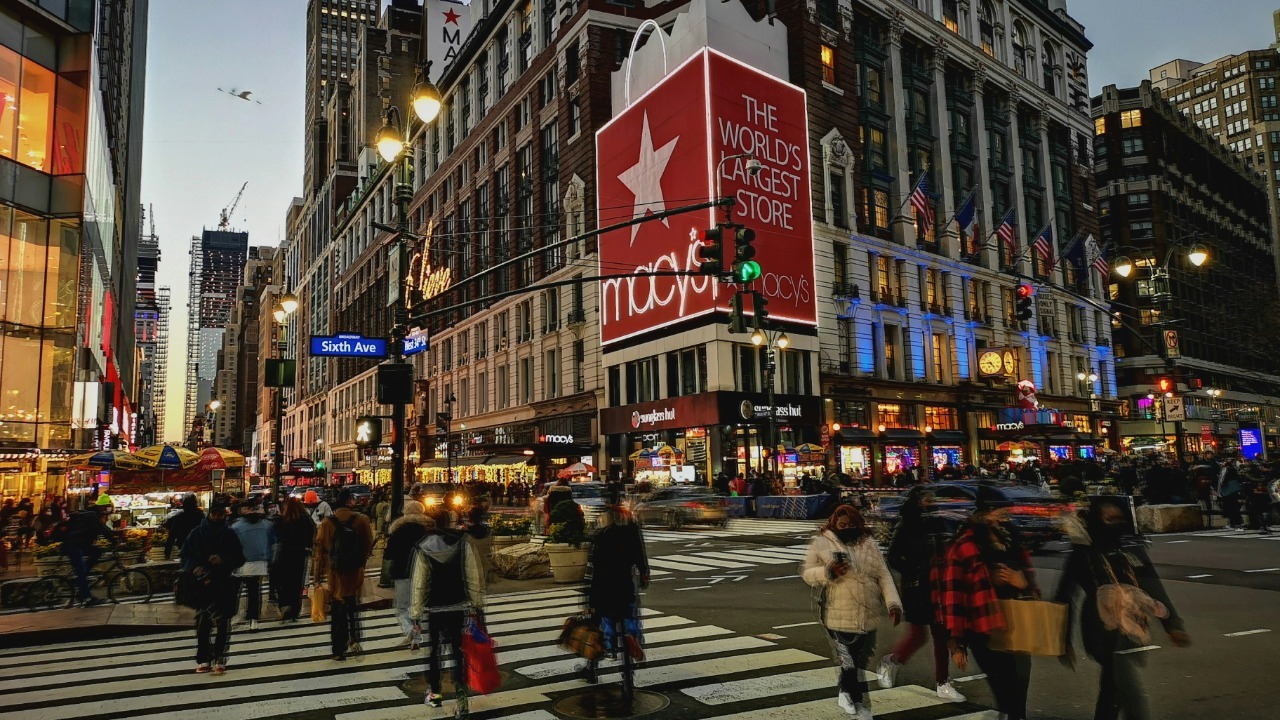
Macy is preparing to eliminate a major slice of its Connecticut workforce, with a sprawling $700 million logistics site set to go dark and roughly 1,200 jobs disappearing alongside it. The move crystallizes the pressure on traditional retailers to streamline operations even as communities that banked on warehouse and distribution work are left scrambling. I see this as a pivotal moment for a state that has quietly become a logistics hub, and for a company trying to reconcile Wall Street expectations with the human cost of rapid restructuring.
The $700 million bet that is now closing
When a company invests $700 million in a single facility, it is making a long term wager on both its own growth and the stability of the region that hosts it. Macy’s decision to unwind that bet in Connecticut, cutting about 1,200 positions as the facility shuts down, signals a sharp reversal in how the retailer wants to move goods and manage inventory. The scale of the cuts, tied directly to a site described as a $700 million facility, underscores how quickly a marquee project can shift from symbol of expansion to emblem of retrenchment once corporate strategy changes and automation, consolidation or new partnerships promise lower costs.
The reporting on the closure makes clear that the 1,200 affected roles are not a marginal trim but a wholesale reset of how Macy intends to serve the Northeast from a logistics standpoint. The company’s choice to close a site associated with a $700 million investment, and in the process erase 1,200 jobs in Connecticut, has been framed as a major inflection point for the region’s economic landscape, with coverage of the Retail Giant Axes 1,200 Jobs In Connecticut As $700M Facility Shuts Down emphasizing just how central the complex had become to local employment. I read that as a warning sign for other communities that have welcomed large, single employer logistics centers without a backup plan for what happens if the corporate math suddenly changes.
South Windsor’s distribution cuts show a broader pattern
Long before the full 1,200 job hit came into focus, Macy had already started shrinking its Connecticut footprint in more targeted ways. In South Windsor, the company moved to cut 106 positions at a distribution center, a smaller but still significant blow that hinted at a broader reconfiguration of its supply chain. The fact that Macy, Inc was willing to pare back operations at a site that had been part of its established logistics network suggested to me that the company was testing how far it could go in consolidating work while still keeping stores stocked and customers satisfied.
Details from that earlier step show how deliberate the process has been. Macy, Inc indicated on Oct 28, 2025 that it would eliminate 106 jobs tied to its South Windsor distribution center, a move that involved shutting down part of the operation at the site on 301 Governors Highway. The specificity of the 106 figure and the timing in late Oct point to a planned restructuring rather than a sudden crisis, and coverage of Macy cutting 106 jobs at South Windsor makes clear that this was framed as a strategic adjustment. I see that step as an early indicator that the company was willing to chip away at its Connecticut presence even before the much larger $700 million facility decision became public.
Backstage operation shutdown deepens the local impact
The pain in South Windsor has not been limited to a single round of cuts. Macy’s South Windsor Distribution Center has also been preparing to shut down its entire Backstage operation, a move that affects over 100 workers and adds another layer of uncertainty for families who had come to rely on those paychecks. When a specialized unit like Backstage is wound down, it does more than trim headcount, it erases a specific set of skills and routines that employees have built up over years, making it harder for them to simply slide into another role nearby.
According to a WARN notice cited in local reporting, the Macy South Windsor Distribution Center’s plan to close its Backstage operation will affect over 100 workers, with the notice dated Oct 28, 2025 and tied directly to the broader restructuring of the site. The fact that this shutdown is documented in a formal notice, and that it targets the Backstage segment in particular, shows how methodically Macy is unwinding pieces of its Connecticut logistics network. Coverage of the over 100 workers affected at the South Windsor Distribution Center highlights how these decisions ripple through a town that had already absorbed earlier cuts. From my vantage point, the Backstage closure illustrates how layered and cumulative the job losses have become, rather than a single, isolated announcement.
Another Connecticut center heads for closure
Even beyond South Windsor and the $700 million facility, Macy is moving to close additional operations in Connecticut, reinforcing the sense that the state is being systematically de prioritized in the company’s logistics map. One distribution center is slated to shut down with more than 100 employees losing their jobs at the start of 2026, a timeline that gives workers only a narrow window to plan their next steps. For a retailer of Macy’s size, 100 employees may not sound like a huge number, but in a small town or single facility context it can feel like the floor dropping out from under a local labor market.
Reporting from early Nov indicates that Macy will close a distribution center in Connecticut and lay off 100 employees, with the decision publicly confirmed on Nov 6, 2025 and the job cuts scheduled to take effect on January 2. The coverage notes that Macy’s plan is to wind down the site entirely, not simply scale it back, which means those 100 employees will not have the option of transferring within the same building or unit. The specificity of the 100 employees figure, the reference to Nov and the January 2 date, and the focus on Connecticut as the setting are all captured in reporting that describes how Macy will close its distribution center and cut those jobs. I see that as another brick in a wall of evidence that the company is not just trimming around the edges but actively exiting multiple logistics footprints in the state.
What the Connecticut cuts reveal about Macy’s strategy
When I step back from the individual announcements, a clear pattern emerges. Macy is steadily pulling back from Connecticut as a logistics base, starting with targeted reductions like the 106 jobs in South Windsor, expanding to the Backstage shutdown that affects over 100 workers, and culminating in the closure of a $700 million facility that takes 1,200 jobs off the map. Each move has its own justification in corporate planning terms, but together they amount to a strategic pivot away from a region that once looked like a long term bet. The company appears to be prioritizing fewer, more centralized or more technologically advanced hubs, even if that means walking away from sites that were heavily promoted and capital intensive only a few years ago.
For Connecticut, the implications are stark. Towns that welcomed Macy distribution centers as anchors of stable employment are now confronting a future in which hundreds of workers, from warehouse pickers to supervisors, must find new roles in a labor market that may not have equivalent positions waiting. The sequence of decisions, from the Oct 28, 2025 notices in South Windsor to the Nov 6, 2025 confirmation of another center’s closure and the Nov 25, 2025 framing of the 1,200 job loss tied to the $700 million facility, shows how quickly a corporate strategy can reshape a state’s economic prospects. I read these developments as a reminder that even the largest and most established retailers can pivot away from communities with little warning, and that states counting on logistics as a growth engine will need to build more diversified, resilient job bases to withstand the next round of corporate recalculations.
More From TheDailyOverview
- Dave Ramsey says these two simple questions show whether you’re rich or poor
- Retired But Want To Work? Try These 18 Jobs for Seniors That Pay Weekly
- IRS raises capital gains thresholds for 2026 and what’s new
- 12 ways to make $5,000 fast that actually work

Grant Mercer covers market dynamics, business trends, and the economic forces driving growth across industries. His analysis connects macro movements with real-world implications for investors, entrepreneurs, and professionals. Through his work at The Daily Overview, Grant helps readers understand how markets function and where opportunities may emerge.

