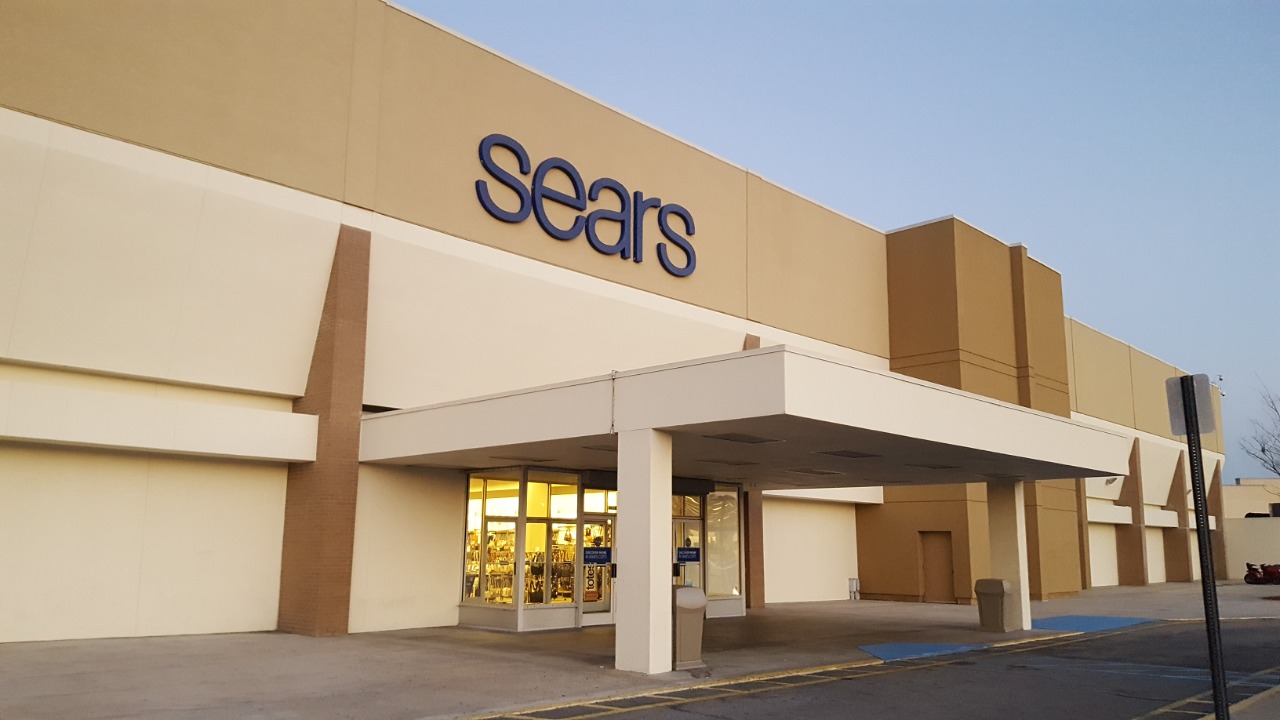
Sears is finally approaching the end of a retail story that once defined American shopping. After decades of shrinking footprints, restructurings, and last-ditch reinventions, the chain that helped build the suburban mall is now down to a handful of locations and facing an exit that looks less like a surprise collapse and more like a long, managed fadeout. The question is no longer whether the company can be saved, but what its drawn-out demise reveals about how retail power can evaporate even from a brand that once felt permanent.
The last chapter of a once-dominant giant
I see the current moment for Sears as the closing scene of a story that has been ending in slow motion for years. The company that once anchored malls and mailed thick catalogs to households across the country is now reduced to a tiny footprint, with reporting indicating that the current Sears store count is just five. That figure would be unremarkable for a niche regional chain, but for a retailer that previously operated nearly 3,500 locations nationwide, it signals that the brand has effectively left the stage even before the last doors are locked.
What makes this endgame striking is how long it has taken to arrive. The Sears chain had 2,000 stores as recently as 20 years ago and more than 200 stores when it emerged from bankruptcy, a collapse in scale that shows just how steep the decline has been even after formal restructuring. Analysts now describe the remaining outlets as a kind of retail afterimage, with one assessment flatly concluding that Sears Will Finally Go Out of Business and that this year’s holiday season is likely to be its last as a functioning chain.
From mail-order innovator to mall-era powerhouse
To understand why the end of Sears resonates so strongly, I start with what it once represented. Long before it became a mall anchor, Sears built its name as a mail-order innovator that used catalogs to reach rural customers who had little access to big-city department stores. That early mastery of logistics and distribution laid the groundwork for the company’s later dominance in the postwar era, when suburbanization and car culture turned enclosed malls and sprawling shopping centers into the default weekend destination for American families.
By the time the mall era peaked, Sears was not just another tenant, it was the gravitational center of many properties, a place where shoppers could buy tools, appliances, clothing, and even insurance in a single trip. At that time, Sears boasted nearly 3,500 stores nationwide, a scale that gave it enormous leverage with suppliers and landlords and made its brands, from Kenmore to Craftsman, fixtures in American homes. The company’s ability to sell everything from washing machines to school clothes under one roof looked like an unbeatable formula, right up until the moment the retail landscape shifted under its feet.
How the numbers tell a story of collapse
The raw store counts trace a collapse that is hard to overstate. Two decades ago, the Sears chain operated 2,000 locations, a figure that already reflected some retrenchment from its absolute peak. When it emerged from bankruptcy protection, it still had more than 200 stores, enough to maintain a national presence and keep the brand visible in many mid-sized markets. Today, with the current Sears store count at five, the company has effectively shrunk to a symbolic footprint, more a legacy artifact than a functioning national retailer, even if the corporate shell technically remains active.
The geographic story is just as stark. Earlier this year, one report noted that Sears had 3,500 stores in the US at its height and now had only 8, highlighting how entire regions have been left without a single location. In Massachusetts, for example, shoppers who want to see the brand in person must travel to the last remaining store in the Massachusetts State, which is located at 250 Granite St. That kind of scarcity would have been unthinkable when Sears was a default presence in malls and shopping centers, and it underscores how thoroughly the company has ceded ground to rivals.
Bankruptcy, restructuring, and the long fade
The formal bankruptcy of Sears was not the moment the company failed, but rather the point at which its long decline became impossible to disguise. On October 15, 2018, Sears Holdings filed for Chapter 11 bankruptcy, a move that allowed it to shed debt, close underperforming stores, and attempt to reorganize around a smaller core. Once the largest retailer in the world, Sears went from a position of unmatched strength to struggling to keep its doors open, a reversal that reflected both strategic missteps and the broader shift toward e-commerce and off-mall shopping.
What followed was less a clean turnaround than a drawn-out process of attrition. The company emerged from Chapter 11 with more than 200 stores, but those locations were often in aging malls with declining traffic, and the capital needed to refresh them was limited. Over the next several years, store closures continued in waves, leaving isolated outposts in places like Florida, California, and the Northeast. By the time analysts began to describe the current Sears store count as five, the chain’s presence had become so thin that even loyal customers struggled to find a nearby location, reinforcing a cycle in which dwindling traffic justified further cuts.
Strategic missteps and missed reinvention
In my view, the most painful part of the Sears story is not just that it lost ground, but that it did so while holding many of the ingredients that later defined successful modern retailers. The company had deep experience in direct-to-consumer logistics from its catalog days, a broad assortment of private-label brands, and a national network of stores that could have served as fulfillment hubs. Yet instead of aggressively reimagining itself for the digital age, it spent years focused on financial engineering, real estate deals, and incremental cost-cutting that left stores looking tired and underinvested.
Analysts who have dissected the collapse point to a series of structural failures. Learnings from Sears Bankruptcy highlight that the company failed to adapt to changing consumer shopping habits, struggled with financial mismanagement, and suffered from a major failure of innovation. While rivals invested in e-commerce platforms, mobile apps, and data-driven merchandising, Sears often appeared reactive and fragmented, closing stores and selling off assets without articulating a compelling vision for what the brand should become in a world where shoppers expected seamless online and in-store experiences.
The Amazon comparison and the digital gap
The contrast between Sears and the digital-native retailers that supplanted it is especially stark when I look at how each approached technology and customer experience. One analysis notes how another company expanded from an online bookstore to a massive retailer of almost anything available at a brick-and-mortar store, a clear reference to the way Amazon built a platform that could sell everything from electronics to groceries. That trajectory shows what Sears might have attempted, given its early mastery of catalog logistics and national distribution, but did not.
Instead of using its physical network as an advantage in the e-commerce era, Sears allowed its stores to become liabilities, with aging fixtures, inconsistent inventory, and limited integration with digital channels. While Amazon leveraged data to personalize recommendations and streamline delivery, Sears struggled to offer basic conveniences like reliable online stock checks or fast in-store pickup. The company’s failure to close this digital gap left it squeezed between nimble online players and more focused brick-and-mortar rivals that invested heavily in omnichannel capabilities, such as curbside pickup and ship-from-store fulfillment.
Black Friday without Sears and the symbolism of the end
For decades, Black Friday was one of the days when Sears felt most central to American consumer life. Families lined up before dawn to grab doorbuster deals on appliances, tools, and electronics, and the chain’s circulars helped set the tone for the entire holiday shopping season. The idea that the country could experience a major retail holiday without Sears participating in any meaningful way would once have seemed far-fetched, yet that is precisely the scenario now unfolding as the chain’s footprint shrinks to a handful of locations.
Recent reporting has framed this year’s holiday period as potentially the last in which Sears operates as a recognizable retail brand, with one analysis asking whether this could be the company’s final Black Friday and quoting a source who bluntly concluded, “There’s no future.” The same reporting notes that The Sears chain had 2,000 stores as recently as 20 years ago and more than 200 stores when it emerged from bankruptcy, underscoring how far it has fallen as it approaches what some describe as Sears’ final demise. The absence of Sears from the national Black Friday conversation is not just a business story, it is a cultural marker of how thoroughly the retail landscape has been reordered.
What the final closures mean for workers and communities
As the last Sears stores prepare to close, I find it important to look beyond the corporate balance sheet and consider the human and local impact. Each remaining location still employs workers who have stayed through years of uncertainty, often out of loyalty to colleagues or a lack of comparable jobs nearby. When a store shutters, those employees face the challenge of finding new work in a retail sector that has shifted toward logistics centers, discount chains, and e-commerce fulfillment, roles that may be located far from the malls where Sears once anchored daily life.
The communities that host the final stores also confront difficult questions about what comes next. A Sears anchor was often a key traffic driver for smaller tenants, from shoe stores to local food courts, and its departure can accelerate the decline of an already struggling property. In places like the last Sears in Massachusetts, located at 250 Granite St, local officials and landlords must decide whether to redevelop the space into mixed-use projects, carve it up for multiple smaller tenants, or leave it dark while they search for a viable replacement. The end of Sears, in that sense, is not just the story of one company’s failure, but a case study in how the collapse of a legacy anchor can ripple through entire commercial corridors.
The legacy Sears leaves behind
Even as the final stores wind down, Sears leaves a legacy that still shapes how I think about retail. The company helped normalize the idea that a single brand could sell everything from tires to televisions under one roof, a concept that later big-box chains and online marketplaces adopted in their own ways. Its catalog business foreshadowed modern e-commerce by teaching generations of consumers to browse at home, place orders remotely, and trust that goods would arrive as promised, even if the mechanism was a postal truck instead of a delivery van guided by an app.
There is also a cautionary dimension to that legacy. Once the largest retailer in the world, Sears demonstrates how quickly dominance can erode when a company fails to invest in innovation and loses touch with how customers actually want to shop. The story that began with a disruptive mail-order catalog and grew into a mall-era powerhouse is now ending with a handful of scattered stores and a brand that survives mostly in memory. As the last locations prepare to go dark, the real question is not whether Sears could have been saved, but how other retailers will absorb the lessons of its rise and fall before they find themselves following the same path.
More From TheDailyOverview
- Tennessee loses $2.6B megafactory and faces major layoffs
- Retired But Want To Work? Try These 18 Jobs for Seniors That Pay Weekly
- What to do with your pennies after the U.S. stops minting them
- Home Depot CEO warns of a troubling customer trend in stores

Grant Mercer covers market dynamics, business trends, and the economic forces driving growth across industries. His analysis connects macro movements with real-world implications for investors, entrepreneurs, and professionals. Through his work at The Daily Overview, Grant helps readers understand how markets function and where opportunities may emerge.

