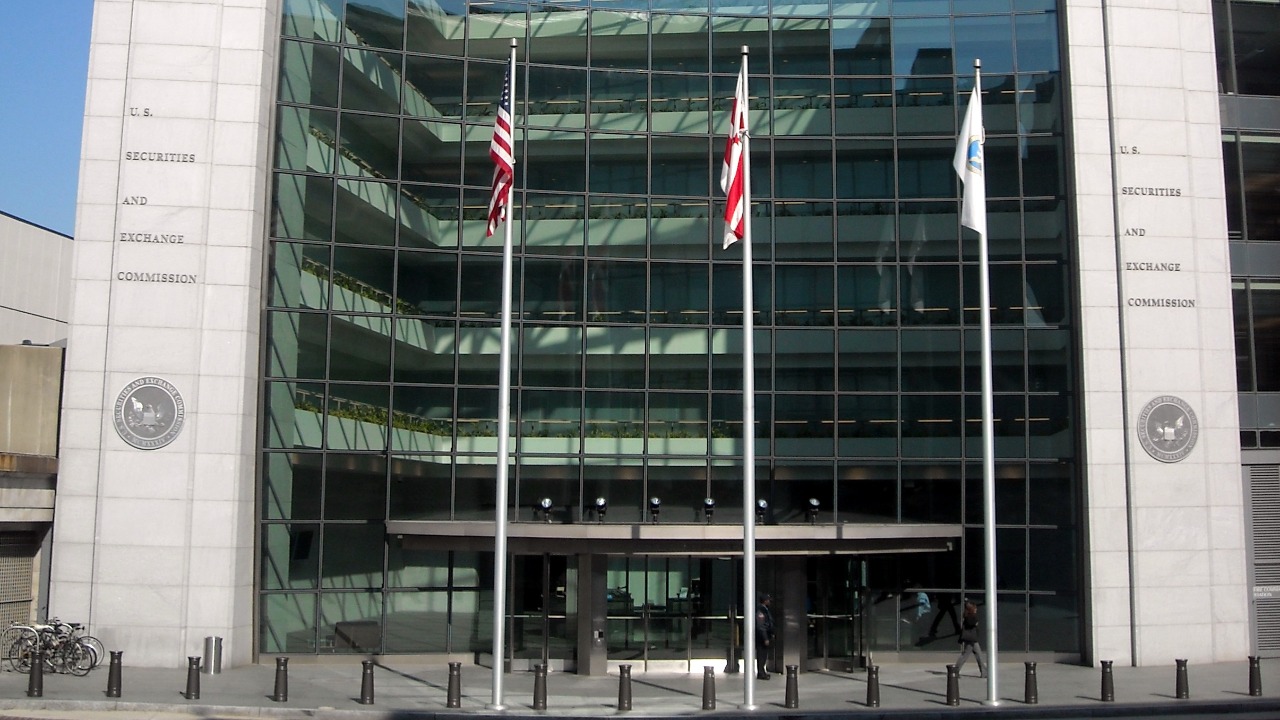
U.S. regulators have just taken a concrete step toward putting Wall Street’s core plumbing on blockchain rails, clearing a path for tokenized versions of traditional stocks to trade alongside their analog cousins. The move gives a key market utility permission to experiment with digital representations of securities, signaling that tokenization is shifting from crypto conference buzzword to regulated market infrastructure.
For investors, brokers, and exchanges, the decision raises a new question: how quickly will today’s familiar stock tickers be joined by blockchain-based twins, and what new risks and responsibilities will come with that shift in market design?
The SEC’s quiet green light to DTCC
The pivotal development arrived when the Securities and Exchange Commis allowed The Depository Trust & Clearing Corporation, or DTCC, to begin tokenizing assets that already sit in its core custody system. In practical terms, DTCC Receives SEC Nod for Asset Tokenization so its subsidiary can create digital tokens that mirror real-world assets held in DTC custody, without uprooting the existing settlement framework that underpins U.S. equity markets, according to DTCC Receives SEC Nod for Asset Tokenization. That structure keeps the traditional books-and-records environment intact while letting market participants test blockchain-based issuance and transfer of tokenized securities.
DTCC said its subsidiary DTC has received a No-Action Letter from the SEC that authorizes a three-year, controlled program for these tokenized instruments, a detail that underscores how tightly supervised the experiment will be. In that letter, the SEC Clears DTCC for Tokenization Services for an initial period of three years, giving the utility room to run pilots while preserving the regulator’s ability to revisit the framework, as described in SEC Clears DTCC for Tokenization. DTCC said its subsidiary DTC has received a No-Action Letter from the SEC that explicitly frames the initiative as a controlled program rather than a wholesale migration, a nuance highlighted in DTCC said its subsidiary DTC has received a No-Action Letter.
How tokenized securities actually work
To understand what is changing, it helps to start with the basic definition of tokenized securities. Tokenized Securities Explained describe these instruments as digital representations of traditional financial assets that live on a blockchain while still being subject to existing securities laws. In other words, the token is not a new asset class so much as a new wrapper, a programmable claim on the same underlying stock or bond that investors already recognize, as outlined in Tokenized Securities Explained.
Within that framework, tokenized stocks are a specific subset that mirror equity positions and can be sliced into smaller units than a single share. Benefits of Tokenized Stocks include the ability to offer Fractional Ownership so that investors can buy slivers of high-priced names instead of full lots, a feature that can make blue-chip equities more accessible to smaller accounts, as detailed in Benefits of Tokenized Stocks. Tokenized securities can also embed compliance rules and settlement logic directly into smart contracts, which is why advocates see them as a bridge between traditional compliance and blockchain efficiency.
Why the DTCC pilot matters for market plumbing
What makes this SEC move significant is not just the technology, but the institution that is being allowed to use it. DTCC sits at the center of U.S. post-trade processing, and its new tokenization service is designed to let tokenized assets flow between registered Participa while maintaining the same risk controls that govern conventional securities, according to DTCC Tokenization Service Benefits. That architecture means brokers and custodians can experiment with blockchain-based settlement without abandoning the central clearing model that has underpinned decades of market stability.
DTCC Authorized to Offer New Tokenization Service, Paving the Way to Tokenized DTC Custodied Assets, and the organization has emphasized that Industry Partnership & Collaboration Will Continue to Underpin DTCC Efforts to Help Lead Transition to digital markets. The goal is to ensure that tokenized instruments meet the same safety and execution standards as traditional markets, rather than creating a parallel system with weaker safeguards, as described in Industry Partnership & Collaboration Will Continue. The SEC’s no-action letter lets DTC launch a tokenization service that is explicitly framed as a way to help lead the transition to digital markets, a point reinforced in SEC Greenlights DTCC: Tokenized Securities to Revolutionize US Markets.
Benefits: access, efficiency and new market design
Proponents of tokenized stocks argue that the technology can make markets more inclusive and more efficient at the same time. Benefits of Tokenized Stocks include Fractional Ownership that lets investors buy smaller slices of companies that might otherwise be out of reach, and Unlike traditional shares that often come in high denominations, tokenized versions can be tailored to lower minimums and more flexible trading hours, as outlined in Benefits of Tokenized Stocks. That structure could complement existing retail platforms that already offer fractionalized exposure, but with the added benefit of on-chain transparency and programmable settlement.
Tokenization, Benefits and Risks analysis points out that Tokenization is transforming previously illiquid markets by making them more accessible and tradable, a dynamic that could extend to private company equity, real estate, or structured products if the DTCC framework proves scalable. At the same time, the same report notes that retail investors can be more prone to panic than their institutional counterparts, which means easier access must be paired with robust investor protections, as highlighted in Tokenization, Benefits and Risks. Over time, if tokenized stocks settle faster and with fewer intermediaries, they could also reduce counterparty risk and free up capital that is currently tied up in multi-day settlement cycles.
Risks: technical fragility, regulation and market behavior
The same features that make tokenized stocks attractive also introduce new fault lines that regulators and market operators will have to manage. Tokenized stock trading: The huge risks in moving stocks to blockchain warns that Benefits of tokenized stocks such as Increased accessibility through fractional shares can come with heightened exposure to technical vulnerabilities, custody mishaps, and governance failures if smart contracts or blockchain networks malfunction, as detailed in Tokenized stock trading: The huge risks. The report notes that moving core equity infrastructure to public or semi-public chains raises questions about who is responsible when code breaks or when forks create competing versions of the same asset.
Tokenized Securities Explained also flags technical vulnerabilities and liquidity challenges as central concerns, noting that tokenized markets can fragment order flow and make it harder to guarantee best execution if liquidity is spread across multiple chains or platforms. Tokenized securities are digital representations of traditional assets, but they still depend on robust cybersecurity, reliable validators, and clear legal frameworks to ensure that on-chain ownership maps cleanly to off-chain rights, as emphasized in Tokenized Securities Explained. For regulators, the challenge will be to extend existing investor protections into this new technical environment without stifling the very efficiencies that tokenization promises.
Exchanges, data providers and the race to adapt
The SEC’s stance on DTCC is already reshaping how exchanges and data providers position themselves for a tokenized future. Nasdaq Pledges Swift Push for SEC Approval of Tokenized Stocks, signaling that the exchange wants to list and trade these instruments under the same safety and execution standards as traditional securities, as described in Nasdaq Pledges Swift Push for SEC Approval of Tokenized Stocks. That push suggests a future in which tokenized and conventional shares trade side by side on mainstream venues, with the underlying infrastructure abstracted away from end users.
On the data side, platforms that already aggregate traditional securities information are likely to face pressure to incorporate tokenized instruments into their feeds. Google Finance provides a simple way to search for financial security data, including stocks, mutual funds, indexes, currencies and cryptocurrencies, and its disclaimer framework hints at how data providers may need to clarify the status and risks of any new tokenized listings, as outlined in Google Finance. If tokenized stocks gain traction, investors may expect to see their blockchain-based holdings reflected alongside conventional tickers in the same dashboards and mobile apps they already use.
From pilot to precedent
For now, the SEC’s decision is tightly scoped. Gift this article notes that regulators have given DTCC the OK to tokenize some stocks in a move to blockchain, with the program limited to approved blockchains for three years and framed as a test rather than a wholesale migration, as detailed in Gift this article. The report cites By Katherine Doherty and references the figures 49 and 35 in connection with the coverage, underscoring how closely market participants are watching the early contours of the program.
At the same time, DTCC Tokenization Service Benefits materials stress that Dec is a starting point rather than an endpoint, with the organization planning iterative releases to meet industry needs as tokenized assets begin to circulate among registered Participa, as described in DTCC Tokenization Service Benefits. If the three-year pilot proves that tokenized stocks can deliver real efficiency gains without undermining investor protection, the SEC’s quiet green light could end up being remembered as the moment when blockchain technology moved from the fringes of finance into the core of how U.S. markets operate.
More From TheDailyOverview

Grant Mercer covers market dynamics, business trends, and the economic forces driving growth across industries. His analysis connects macro movements with real-world implications for investors, entrepreneurs, and professionals. Through his work at The Daily Overview, Grant helps readers understand how markets function and where opportunities may emerge.

