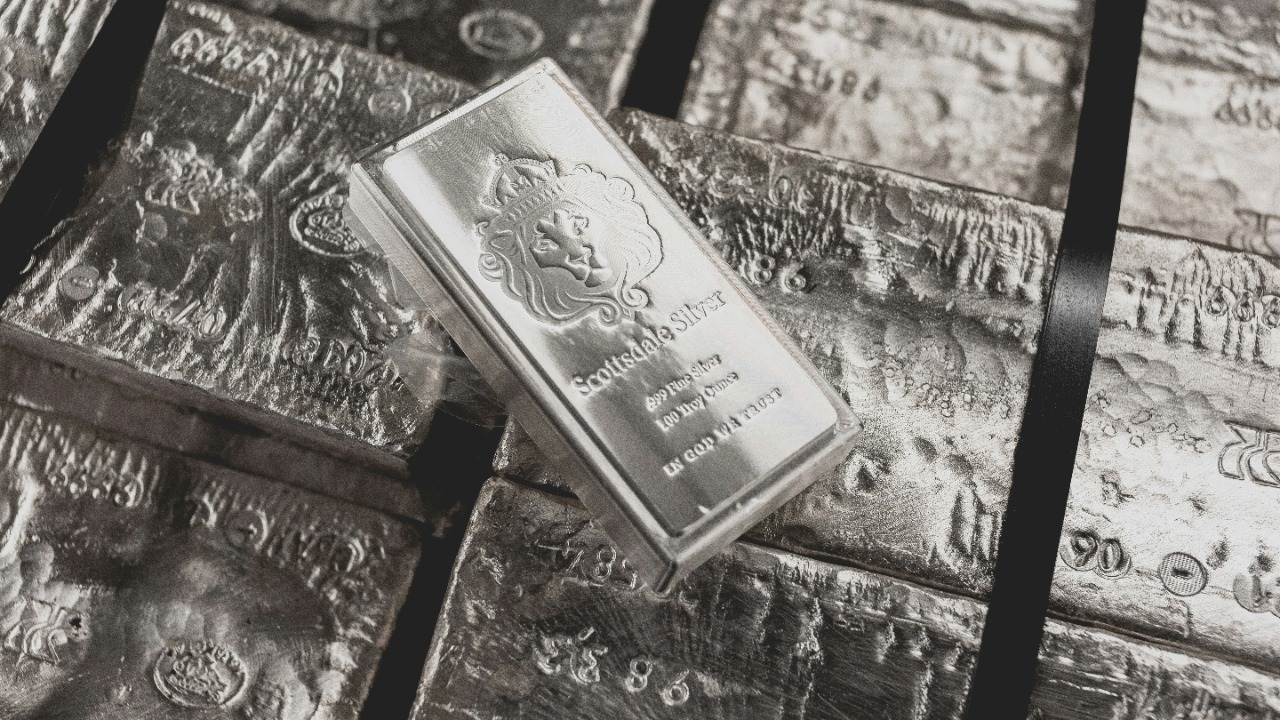
Silver’s spectacular boom has flipped into an equally spectacular bust, with prices crashing about 35% in a single session and erasing trillions in paper wealth. Yet even as the metal’s collapse spilled into tokenized products and crypto exchanges, bitcoin’s own slide has been milder, leaving the flagship cryptocurrency looking almost restrained beside the carnage in precious metals.
I see this episode as more than a freak trading day. It is a stress test of the “digital gold” narrative, a reminder that leverage can turn any safe-haven story into a bubble, and a warning that the line between commodities and crypto is thinner than many investors like to admit.
From record highs to a 35% rout in a single day
Silver’s fall did not come out of nowhere. After a furious rally that pushed Silver above $100 an ounce for the first time, the market was primed for a reversal. Analysts such as Aditya Raghunath had already highlighted how speculative flows had driven the metal far beyond fundamentals, warning that a move above $100 was “destined to unwind violently” as positioning became stretched and liquidity thinned at the top.
That unwind arrived with brutal speed. On a single Precious metals trading day, silver plunged 35%, its worst session on record, while gold dropped about 12% from its own recent peak. One viral post from Bitcoin Magazine noted that the Silver price was “currently down 35% today” and estimated that roughly $2,400,000,000,000 in market capitalization had been wiped out, a staggering figure that underlined just how crowded the trade had become at the top.
Fed politics, Trump’s pick and the macro spark
Behind the price action sat a powerful macro catalyst. Gold and silver had surged as investors fretted about inflation, fiscal deficits and the path of interest rates, but that narrative shifted when President Donald Trump moved to reshape the Federal Reserve. Reporting linked the metals’ sudden reversal to Trump’s nomination of Kevin War as the next Fed chair, a choice interpreted by traders as a signal that policy could turn more hawkish than markets had priced in.
As that nomination hit the tape, Gold and silver prices nosedived as the dollar strengthened and real yields jumped, undercutting the core rationale for holding non-yielding metals at record valuations. The shift in expectations was so abrupt that it turned what might have been a healthy correction into a historic liquidation, with traders scrambling to exit leveraged bets that had been built up over months of easy money and dovish rhetoric.
How leverage turned a correction into a crash
Once the macro spark lit the fuse, market structure did the rest. Futures data show that Silver prices fell more than 30% in the immediate aftermath of the Fed chair news, dropping below $100 per ounce from peaks above $120. That kind of intraday swing is almost impossible without heavy leverage, and the move through key levels triggered a cascade of margin calls that forced even fundamentally bullish traders to sell into a falling market.
On the crypto side, the damage was even more telling. Tokenized silver futures became the epicenter of a rare cross-asset liquidation, with Tokenized contracts leading crypto-market liquidations over a 24 hour window and roughly $142 million, or $142 m, in positions wiped out. Another analysis of the same episode noted that Higher margins forced leveraged traders either to add capital or exit, amplifying short term price swings and turning what might have been a contained metals sell off into a broader crypto shock.
Bitcoin’s slide looks tame beside silver’s meltdown
Bitcoin did not escape the turmoil, but its losses were modest compared with the devastation in silver. As precious metals cracked, one report noted that What traders saw was silver down more than 30% and gold off more than 10%, while bitcoin merely slipped back toward the $82,000 area. Another snapshot from MEXC showed the same pattern, with silver plunging 35%, gold falling 12% and News that bitcoin was still holding around $83,000 even as metals were in free fall.
The next leg lower for crypto came slightly later, when Bitcoin fell sharply on Saturday and briefly traded below $80,000, its lowest level since April 2025. Even then, the percentage drawdown lagged far behind silver’s 35% single day collapse, a reversal of the usual pattern in which crypto is the most volatile asset on the screen. For once, the “digital gold” looked like the steadier store of value while the physical metal behaved like a meme stock.
Silver has been out-volting bitcoin for longer than one bad day
To understand why silver’s crash felt so violent, it helps to look at the run up. By the end of last year, Silver had already overtaken bitcoin on key volatility measures, finishing 2025 up 151% while Bitcoin ended the year down about 7% and stuck in a holding pattern. That divergence meant a huge amount of speculative capital had migrated into metals, treating them less as safe havens and more as high beta trades on macro policy and industrial demand.
When the tide turned, the same leverage that had powered silver’s 151% gain on the way up magnified the losses on the way down. One analysis of the liquidation shock noted that Silver‘s 35% plunge ended up “beating” bitcoin in terms of sheer downside volatility, a rare inversion of the usual risk hierarchy. For traders who had come to see metals as the conservative alternative to crypto, that reversal was a rude awakening.
From bubble talk to “buy the dip”: how sentiment flipped
In the weeks leading up to the crash, warnings about a metals bubble were already circulating. Analysts had framed the surge above $100 as evidence that Gold and silver had entered bubble territory, with both metals plunging sharply from record highs once the macro backdrop shifted. At the same time, bank research flagged the risk that prices could ultimately retrace toward $50 if speculative froth evaporated, a scenario that would still leave long term holders with gains but would devastate latecomers who bought near the top.
Yet even after the rout, some seasoned bears turned constructive. Todd Campbell, who had previously highlighted the downside risks, argued that Todd Campbell now saw the 30% plunge in Silver on January 30 as “one for the record books” but also as a potential reset that could attract longer term investors. Another breakdown of the same move stressed that structural deficits in mine supply and industrial demand might eventually reassert themselves once forced sellers were cleared, suggesting that the crash could mark the transition from a speculative bubble to a more fundamentally driven market.
Why crypto did not get the rotation it expected
One of the more surprising aspects of this episode is what did not happen. Many crypto investors had assumed that if precious metals cracked, capital would rotate into bitcoin as the alternative macro hedge. Instead, as When the metals witnessed their sharp reversal, the broader crypto market also slid, with total digital asset capitalization hovering around $2.7 trillion and no sign of a decisive inflow from gold or silver refugees. Instead of acting as a beneficiary, bitcoin traded like part of the same risk complex, pressured by the same macro forces and the same deleveraging wave.
The behavior of tokenized metals on crypto exchanges helps explain why. As What derivatives data showed, tokenized silver futures were at the center of the liquidation, with about $142 million in positions flushed out as prices collapsed. Another analysis of the same contracts emphasized that Higher margins forced traders to dump positions across the board rather than rotate neatly from one asset to another. In that environment, bitcoin was not a safe harbor, it was collateral, and it was sold to meet margin calls just like everything else.
More From TheDailyOverview
This article was researched with the help of AI, with editors refining and creating the final content.

Grant Mercer covers market dynamics, business trends, and the economic forces driving growth across industries. His analysis connects macro movements with real-world implications for investors, entrepreneurs, and professionals. Through his work at The Daily Overview, Grant helps readers understand how markets function and where opportunities may emerge.

