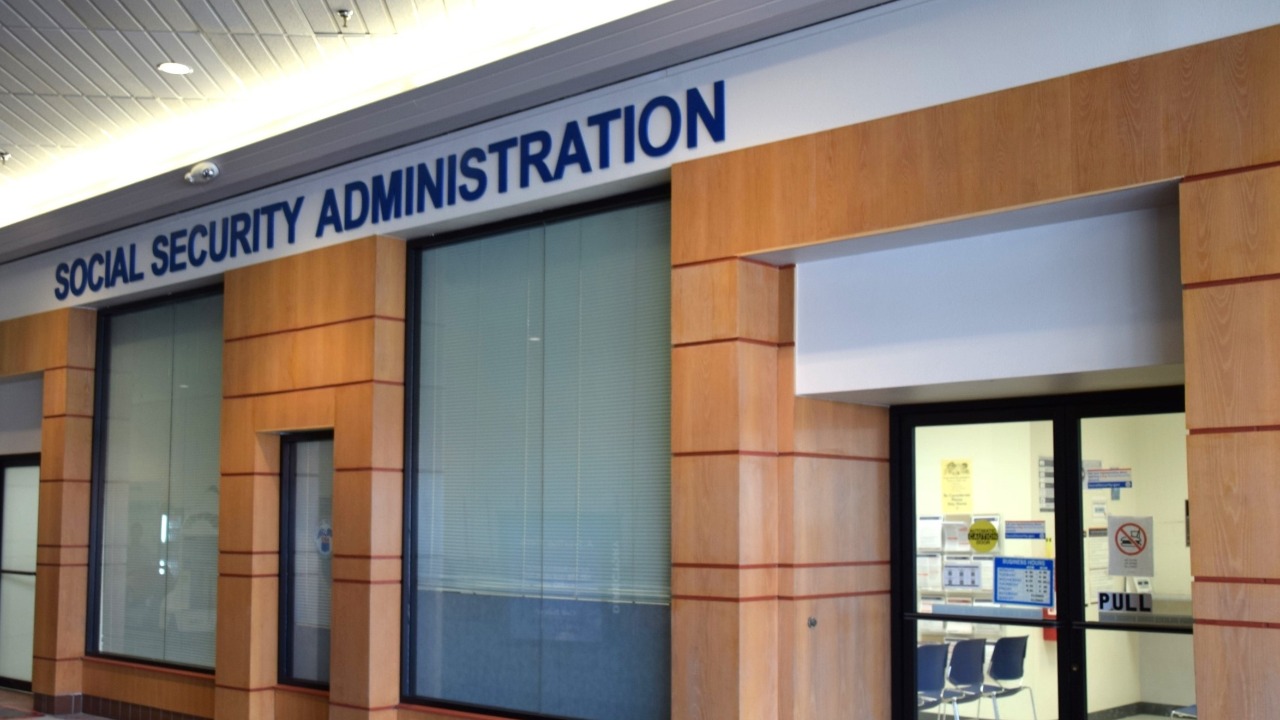
The Congressional Budget Office projects that Social Security’s retirement trust fund will become insolvent around fiscal year 2032, while the Social Security Administration’s own trustees place the date at 2033. Either timeline gives Congress fewer than eight years to close a funding gap that, left unaddressed, would force automatic benefit cuts for tens of millions of retirees. The divergence between the two federal forecasts reflects different economic assumptions, but the direction is the same, the clock is accelerating, not slowing.
Two Federal Forecasts, One Shrinking Window
On June 18, 2025, the Social Security Administration released its annual trustees report, which projects that the Old-Age and Survivors Insurance trust fund will exhaust its reserves in 2033 under intermediate assumptions, as described in the agency’s own press materials. At that point, incoming payroll tax revenue would cover only 77% of scheduled benefits, according to the trustees’ official summary. Until 2033, the OASI fund can pay 100% of scheduled benefits, but the margin is thin and narrowing each year as costs outpace dedicated tax income.
The Congressional Budget Office, working from its own macroeconomic baseline, places the insolvency date roughly a year earlier, around fiscal year 2032, as outlined in its long-term budget outlook for 2026 to 2036. The gap between the two estimates stems from different assumptions about wage growth, labor force participation, and interest rates rather than from a disagreement about the basic math. Both agencies agree that annual Social Security costs have exceeded non-interest income for more than a decade, and the trust fund has been drawing down reserves to cover the difference.
Depletion Date Moved Up From Last Year
The 2025 trustees report shifted the combined Old-Age and Survivors Insurance and Disability Insurance depletion date to 2034, one year earlier than the prior year’s estimate, according to the report’s overview highlights. The trustees noted that they had reassessed their expectations around several economic and demographic variables, and the resulting changes pushed the projected shortfall closer to the present. That one-year acceleration may sound modest, but it compounds a pattern: projections have generally moved forward, not backward, across recent annual reports.
A nonpartisan analysis from the Congressional Research Service confirmed the year-over-year shift by comparing key dates in the 2024 and 2025 trustees reports in a concise research brief. The CRS summary restated the same depletion dates and payable-benefit shares, providing a side-by-side look at how much ground the program lost in a single year. For workers in their mid-50s today, the practical consequence is straightforward: the window during which full benefits are guaranteed shrank by 12 months between one annual report and the next.
What Is Driving the Faster Drawdown
Demographics sit at the center of the problem. The ratio of workers paying into the system to retirees drawing benefits continues to decline as the baby-boom generation ages and birth rates remain low. The trustees’ detailed actuarial discussion cites the relationship between program costs and income over the long-range projection window as a key factor in the imbalance. That structural gap means even a strong economy cannot fully offset the rising outflow of benefit payments as more beneficiaries live longer and draw benefits for additional years.
Legislative and policy changes have also played a role. Reporting from the Associated Press noted that new Social Security rules and rising health care costs contributed to the acceleration of the go-broke dates, highlighting how specific regulatory decisions can alter the trajectory of the trust fund in ways that are not always obvious to the public, as described in news coverage of the latest report. While the trustees focus primarily on demographic and economic modeling, outside analyses have emphasized how an aging population spending more on medical care interacts with program rules to create compounding pressure on a fund that was already running deficits on a cash-flow basis.
What a 77% Benefit Looks Like for Retirees
The 77% figure published in the 2025 OASDI trustees document is not a hypothetical worst case; it is the automatic outcome under current law if Congress does nothing before the OASI trust fund runs dry, as laid out in the full trustees report. Social Security lacks the legal authority to borrow or run a deficit the way the general federal budget does. Once reserves hit zero, the program can pay out only what it collects in real time from payroll taxes, and that revenue stream covers roughly three-quarters of promised benefits under the intermediate projections.
For a retiree receiving $2,000 per month in scheduled benefits, a 23% cut would reduce the check to about $1,540, a loss of nearly $5,500 per year. That reduction would hit hardest among older Americans who depend on Social Security for the majority of their income and have limited ability to return to work or rebuild savings. The trustees themselves urged that lawmakers address the shortfall soon to continue to protect future generations, echoing language in their own narrative that effectively serves as a direct warning from the program’s financial stewards. The longer Congress waits, the steeper the required fix becomes, whether through tax increases, benefit adjustments, or some combination of both.
Congressional Inaction as a Budget Strategy
One underexamined risk is that the trust fund shortfall could quietly become a budgetary convenience rather than a problem to be solved. Analysts at the Urban Institute have warned that Congress might treat the projected benefit cuts as budget savings rather than as a crisis requiring legislative repair, explaining that current scoring rules already build those reductions into the official projections of future spending, as noted in their policy commentary. Under Congressional Budget Office conventions, the baseline assumes that benefits will drop after trust fund depletion, so any legislation that restores full benefits would appear to increase federal spending relative to that baseline.
This dynamic inverts the normal incentive structure around entitlement reform. Passing a fix looks expensive on paper, while doing nothing looks fiscally responsible in budget documents, even though inaction would impose real-dollar losses on retirees who built their retirement plans around promised benefits. The scoring problem is not new, but it grows more consequential as the depletion date approaches and the size of the necessary adjustment grows. If lawmakers treat the CBO baseline as a ceiling rather than a floor, they may find it politically easier to let benefits erode by default than to vote for the tax increases or spending reallocations needed to prevent cuts, effectively allowing technical budget rules to dictate substantive policy outcomes.
Why the CBO and SSA Dates Diverge
The one-year gap between the CBO’s fiscal year 2032 projection and the SSA trustees’ 2033 estimate for the OASI fund is worth understanding because it shapes how policymakers frame the urgency of reform. CBO builds its forecast from a unified budget perspective, incorporating broader fiscal assumptions about federal spending, tax receipts, and economic growth as part of the overall federal ledger, which is why the agency’s long-range baseline tables situate Social Security alongside other major programs. The trustees, by contrast, model the trust fund in isolation using actuarial methods tuned specifically to Social Security’s dedicated revenue and cost streams, focusing on the program’s own balance sheet rather than on the federal budget as a whole.
For practical purposes, the difference matters less than the agreement. Both agencies project that the retirement trust fund will be unable to pay full benefits within the next seven to eight years, and the Treasury Department, which manages the trust fund’s investments and day-to-day financial operations, has not publicly disputed either timeline in its own official statements. When two independent federal forecasting bodies converge on the same basic conclusion, the remaining debate is not about whether the problem exists but about how quickly Congress will choose to address it. Every year of delay narrows the menu of politically viable solutions, reduces the time available for gradual phase-ins, and increases the size of the eventual adjustment needed to restore long-term solvency.
The Shrinking Reform Calendar
The math behind Social Security reform is not complicated. Closing the long-range funding gap requires some mix of higher payroll taxes, a higher retirement age, modified benefit formulas, or new revenue sources, all of which can be calibrated to share the burden across generations. What makes the problem hard is politics: each option has a constituency that opposes it, and the closer the depletion date gets, the less room there is for gradual phase-ins that spread the impact. Policymakers who want to shield near-retirees must act earlier, because waiting until the last years before insolvency would force abrupt, concentrated changes on a smaller group of workers and beneficiaries.
The trustees’ own documents underscore that timing challenge by emphasizing how early action allows for more modest adjustments, a theme that runs throughout the detailed technical appendices accompanying the 2025 report. If Congress moves soon, it can design reforms that phase in over decades, giving younger workers time to adapt their savings and retirement plans. If it waits until the trust fund is nearly depleted, the only remaining options will be steeper tax hikes or sharper benefit cuts imposed quickly. With both CBO and SSA pointing to a narrow window before automatic reductions take hold, the real question is not whether Social Security will change, but whether those changes will be deliberate and planned or sudden and forced by the calendar.
More From The Daily Overview
*This article was researched with the help of AI, with human editors creating the final content.

Nathaniel Cross focuses on retirement planning, employer benefits, and long-term income security. His writing covers pensions, social programs, investment vehicles, and strategies designed to protect financial independence later in life. At The Daily Overview, Nathaniel provides practical insight to help readers plan with confidence and foresight.

