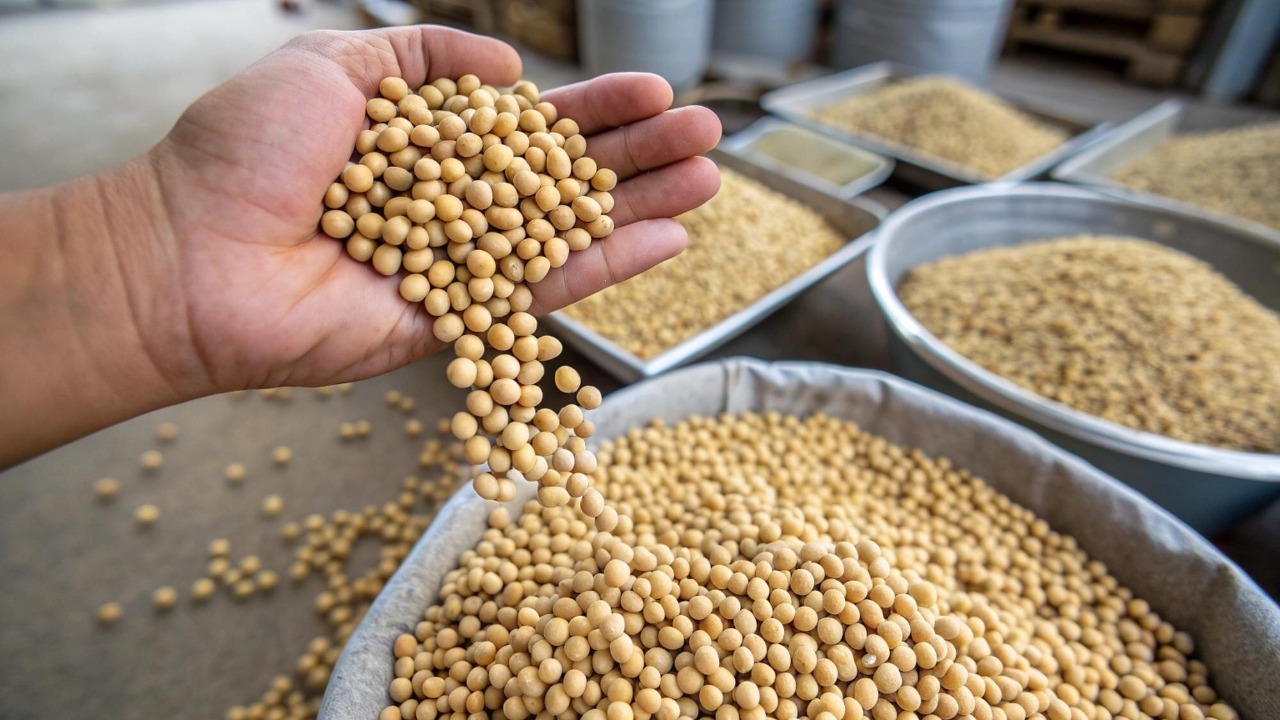
Soybean prices have vaulted to their highest level of 2026 after President Trump jolted grain markets with a fresh push for expanded sales to China. Futures spiked in a matter of minutes as traders scrambled to reprice the odds of a new wave of Chinese buying, turning a routine session into a test of how much influence the White House still wields over a single crop.
The move has revived memories of earlier trade-war whiplash, but this time the rally is unfolding against a backdrop of tighter global supplies and intense competition from Brazil. I see a market suddenly forced to weigh political promises against hard fundamentals, with farmers, importers and speculators all trying to decide whether this surge is a fleeting headline reaction or the start of a more durable shift.
Trump’s social media jolt and the 2026 price spike
The immediate catalyst for the rally was President Trump’s latest online intervention, where he flagged the prospect of significantly larger Chinese purchases of U.S. soybeans. In early trading, Soybean futures were reported trading as much as 45 cents higher, with intraday gains stretching to 50 cents at one point after President Donald Trump floated the idea of stepped-up demand from Beijing. That kind of move in a single morning is the definition of a shock to positioning, especially for funds that had been leaning on more cautious views of export demand.
Market commentary underscored how tightly prices remain tethered to the president’s feed. One analysis framed the session as a textbook case of how Social Media Comments, with traders forced to chase prices after an initial burst of algorithmic buying. I read that as a reminder that in this market, political communication is not background noise, it is a tradable event in its own right, and the 2026 high in futures is as much about perceived presidential intent as it is about bushels and weather.
The 8 million ton promise and China’s leverage
Behind the price spike is a specific pledge: President Trump has suggested that China may buy an additional 8 million metric tons of U.S. soybeans, a volume that would meaningfully tighten export balances if it materializes. Coverage of the move notes that President Trump framed the prospective deal as a way to boost U.S. exports of the staple oilseed to China, a signal that Washington wants soybeans back at the center of the bilateral trade relationship. For a market that has spent years watching Chinese crushers pivot toward Brazilian supply, the idea of such a large incremental U.S. program is enough to force a rethink of price decks.
Analysts tracking the futures pit describe how Soybeans and bean oil ended sharply higher on the day of the announcement, even as other grains like corn and wheat lagged, highlighting how concentrated the optimism is in this single commodity. At the same time, I see a note of caution in the way some market watchers stress that the sort of buying President Trump outlined from China seems “unlikely on many fronts,” even if it cannot be dismissed outright.
Diplomacy, Taiwan and the Beijing angle
The soybean surge is not happening in a vacuum, it is tied directly to a broader diplomatic thaw that the White House is trying to engineer. Reporting on a recent call between Trump and Xi notes that the two leaders discussed Taiwan and soybeans in a conversation aimed at easing tensions and potentially paving the way for a Trump visit to Beijiing. In that context, the rally in Soybean futures on the back of a potential deal looks less like a one-off market blip and more like a deliberate use of agricultural trade as diplomatic ballast.
At the same time, Beijing’s room for maneuver is constrained by price. Analyses of the situation point out that China Faces Higher U.S. Soybean Buys if it wants to Please Trump, especially now that Brazilian cargoes are cheaper. One report even frames the situation with a FILE PHOTO of soybeans being sorted, a visual reminder that behind the geopolitics are crushers and feed mills that still have to make the math work.
From pit to farm: who wins from the rally
For U.S. growers, the new 2026 high is a welcome reprieve after years of volatile trade headlines and margin pressure. Reports note that Soybeans were in rally mode following a mid-morning update from President Trump, with front-month contracts closing roughly 25 to 26 1/4 cents higher on the day. For producers who locked in lower prices earlier in the marketing year, that is a reminder of how quickly policy risk can swing against hedging strategies, while those still holding old-crop supplies suddenly have a more attractive window to sell.
Yet the benefits are uneven. Domestic crushers and livestock feeders face higher input costs, and some traders point out that soybeans from Brazil, which could limit how much of the rally translates into sustained export flows. In the livestock complex, even as Cattle futures have rallied toward nearby highs, feed users are now staring at a more expensive ration, a reminder that every soybean bull market creates winners and losers across the farm economy.
Volatility as a policy feature, not a bug
What stands out to me in this episode is how normalized it has become for a single presidential message to reprice an entire commodity complex in minutes. Analysts tracking intraday moves describe how President Trump can, with a few words, flip soybeans from listless to limit-chasing, and how that dynamic has turned political communication into a core trading input. The latest rally, which pushed Soybean prices to their highest level this year, fits that pattern perfectly.
For traders and risk managers, the lesson is that volatility is now a feature of agricultural policy, not a bug. The same RRN Staff reports that chronicled a move of up to 50 cents on a single OPEN ACCOUNT style message are a reminder that in 2026, soybeans trade on tweets as much as on yield reports, and anyone exposed to the market has to plan accordingly.
More From The Daily Overview
*This article was researched with the help of AI, with human editors creating the final content.

Grant Mercer covers market dynamics, business trends, and the economic forces driving growth across industries. His analysis connects macro movements with real-world implications for investors, entrepreneurs, and professionals. Through his work at The Daily Overview, Grant helps readers understand how markets function and where opportunities may emerge.

