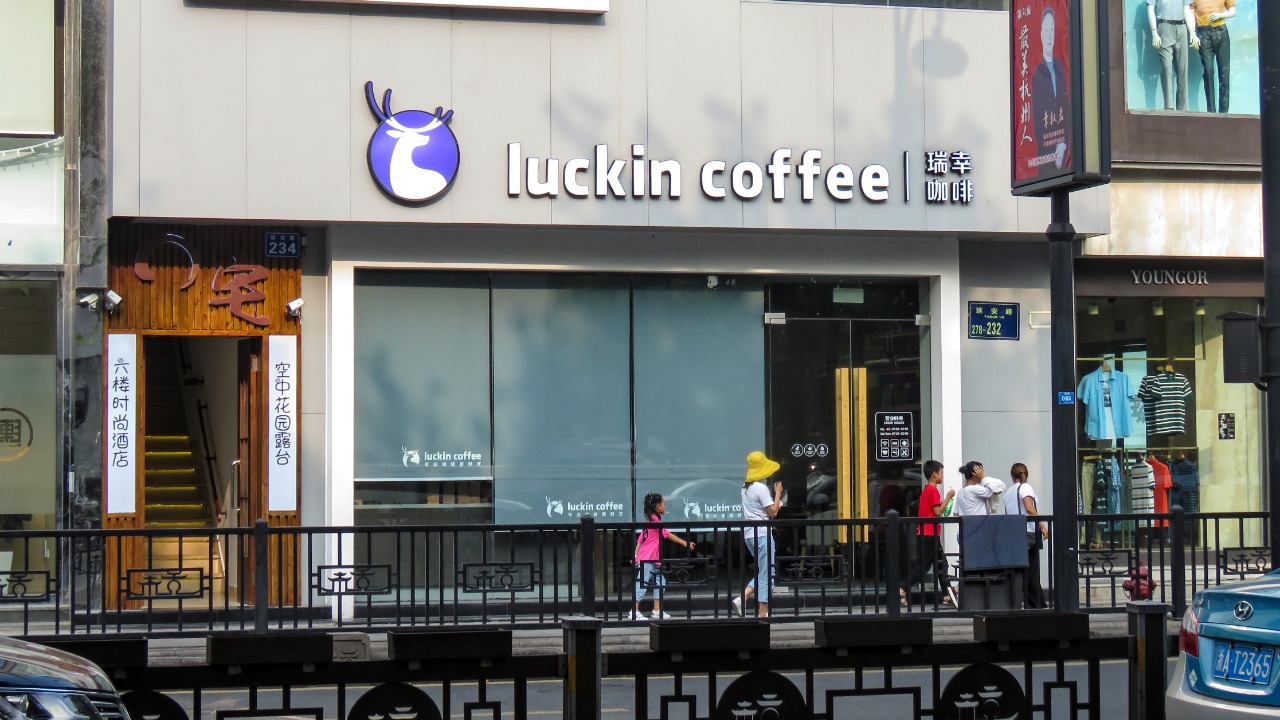
Luckin Coffee has turned a routine store opening into a spectacle, unveiling a lavish new flagship in southern China that pushes the budget chain squarely into Starbucks territory. The debut has drawn crowds, social buzz, and a wave of curiosity about whether the onetime discount disruptor can now win over China’s premium coffee drinkers. I see the launch as a pivotal test of whether a brand built on cheap convenience can credibly sell an upscale experience without losing its core fans.
The store, billed as Luckin’s 30,000th location, is more than a milestone; it is a statement of intent in a market where Starbucks once set the tone for aspirational café culture. By pairing a flashy design with higher prices and rare beans, Luckin Coffee is betting that China’s maturing coffee scene is ready for a homegrown rival to the green siren at the top end of the menu.
The Shenzhen flagship that stopped coffee lovers in their tracks
The centerpiece of Luckin Coffee’s new push is a premium two-level “Origin Flagship” in Shenzhen, a city that has become shorthand for China’s tech-fueled consumer boom. The company chose a sprawling 420-square-meter site for its 30,000th store, signaling that this is not just another grab-and-go kiosk but a destination meant to be photographed, lingered in, and shared online. On February 8, 2026, Shenzhen, perched on the southern edge of China and brushing up against Hong Kong, became the stage for Luckin’s most ambitious retail experiment yet, with the brand positioning the space as a showcase for its upgraded coffee credentials and design language.
Inside, the layout leans into spectacle: a two-floor configuration, prominent brewing stations, and zones that encourage customers to sit rather than sprint back to the office. Reports from the opening describe a crowd drawn not only by promotions but by curiosity about how a chain known for app-based takeaway would translate its identity into a flagship built for lingering. On February 8, 2026, the city of Shenzhen effectively turned into a live focus group for whether Luckin Coffee can sell atmosphere as convincingly as it sells coupons.
From $1 lattes to premium pricing, without losing the value edge
What makes this flagship so striking is how sharply it departs from Luckin’s original value play. In contrast to Luckin’s typical offerings priced at roughly $1 or $2 for an Americano or latte, the new store has nudged prices higher to reflect its specialty beans and elevated service. Yet even with the markup, the company is still positioning many drinks at about half the price of comparable items at Starbucks, a gap that underscores how aggressively it wants to undercut the incumbent at the top end of the market. The shift from rock-bottom pricing to a more layered menu is central to Luckin’s attempt to move from pure volume to perceived quality, as detailed in its new premium pricing strategy.
This evolution is not happening in a vacuum. Earlier this year, Luckin Coffee, a major Chinese coffee chain, formally shifted its strategy to compete in the premium segment, specifically targeting urban professionals who are willing to pay more for single-origin beans and café-style seating but still watch their budgets. The company is betting that these consumers will accept a higher ticket if the experience feels closer to Starbucks Reserve than to a convenience counter, while still appreciating that a latte here can cost a fraction of what they would pay at a traditional Western chain. That repositioning, described in detail in a recent marketing analysis, suggests Luckin is trying to stretch its brand upmarket without snapping the thread that ties it to value-conscious drinkers.
Design, beans, and LEED: how Luckin is selling “origin” and sustainability
Luckin is not just charging more; it is working hard to justify the premium through design and sourcing. The Origin Flagship leans heavily on the language of terroir and craft, highlighting beans from Yunnan, Ethiopia, and Mandheling and presenting them as part of a curated journey rather than a commodity. The company has also developed a portfolio of exclusive raw material bases, including an “Exclusive Coconut Island” in Indonesia, which it promotes as a dedicated source for its coconut-based drinks. By foregrounding these origins, Luckin is trying to speak the same language as specialty cafés that have long used single-origin labels and farm stories to justify higher prices.
The physical build of the store is part of that narrative. Upholding its commitment to sustainable development, the flagship was constructed in strict compliance with LEED Platinum standards, a choice that lets the brand talk about environmental credentials alongside flavor notes. That sustainability push extends into its supply chain, where Luckin emphasizes traceability and “uncompromising quality” as part of the flagship’s identity. For a company that once defined itself by speed and discounts, the pivot toward green building certifications and origin storytelling is a clear attempt to court a more discerning, and vocal, slice of China’s coffee audience.
Starbucks on the back foot as Luckin targets the high end
The timing of Luckin’s flagship debut is not accidental. As Starbucks sells off most of its China business and local partners take on a larger role, the American giant is recalibrating its presence in a market it once dominated. China’s Luckin Coffee is taking direct aim at Starbucks’ high-end roastery chain with this new flagship in the country’s south, explicitly framing the store as a domestic answer to the immersive, theater-like spaces that Starbucks uses to showcase its rarest beans. By opening in a city that sits at the crossroads of China and Hong Kong, Luckin is signaling that it wants to be seen not just as a mass-market chain but as a standard-bearer for Chinese coffee culture in its own right, a point underscored in recent social coverage of the launch.
At the same time, Luckin Coffee’s 30,000th store in Shenzhen features premium global coffee origins and aims to compete directly with Starbucks Reserve, the ultra-premium sub-brand that has long been the company’s halo in major cities. By matching that concept with lower prices and a homegrown story, Luckin is effectively telling Chinese consumers they no longer need to pay imported-brand premiums to get a “third wave” experience. The move also puts pressure on other international rivals such as Costa, which now face a domestic player willing to invest heavily in flagship spaces while still leveraging a vast network of smaller outlets. That competitive intent is laid out clearly in recent reporting on Luckin’s challenge to Starbucks Reserve and Costa in China’s coffee market.
From scandal to scale, and why fans are cheering the comeback
Luckin’s flashy Shenzhen debut lands only a few years after an accounting scandal that many outside China assumed would cripple the brand. Instead, the company continued to operate many of its stores, kept its name and logo, and focused on rebuilding through aggressive expansion and cross-industry collaborations. The Chinese coffee company has since pursued re-listing and international growth, including jointly operated locations in Malaysia, while reporting revenue of $1.55 billion and outlining a pipeline of future licensing fees that underline how far it has bounced back. That turnaround, detailed in its latest expansion plans, provides the financial muscle behind the new flagship push.
More From The Daily Overview
*This article was researched with the help of AI, with human editors creating the final content.

Grant Mercer covers market dynamics, business trends, and the economic forces driving growth across industries. His analysis connects macro movements with real-world implications for investors, entrepreneurs, and professionals. Through his work at The Daily Overview, Grant helps readers understand how markets function and where opportunities may emerge.

