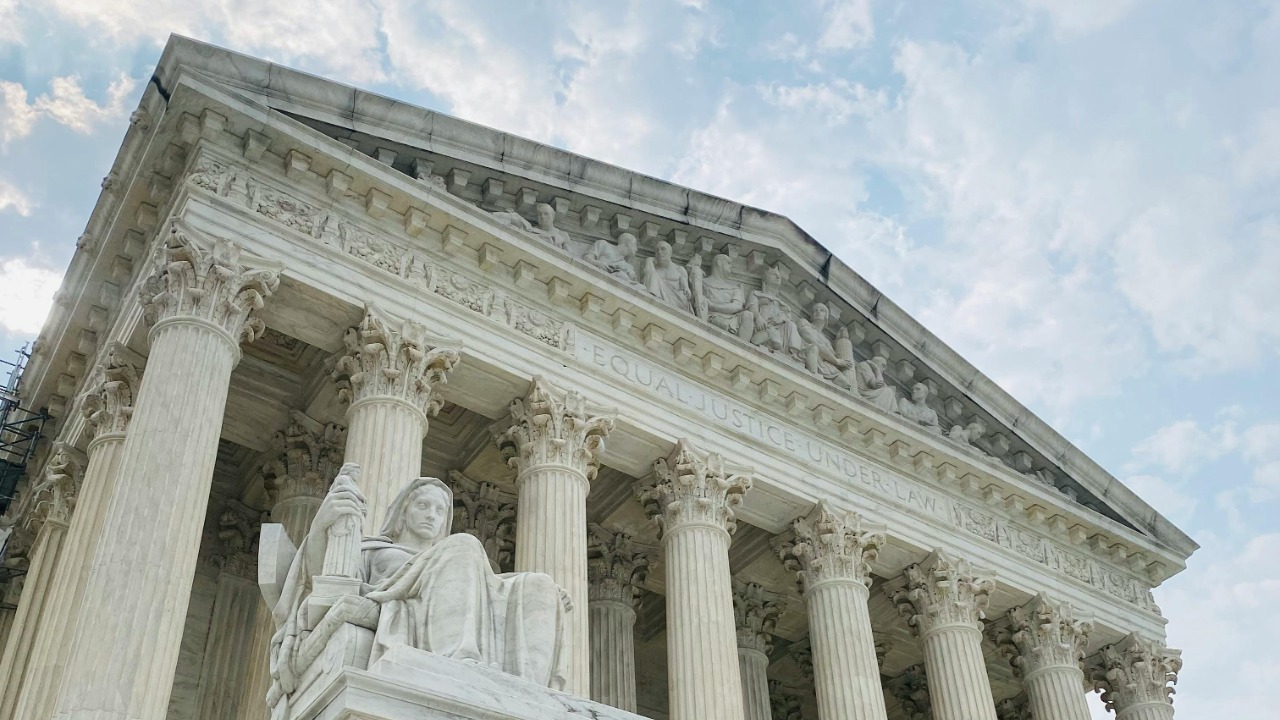
The Supreme Court on February 20, 2026, struck down President Trump’s sweeping tariffs imposed under the International Emergency Economic Powers Act, according to the Associated Press, delivering a 6-3 ruling that rejected the legal theory behind the “reciprocal” tariff program. The decision lands squarely on Apple, which manufactures nearly all of its products in countries facing steep levies and has accumulated a projected tariff bill of $3.3 billion over four years. With the White House already vowing to pursue new levies through alternative statutes, the ruling creates both immediate relief and fresh uncertainty for the world’s most valuable company.
How IEEPA Tariffs Hit Apple’s Supply Chain
Apple’s exposure to the tariff regime was not incidental. The company builds iPhones, iPads, Macs, and AirPods overwhelmingly in China, India, and Vietnam, all of which were targeted by the 2025 executive orders published in the Federal Register establishing the IEEPA reciprocal tariff program. Those orders included temporary exclusions and modifications to the Harmonized Tariff Schedule of the United States, but the carve-outs left Apple’s highest-volume product lines still subject to duties. Apple’s quarterly disclosures, including its regulatory filings with the SEC, flagged tariff exposure directly in risk factor and management discussion sections, warning investors about cost impacts on gross margins and supply chain operations.
The $3.3 billion figure, reported by The New York Times, represents the cumulative tariff bill Apple faced over four years under the program. That number dwarfs what most other consumer electronics firms owed, largely because Apple’s manufacturing footprint is so concentrated in the countries hit hardest. Even temporary HTSUS exclusions did little to blunt the total cost, since Apple’s product refresh cycles meant new devices continually entered tariff-affected categories. For a company that reported over $380 billion in annual revenue, $3.3 billion is not existential, but it is large enough to compress margins and force difficult pricing decisions on flagship products, particularly in price-sensitive markets where Apple has relied on older models and aggressive carrier subsidies to maintain share.
The Legal Path from V.O.S. Selections to the Supreme Court
The case that ultimately reached the Supreme Court, V.O.S. Selections (No. 25-1812), began not as a tech industry challenge but as a dispute brought by a wine importer. The U.S. Court of Appeals for the Federal Circuit issued an order on June 13, 2025, setting the appellate posture that would carry the case to the highest court. The central question was whether IEEPA, a statute designed to address national emergencies involving foreign threats, could legally authorize a broad tariff program covering hundreds of billions of dollars in imports across dozens of countries. The Federal Circuit’s handling of the case established the procedural record the justices would later review, and it framed the dispute as a separation-of-powers clash over how far a president can stretch emergency economic authority into everyday trade policy.
According to the Associated Press, the Supreme Court rejected the IEEPA theory in a 6-3 decision, finding that the statute did not grant the president authority to impose sweeping trade levies of this scope. The Washington Post reported that Trump slammed the justices following the ruling, though the two outlets differ slightly on scope: the AP described the court as striking down “sweeping tariffs,” while the Post characterized the decision as striking down “most” of the tariffs. That distinction matters because it leaves open whether certain narrower tariff actions imposed under the same program might survive legal challenge. Investors and importers watching for clarity on which specific duties are now void will need to track post-decision administrative guidance from U.S. Customs and Border Protection, as well as any subsequent litigation testing the boundaries of what the court left intact.
What the Ruling Changes for Apple’s Bottom Line
If the tariffs are fully unwound, Apple’s projected $3.3 billion liability shrinks dramatically, though the timeline for any refunds or duty adjustments remains unclear. The Yale Budget Lab noted on February 20, 2026, that the economic implications of the decision are complicated by two major factors: the short-term question of whether firms can recover tariffs they already paid, and the longer-term uncertainty about what replacement levies the administration might pursue. Apple’s public filings already disclosed tariff-related cost impacts, and any reversal of those costs would flow through future quarterly results, potentially improving gross margins in the second half of fiscal 2026 and giving the company more flexibility to absorb component cost increases without passing them on to consumers.
But relief is not guaranteed to be permanent. Trump’s vow of new levies under other statutory authorities, according to the Associated Press, means Apple could face a different set of duties imposed through trade laws that have clearer congressional authorization, such as Section 301 of the Trade Act of 1974 or Section 232 of the Trade Expansion Act. Those statutes have already survived judicial scrutiny in prior administrations, and they sit within a broader framework of trade powers described on federal portals like USA.gov, which outlines how the executive branch implements congressionally delegated authority. For Apple, the strategic calculus has not changed: the company’s dependence on manufacturing in tariff-vulnerable countries remains its core exposure, regardless of which legal mechanism the White House uses to impose duties or how the courts police the outer edges of emergency economic powers.
Supply Chain Pressure and the Limits of Diversification
Apple has spent years gradually shifting some production to India and Vietnam, partly to reduce concentration risk in China. But the IEEPA tariff program targeted those alternative manufacturing hubs as well, undermining the diversification strategy and illustrating how geopolitical risk can follow a company even as it moves factories across borders. In its communications with shareholders, Apple has framed this regional expansion as a way to improve resilience against localized disruptions, yet the reciprocal tariff scheme treated the entire set of major Asian manufacturing centers as a single risk cluster. That left Apple paying higher duties not only on devices assembled in China but also on products built in newer facilities that were supposed to serve as a hedge against exactly this kind of policy shock.
The experience underscores the limits of supply chain diversification when trade policy is aimed broadly at multiple countries rather than a single adversary. Investor education materials from the SEC, including those provided through retail-focused resources, emphasize that concentration risks can exist at both the company and country levels, and Apple’s situation now illustrates a third dimension: legal and regulatory concentration in the United States as the primary market of sale. Even if Apple were to shift more assembly to regions not directly targeted by future tariffs, it would still be exposed to changes in U.S. import law and to political debates over reshoring, national security, and industrial policy that can rapidly alter the cost structure for any firm dependent on cross-border supply chains.
What Comes Next for Apple, Washington, and Global Trade
The Supreme Court’s decision forces both the administration and Congress to confront the boundaries of emergency economic authority. If the White House follows through on its pledge to pursue new tariffs under alternative statutes, it will be doing so in a legal environment where the justices have signaled skepticism of expansive readings of IEEPA and, by implication, of attempts to bypass the normal trade law framework. For Apple and other multinationals, that means closely monitoring not only new executive actions but also potential legislative responses, such as efforts to rewrite or clarify the underlying statutes to either cabin presidential discretion or, conversely, to grant more explicit tariff powers that could survive judicial review.
For now, the ruling offers Apple a reprieve and a chance to reassess its long-term manufacturing strategy before the next round of tariffs is designed. The company must weigh the costs of accelerating diversification into regions less likely to be swept into future reciprocal programs against the reality that large, export-oriented economies are often the very ones that attract political scrutiny in Washington. The outcome of that calculus will shape not only Apple’s balance sheet but also the broader geography of high-end electronics manufacturing, as suppliers follow the company’s lead and governments compete to offer stable, tariff-resilient environments for the next generation of iPhone, Mac, and wearable production.
More From The Daily Overview
*This article was researched with the help of AI, with human editors creating the final content.

Grant Mercer covers market dynamics, business trends, and the economic forces driving growth across industries. His analysis connects macro movements with real-world implications for investors, entrepreneurs, and professionals. Through his work at The Daily Overview, Grant helps readers understand how markets function and where opportunities may emerge.

