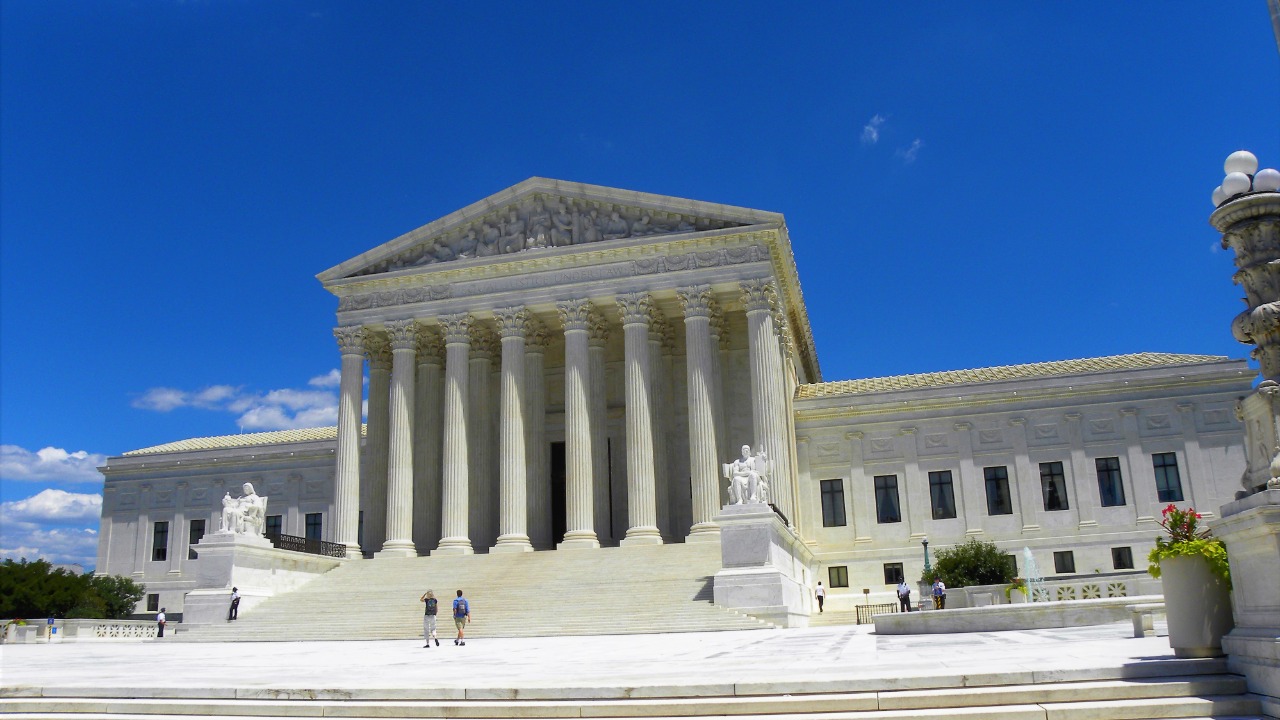
The Supreme Court on February 20, 2026, struck down President Trump’s sweeping tariffs in a 6-3 ruling, declaring that the International Emergency Economic Powers Act (IEEPA) does not grant the president authority to impose them. But the decision in Learning Resources, Inc., et al. v. Trump does not mean shoppers will see lower prices anytime soon. A tangle of overlapping executive orders, billions in unresolved refund claims, and the administration’s vow to pursue new levies through other legal channels all point to a prolonged period of elevated costs for American consumers and businesses.
What the Court Actually Decided
The six-justice majority framed tariffs as a form of taxation, placing them squarely within Congress’s constitutional power of the purse. That separation-of-powers reasoning drew a hard line, the executive branch cannot unilaterally set import duties by invoking IEEPA, a statute designed to let the president freeze assets and block transactions during national emergencies. The official opinions page for the Supreme Court shows the slip opinion issued on February 20, resolving a question that had been building since the administration began layering IEEPA-based duties on goods from dozens of countries. The ruling does not, however, touch tariffs imposed under other statutes, such as Section 301 of the Trade Act or Section 232 on steel and aluminum. That distinction matters because it leaves a significant share of existing import duties intact and preserves tools future administrations can still use to reshape trade flows.
The case reached the justices on an emergency basis after lower courts split on whether IEEPA could be stretched to cover broad-based import duties. The Court’s docket entry in case 25A327 reflects the fast-moving posture, with importers warning of irreparable harm from continued collections and the government arguing that unwinding the tariffs would disrupt foreign policy. In siding with the challengers, the majority emphasized that Congress had repeatedly legislated specific tariff authorities and that reading IEEPA to cover the same ground would effectively erase those limits. That constitutional framing signals potential trouble for any future attempt to rely on emergency statutes to reconfigure trade policy without explicit congressional approval.
How Stacked Duties Keep Prices Elevated
Even before the Court’s ruling, the tariff regime had grown into a layered system that went well beyond a single executive order. Executive Order 14195 imposed additional ad valorem duties on goods originating in the People’s Republic of China, specifying that these charges applied “in addition to” other existing duties. The text of that order, posted on the White House site, makes clear that the new rates were meant to address the synthetic opioid supply chain in the PRC, yet they also functioned as a broad trade tool, and the order’s operative provisions explicitly layered the new tariffs on top of prior measures. That stacking meant Chinese-origin electronics, apparel, and household goods could face multiple tariff layers simultaneously, magnifying the price impact for importers and end buyers.
Executive Order 14257 then established a broader reciprocal tariff framework with an “at least 10%” baseline rate and country-specific surcharges aimed at reducing persistent U.S. goods trade deficits. In that order’s text, archived by the American Presidency Project, the administration justified the new structure as a way to “rectify unfair trade practices,” and the reciprocal tariff language effectively created a floor under many import duties. Because these measures were built on different statutory authorities, the Court’s decision only peels away the IEEPA-based layers. For a retailer importing consumer electronics from China, that means some portion of the tariff stack may disappear, but other charges (such as those tied to trade remedies or national security statutes) continue to apply. In practice, that partial unwinding is unlikely to translate into a clean, immediate rollback in shelf prices.
$133 Billion in Limbo
The financial stakes are staggering. U.S. Customs and Border Protection (CBP) had already collected approximately $133.5 billion in IEEPA-based duties as of the ruling date, according to estimates from the Penn Wharton Budget Model. That same analysis projects that total refund exposure could reach up to $175 billion when accounting for all affected import categories and statutory tariff schedules, as laid out in its tariff revenue assessment. The gap between the two figures reflects duties that were assessed but may not yet have been fully paid or processed through CBP’s systems, along with uncertainty over how far back refunds might reach if the government is ordered to make importers whole.
For businesses that paid those duties and passed the costs along to customers, the refund question is urgent but far from settled. The Court’s opinion left open the mechanics of how refunds would work, and no primary source data from official refund claim filings or CBP administrative guidance has emerged in the immediate aftermath. CBP’s own IEEPA-focused FAQ still describes the now-invalidated tariffs as in effect, underscoring how quickly the legal landscape has shifted and how much implementation work remains. Trade lawyers expect that any refund process will run through the Court of International Trade and CBP’s protest mechanisms, but even a streamlined system would face an enormous backlog. The Wall Street Journal has reported that hundreds of billions in collections are now implicated, creating massive uncertainty for federal budget planning and for companies that must decide whether to treat potential refunds as near-term cash or distant contingencies.
Why Corporate Pricing Will Not Snap Back
The ruling changes the forward path for corporate pricing strategy and resulting profits, but it does not automatically reverse the decisions firms made over the last two years in response to higher import costs. Many companies redesigned supply chains, shifted sourcing to higher-cost countries, or locked in long-term contracts with suppliers to hedge against tariff volatility. Those structural adjustments are not easily undone, even if some duties fall away. Retailers that used the tariffs as an opportunity to reset price points higher may also be reluctant to cut stickers quickly, especially if they believe new levies could arrive under different legal authorities. The administration’s statements following the decision, including threats to pursue alternative statutory paths, reinforce that sense of uncertainty.
Another reason prices will not snap back is that tariffs were only one input into a broader inflationary environment. Transportation costs, labor shortages, and inventory overhangs all contributed to higher consumer prices, and the unwinding of one policy lever cannot by itself reverse those trends. For import-heavy sectors like consumer electronics, apparel, and furniture, executives now face a complex calculus: pass through any tariff savings to compete for market share, or hold prices and capture margin to offset the risk of future trade shocks. Analysts note that in prior tariff episodes, such as the U.S.–China trade war earlier in the decade, companies typically passed on only a fraction of duty reductions to consumers, preferring to rebuild balance sheets and invest in supply-chain resilience. There is little evidence so far that this pattern will change simply because the legal basis for one tranche of tariffs has been struck down.
What Consumers and Businesses Should Expect Next
In the near term, the most visible effects of the decision are likely to appear not in store aisles but in court filings and regulatory notices. Importers are expected to flood CBP and the Court of International Trade with claims seeking refunds on past shipments, while the administration works to identify which portions of its tariff program can be reconstituted under alternative statutes. A separate executive order, EO 14256, targeted low-value shipments by removing or suspending de minimis treatment for covered PRC and Hong Kong goods and directing new collection procedures for those imports; the White House’s text on low-value parcels underscores how central small e-commerce packages have become to the trade debate. Whether and how the Court’s IEEPA reasoning applies to that de minimis crackdown will be a key question for direct-to-consumer platforms and their customers.
Consumers, meanwhile, should brace for a drawn-out adjustment rather than a sudden discount wave. Even if some import costs fall, retailers may prioritize clearing old, high-cost inventory before lowering prices on new stock. The possibility that the administration could reconstruct parts of its trade agenda through other authorities—such as targeted antidumping or countervailing duty cases—also hangs over pricing decisions. For small and medium-sized importers, the combination of legal uncertainty, delayed refunds, and the prospect of new, differently structured tariffs makes planning especially difficult. Until the legal dust settles and a new, stable tariff framework emerges, the Supreme Court’s landmark rebuke of IEEPA-based duties is more likely to reshape the balance of power between Congress and the presidency than to deliver immediate relief at the checkout counter.
More From The Daily Overview
*This article was researched with the help of AI, with human editors creating the final content.

Grant Mercer covers market dynamics, business trends, and the economic forces driving growth across industries. His analysis connects macro movements with real-world implications for investors, entrepreneurs, and professionals. Through his work at The Daily Overview, Grant helps readers understand how markets function and where opportunities may emerge.

