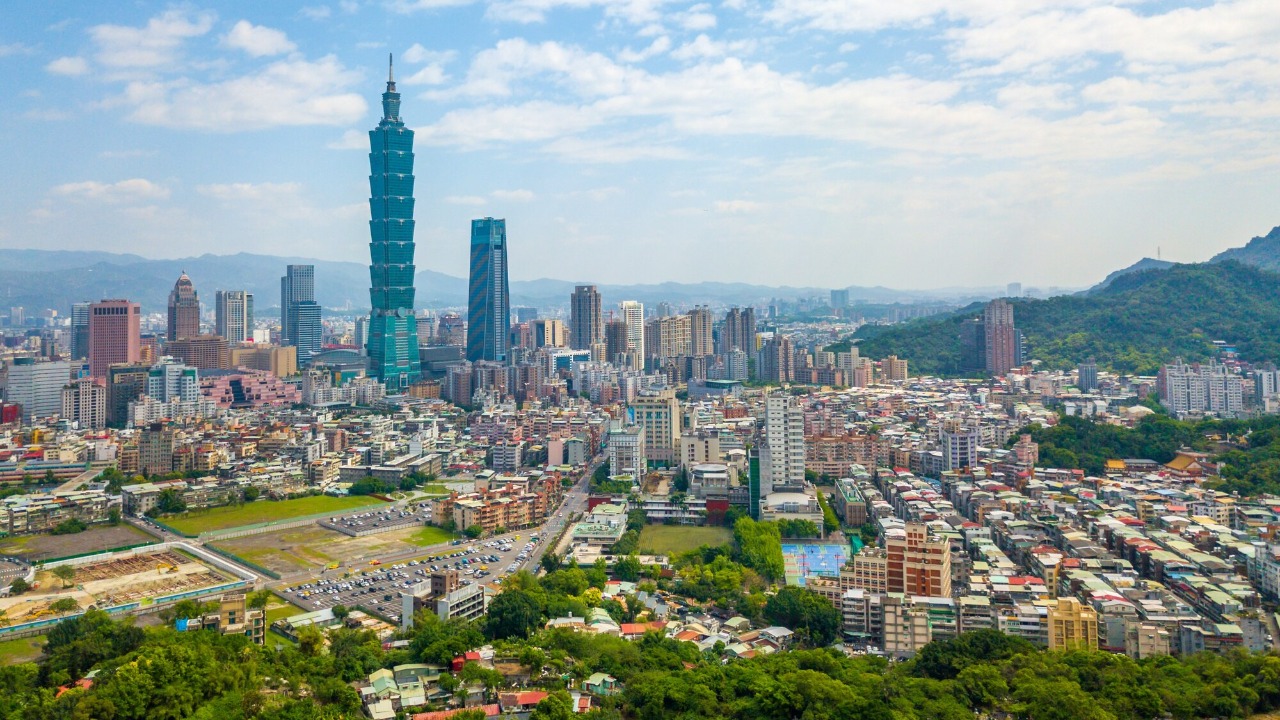
Taiwan is pouring record sums into its armed forces as it tries to harden its skies against a far larger Chinese military, with air and missile defense at the center of that effort. The headline figure may focus on hundreds of millions of dollars for interceptors and radars, but the real story is how those systems fit into a broader strategy to deter Beijing without triggering a war.
I see Taiwan’s latest air defense investments as part of a multi‑year shift, not a one‑off splurge, tying together a bigger core budget, special funds, and foreign arms sales into a layered shield that stretches from frontline islands to the semiconductor fabs that anchor the global tech economy.
Air defense at the heart of a record military buildup
Taiwan’s decision to channel hundreds of millions of dollars into air and missile defenses only makes sense when viewed against a broader surge in overall military spending. Officials have signaled that core defense outlays are being raised toward 3 percent of gross domestic product, a move described on Sep 28, 2025 as a step in the right direction for Taiwan’s long‑term security. That shift reflects a recognition that deterring the People’s Liberation Army requires sustained investment, not sporadic purchases.
The budget trajectory has been steep. Taiwan’s government announced on Aug 22, 2024 that it was proposing a USD20 billion defence budget for 2025, a record figure that set the stage for larger allocations to air defense, long‑range strike, and naval forces. Around the same time, reporting on Aug 20, 2024 highlighted how Taiwan Plans Record Military Spending as the China Threat Looms, underscoring that the island is on track to spend the most money on its military in modern history. Within that envelope, air defense is treated as a priority line item rather than a niche capability.
From “silicon shield” to T‑Dome and Iron Dome‑style defenses
For years, Taiwan leaned on its role as a semiconductor powerhouse as a kind of “silicon shield,” betting that the world’s dependence on its chip factories would deter Beijing from a full‑scale attack. That logic is now being supplemented with hard military capabilities. On Nov 12, 2025, analysts noted that Taiwan is still relying on its “silicon shield” even as it moves to develop an Iron Dome‑inspired missile protection system. The warning was stark: one well‑placed Chinese missile could make it impossible to get a new iPhone for three years, a reminder that air defense is not just about military bases but also about global supply chains.
That shift in mindset is visible in the so‑called T‑Dome project and related initiatives. Reporting on Oct 13, 2025 described how T‑Dome and increased military spending show Taiwan committed to self‑defense, with defense outlays standing at about 2.5% of gross domestic product and expected to surpass 3% the following year. The idea is to build a layered shield that can intercept drones, cruise missiles, and potentially hypersonic weapons, protecting both population centers and critical infrastructure.
U.S. missile sales and the $700 million air defense boost
Foreign arms sales are a crucial part of Taiwan’s air defense architecture, and the latest package from Washington underscores that point. The United States confirmed on Nov 17, 2025 the sale to Taiwan of an advanced missile system worth almost $700 m, describing it as a $700 million air defence missile system. That deal, which focuses squarely on bolstering Taiwan’s ability to shoot down incoming threats, effectively adds a major new layer to the island’s defensive network.
I see this U.S. package as both a military and political signal. Militarily, it plugs gaps in Taiwan’s existing systems and gives commanders more options in a crisis. Politically, it reinforces the message that Taipei is not facing Beijing alone, even as it shoulders more of the financial burden itself. The sale sits alongside domestic efforts to enhance long‑range strike weapons, mobile anti‑ship missiles, and air and missile defense, priorities that were explicitly highlighted on Sep 28, 2025 as part of Taiwan’s evolving force structure.
Han Kuang drills show how air defenses would fight
Budget lines and procurement contracts only tell part of the story; exercises reveal how Taiwan intends to fight. Over the summer, the Republic of China Armed Forces launched the 2025 iteration of its major military drill, the annual Han Kuang exercise, which stress‑tests everything from air defense to logistics under simulated attack. Analysis on Jul 24, 2025, By Ying Yu Lin, emphasized that The Republic of China Armed Forces used Han Kuang to explore strategic implications of a prolonged conflict, including how to keep air defense systems survivable under heavy fire.
Those themes were reinforced in more detailed coverage of the 2025 drills. On Aug 24, 2025, observers noted that Taiwan’s Military Shows New Areas of Focus in a More Ambitious 2025 Han Kuang Exercise, highlighting new emphasis on dispersed operations and integrated air and missile defense. Earlier in July, the Defense Ministry had already underscored the stakes when it began 10‑day live‑fire Han Guang drills, described on Jul 8, 2025 as the longest yet, with Han Guang exercises featuring Taiwanese President Lai Ching‑te waving in Kaohsiung as forces rehearsed countering Chinese threats along the coast.
Special funds, rising GDP share, and the politics of deterrence
Beyond the core budget and foreign sales, Taipei is turning to special funds to accelerate key programs, many of which touch air and missile defense. On Sep 9, 2025, reporting noted that Taiwan approves special funds for ships and drones to deter China, with Takeaways by Bloomberg AI explaining that the package was designed to strengthen “national resilience” and extend reservist training from four months to one year. While much of that money targets naval platforms and unmanned systems, it also supports the broader network that air defenses rely on, from sensors to command‑and‑control.
Another sign of political will came on Oct 21, 2025, when coverage of a Taiwan Record-High Special Defense Budget highlighted that the country is set to propose a billion dollar special defense budget, with reporter Alan Lou noting that part of that will be directed toward capabilities meant to deter China. Parallel commentary on Sep 25, 2025 stressed that Taiwan’s defense spending increases are moving in the right direction as geopolitical tensions rise, underlining investments in rapid response to incursions and better integration of air and maritime surveillance.
Geography, global stakes, and the limits of hardware
Geography makes Taiwan’s air defense challenge uniquely complex. The island sits close to the Chinese coast, with major cities and industrial hubs packed into a relatively small area. Mapping tools that highlight Taiwan’s location in the western Pacific underscore how little warning time defenders might have against missiles launched from across the Taiwan Strait. That proximity compresses decision‑making and places a premium on early warning radars, hardened shelters, and mobile launchers that can survive a first strike.
At the same time, the island’s global economic role magnifies the stakes. Semiconductor clusters and export hubs are concentrated in and around cities such as Taipei and Kaohsiung, which appear prominently in geographic references like Kaohsiung’s urban sprawl. Protecting those areas is not just a national priority but a global one, given how disruptions would ripple through supply chains for everything from smartphones to electric vehicles. That is why I see Taiwan’s air defense investments, whether funded through core budgets, special appropriations, or foreign sales, as part of a broader effort to convince Beijing that any attempt to seize the island would be prohibitively costly and uncertain, even before the first missile is launched.
More From TheDailyOverview
- Dave Ramsey says these two simple questions show whether you’re rich or poor
- Retired But Want To Work? Try These 18 Jobs for Seniors That Pay Weekly
- IRS raises capital gains thresholds for 2026 and what’s new
- 12 ways to make $5,000 fast that actually work

Grant Mercer covers market dynamics, business trends, and the economic forces driving growth across industries. His analysis connects macro movements with real-world implications for investors, entrepreneurs, and professionals. Through his work at The Daily Overview, Grant helps readers understand how markets function and where opportunities may emerge.

