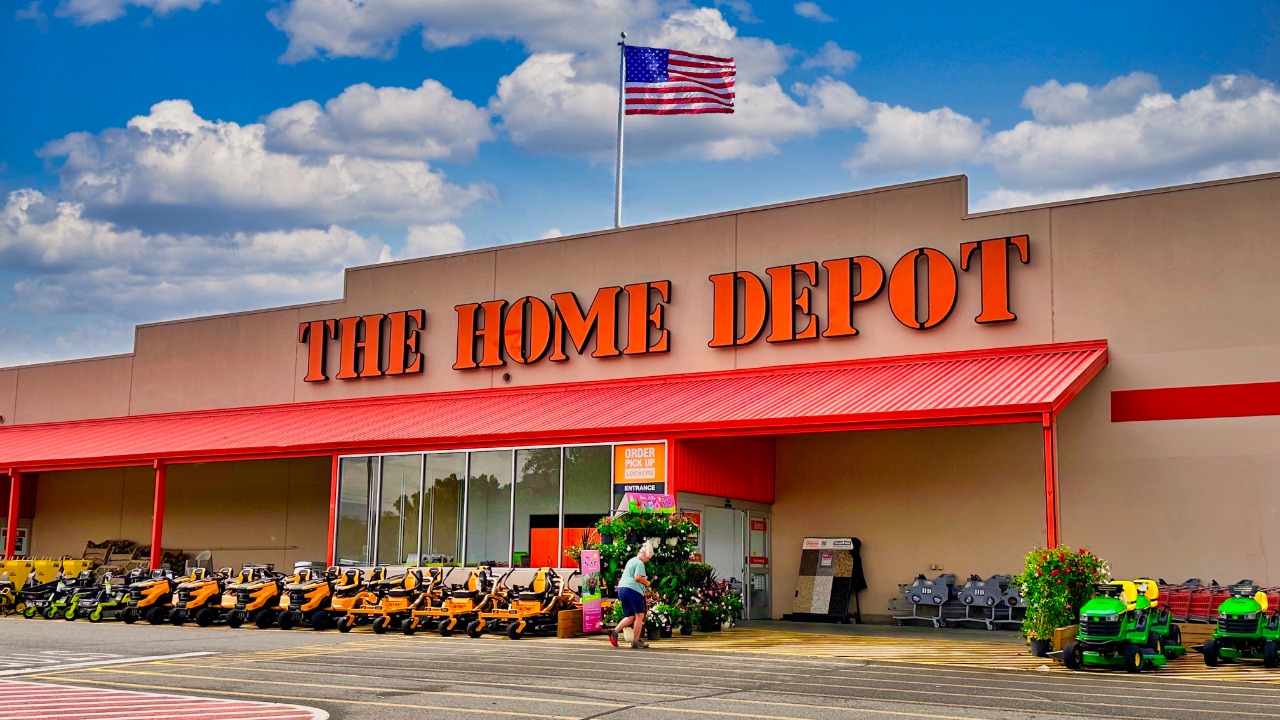
Tariffs on imported building materials have quietly reshaped the economics of home renovation, and one of Home Depot’s biggest specialty rivals has now paid the price. After lumber costs jumped sharply, a national flooring chain that once rode the housing boom into hundreds of storefronts has ended up in Chapter 11, with store closures rippling through communities that depended on discount planks and cut-rate installation.
I see this collapse not as an isolated misstep but as a case study in how policy, pricing, and shifting consumer habits can converge to topple a retailer that looked entrenched only a few years ago. The story of a Home Depot competitor pushed into court protection after lumber rose by double digits shows how thin the margin for error has become in the home improvement business.
How a Home Depot rival went from 300 stores to mass closures
The chain at the center of this shakeout built its brand as a lower-cost alternative to Home Depot, expanding to 300 locations across the United States by leaning on aggressive pricing and a warehouse-style model. That footprint, once a symbol of scale, became a liability when higher input costs collided with softer demand and a more cautious homeowner. When the company finally sought court protection, it moved to shut 94 stores immediately, a drastic retrenchment that underscored how quickly a national footprint can unravel once creditors and landlords lose patience.
As the company’s troubles deepened, coverage of the closures highlighted how vulnerable even recognizable brands can be when they sit between big-box giants and nimble online sellers. Commentators framed the wave of shutdowns as part of a broader pattern in which Businesses across America are being squeezed by higher costs and changing shopping habits, with specialty retailers caught in the middle. In that context, the flooring chain’s bankruptcy looks less like an outlier and more like an early warning for other mid-tier players that lack the pricing power of Home Depot or the ultra-lean operations of online-only competitors.
Tariffs, lumber inflation, and the 4,900 per home problem
At the heart of this collapse sits a simple but brutal math problem: when tariffs push up the cost of lumber and other building materials, retailers that live on thin margins have nowhere to hide. Industry group Leading Builders of America has estimated that current market conditions add about 4,900 per home in extra costs, a figure that ripples through everything from new construction to kitchen remodels. For a flooring specialist that sells into both professional and do-it-yourself channels, that kind of inflation can choke off volume while simultaneously eroding the discount edge that drew customers in the first place.
Those higher costs are not just an abstract line item on a builder’s spreadsheet, they show up in the price tags that homeowners see when they walk into a store looking for new planks or engineered boards. When tariffs lift the underlying USD cost of imported wood, retailers must either pass those increases along or absorb them, and neither option is attractive for a chain already fighting for market share. In that environment, a double-digit jump in lumber prices, such as a 14.5 percent surge, can be the difference between a profitable quarter and a covenant breach that sends executives racing to bankruptcy lawyers.
Chapter 11 as a survival play in a punishing market
Once the financial vise tightened, the flooring chain turned to Chapter 11 as a way to buy time and restructure around a smaller, more sustainable core. The move echoed other specialty retailers that have used Chapter protection to pursue asset sales while keeping at least part of the business alive. In practice, that means closing underperforming locations, renegotiating leases, and trying to convince suppliers that a leaner version of the company can still be a reliable partner.
From my vantage point, Chapter 11 has become less a stigma and more a standard tool in the retail playbook, especially for chains that sit in the shadow of Home Depot and Lowe’s. The flooring rival’s filing fits that pattern, with management signaling that a sale of its assets could be the cleanest way to preserve jobs and customer relationships in the surviving stores. Yet the sheer scale of the closures, starting with those 94 immediate shutdowns, shows how brutal the triage can be once a retailer crosses the line into court supervision.
From LL Flooring’s litigation scars to a fight for survival
The company’s current troubles did not emerge in a vacuum. The chain, now known as Flooring, previously operated under the Lumber Liquidators name and has been carrying the weight of past controversies for years. A 60 M investigative segment on Minutes raised questions about laminate products nearly a decade ago, triggering expansive litigation that drained cash and damaged trust. Even as the company rebranded, those legal and reputational scars lingered, making it harder to win back contractors and homeowners who had plenty of alternatives.
More recently, the chain’s attempt to stabilize ran headlong into a consumer slowdown and the same tariff-driven cost pressures that have hit the broader building sector. Analysts noted that lower levels of home improvement spending left LL Flooring with too much square footage and not enough traffic, a mismatch that became untenable once lenders started to balk. By the time the company acknowledged that it was effectively going out of business in its current form, it had already signaled plans to close roughly 400 stores earlier in the year, a staggering contraction for a chain that once pitched itself as a national force.
Store counts whipsaw as owners, courts and customers collide
Even within bankruptcy, the fate of individual locations has been anything but static. Early plans called for more than 200 closures, only for the company to reverse course on some of them as new financing and buyer interest emerged. Reporting by By Lynda Baquero detailed how the chain initially prepared to shutter more than 200 outlets, then scaled back to a smaller number while still warning that the process would take about 12 weeks and affect at least 38 locations in the New York region alone. For customers who had orders in progress, the shifting plans created confusion about whether their local store would survive long enough to finish the job.
Behind the scenes, ownership battles added another layer of uncertainty. A report on how a Home Depot rival was “saved” but still forced to shutter roughly half its stores described how a former founder pushed to regain control in the bankruptcy process. That tug-of-war over strategy and store counts illustrates how, once a retailer enters court protection, decisions about which communities keep a flooring outlet and which lose one are no longer purely commercial. They become bargaining chips among creditors, landlords, and would-be buyers, with customers and employees left to adapt to whatever footprint emerges on the other side.
What LL Flooring’s fall signals for the next wave of home improvement shakeouts
For me, the most striking part of this saga is how many different headwinds converged on a single chain: tariffs that inflated lumber costs, lingering litigation from the Lumber Liquidators era, a cooling renovation cycle, and the relentless scale advantage of Home Depot and Lowe’s. When Evan Paul and others chronicled the closures, they framed them as part of a broader story about Evan Paul Published reports on retailers struggling to keep up with shifting consumer expectations. The flooring rival’s collapse suggests that any specialty chain heavily exposed to commodity inputs and discretionary spending is now on notice.
Looking ahead, I expect more mid-sized players to explore preemptive restructurings rather than waiting for a full-blown crisis. The experience of LL Dive Insight and its peers shows that once tariffs and material inflation take hold, it is extremely difficult to claw back lost margin without either raising prices or slashing costs in ways that hurt the customer experience. For homeowners, the near-term impact may be fewer local options and longer drives for in-person help, even as online sellers rush to fill the gap. For policymakers weighing future trade moves, the bankruptcy of a Home Depot rival after lumber spiked by double digits is a reminder that the real-world fallout from tariffs often lands far from the negotiating table, in the aisles of once-busy stores now marked for liquidation.
More From TheDailyOverview

Grant Mercer covers market dynamics, business trends, and the economic forces driving growth across industries. His analysis connects macro movements with real-world implications for investors, entrepreneurs, and professionals. Through his work at The Daily Overview, Grant helps readers understand how markets function and where opportunities may emerge.

