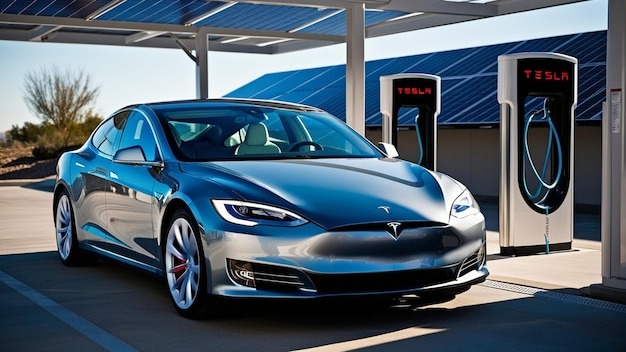
Tesla avoided a 30-day suspension of its California dealer and manufacturer licenses this week after agreeing to stop using the term “Autopilot” in its marketing across the state. The resolution caps a years-long enforcement battle between the electric vehicle maker and the California Department of Motor Vehicles, which found that Tesla’s advertising of its driver-assistance features misled consumers and violated state law. The outcome spared Tesla from a sales ban in the nation’s largest auto market, but the fight over how automakers describe semi-autonomous technology is far from settled.
How the DMV Cornered Tesla on Marketing Language
The confrontation traces back to a pair of enforcement cases, identified as Case Nos. 21-02188 and 21-02189, in which the DMV accused Tesla of marketing its “Autopilot” and “Full Self-Driving Capability” features in ways that implied the vehicles could drive themselves without human oversight. Last December, the DMV adopted an administrative law judge’s proposed decision concluding that Tesla’s use of those terms violated California state law. The ruling found that Tesla’s language was, in the DMV’s characterization, tantamount to claiming autonomous driving capability, a standard the vehicles do not meet under existing regulations.
That decision set the stage for a penalty that would have been extraordinary in scope: a full 30-day suspension of Tesla’s ability to sell or distribute vehicles in California. For a company that depends heavily on the state for both sales volume and brand identity, the threat carried serious commercial weight. The DMV made clear that the suspension was not a hypothetical warning but an active enforcement measure that Tesla would need to address through concrete changes to its advertising practices.
Tesla Pulls “Autopilot” to Dodge the Sales Ban
Rather than contest the penalty or risk losing access to the California market, Tesla chose compliance. The company took corrective action by removing the “Autopilot” branding from its California-facing marketing materials. The DMV confirmed the resolution in a press release issued on February 17, 2026, stating that Tesla’s changes were sufficient to avoid the suspension. The agency framed the outcome as a win for consumer protection, though it stopped short of requiring any broader national changes to Tesla’s branding.
The speed of Tesla’s capitulation is telling. The company offered no public statement defending its use of the terms or challenging the DMV’s legal reasoning. That silence contrasts sharply with Tesla’s history of aggressive pushback against regulators, including federal safety investigators who have probed Autopilot-related crashes. By stripping the name from California ads without a fight, Tesla effectively conceded that the branding crossed a legal line in at least one jurisdiction, even if the company has not acknowledged that the technology itself falls short of its marketing promises. Reporting from a UK-based outlet indicates that state regulators walked back the suspension threat only after confirming the corrective steps were in place.
Why This Fight Matters Beyond California
The practical result is narrow: Tesla changed some ad copy in one state and avoided a temporary sales halt. But the precedent is broader than the penalty. California is the first state to successfully force Tesla to alter how it describes its driver-assistance suite through a formal enforcement action tied to dealer licensing. Other states with similar consumer protection statutes now have a template. If regulators in New York, Texas, or Florida decide that “Full Self-Driving Capability” overpromises what the technology delivers, they can point to California’s case record as proof that the argument holds up under administrative review.
The risk for Tesla, and for the wider autonomous vehicle industry, is a fragmented marketing environment where brand names and feature descriptions vary by state. A company selling the same software package under different labels depending on local regulations faces real costs in advertising, customer communication, and legal compliance. That kind of patchwork is exactly what national industry groups typically lobby to prevent, but Tesla’s decision to settle quietly rather than appeal may have weakened the case for a uniform federal standard. By accepting the DMV’s terms, Tesla implicitly validated the idea that states can regulate how automakers describe software capabilities, not just how vehicles perform on the road.
California Tightens the Broader AV Rulebook
The marketing enforcement action did not happen in isolation. The California DMV has also been updating its autonomous vehicle regulations, introducing a framework that covers testing and deployment protocols, reporting requirements, rules for how self-driving vehicles interact with first responders, and a phased permitting system. These rules treat the question of what a vehicle can actually do as separate from how a company describes those abilities in advertising. The distinction matters because it means Tesla faces regulatory pressure on two fronts simultaneously: one governing the technology itself and another governing the words used to sell it.
The updated regulations signal that California intends to remain the most aggressive state regulator of autonomous driving technology. The phased permitting approach, in particular, suggests that the DMV wants to control the pace at which companies can expand self-driving features, rather than letting automakers define readiness through marketing claims. For Tesla, which has repeatedly promised that full autonomy is imminent, this creates a structural tension between its public messaging and the regulatory timeline it must follow to legally deploy higher levels of automation.
What Tesla’s Quiet Retreat Signals for Buyers
For consumers, the most immediate takeaway is straightforward: the name “Autopilot” will no longer appear in Tesla’s California marketing. But the underlying technology has not changed. Tesla vehicles sold in the state still offer the same driver-assistance features, and owners who already purchased the software retain access to it. The gap between what the product does and what the old branding implied remains a live issue for anyone who bought a Tesla expecting the car to drive itself based on the company’s advertising.
The deeper question is whether Tesla’s compliance in California will ripple into how it communicates with customers elsewhere. If the company keeps the “Autopilot” and “Full Self-Driving” labels in other markets, it risks reinforcing a perception that safety and honesty in advertising are negotiable and vary by jurisdiction. Consumer advocates have long argued that marketing around automation should emphasize driver responsibility, and the DMV’s enforcement action effectively endorses that view. For buyers trying to understand what they are paying for, the California case underscores the need to read beyond brand names and examine the fine print about when and how driver-assistance systems can safely be used.
Signals for Regulators, Investors, and the Industry
Regulators in other jurisdictions are likely to study the California outcome closely. The DMV used its leverage over dealer and manufacturer licenses, rather than waiting for a major crash investigation, to force changes in wording, demonstrating that advertising claims can be treated as a direct safety issue. That approach could be particularly attractive in states where legislatures have been reluctant to pass new autonomous-vehicle laws but where existing consumer protection and unfair business practice statutes already give agencies tools to police misleading language. If those regulators follow California’s lead, automakers may face a wave of parallel enforcement actions that collectively reshape how advanced driver-assistance is marketed nationwide.
For investors and industry strategists, Tesla’s quiet retreat is also a data point about reputational risk. The company built much of its allure on bold promises about an autonomous future, and those promises have helped support premium pricing for software packages that remain in beta-like states for years. A clampdown on evocative branding could make it harder to justify those price tags, especially if rivals choose more conservative language but deliver comparable functionality. At the same time, the episode highlights how media scrutiny (amplified by readers who engage with coverage through tools such as digital accounts, recurring print subscriptions, and reader contributions) can reinforce regulatory pressure by keeping public attention on whether marketing language matches real-world performance.
The broader labor market around autonomous technology is also implicated. As automakers and tech firms recalibrate their claims, they may shift hiring priorities toward compliance experts, safety engineers, and communications professionals who can navigate a more tightly supervised environment. Job boards such as specialist recruitment platforms already feature roles blending legal, technical, and policy skills, an indication that the next phase of the autonomy race will be fought as much in regulatory hearings and consumer protection offices as in code repositories and test tracks. Tesla’s experience in California suggests that companies which treat marketing language as a core regulatory risk, rather than an afterthought, will be better positioned as governments continue to redefine the boundaries of acceptable autonomy branding.
More From The Daily Overview
*This article was researched with the help of AI, with human editors creating the final content.

Grant Mercer covers market dynamics, business trends, and the economic forces driving growth across industries. His analysis connects macro movements with real-world implications for investors, entrepreneurs, and professionals. Through his work at The Daily Overview, Grant helps readers understand how markets function and where opportunities may emerge.

