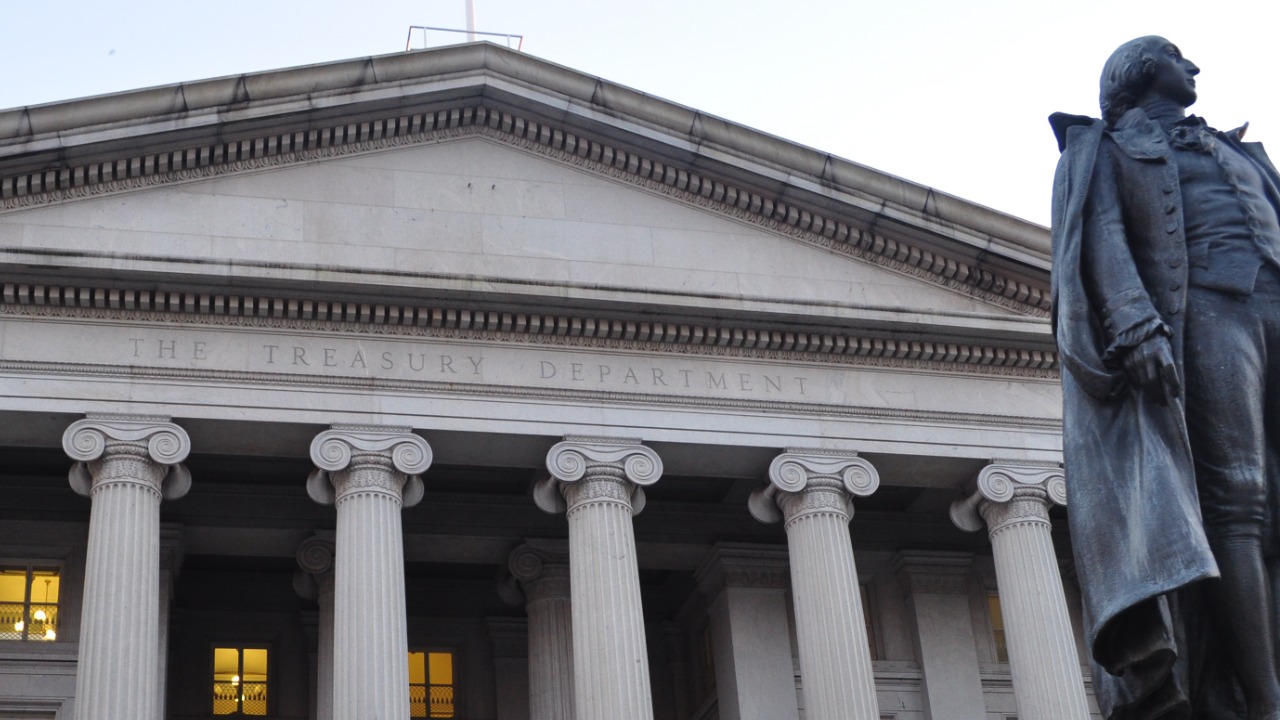
Global markets spent much of the past year flirting with the idea that the United States was no longer the default safe harbor for capital, yet the money never really left. Instead of a lasting “sell America” stampede, investors have been quietly doubling down on U.S. Treasurys, treating them as the one asset class that still anchors a jittery financial system. The result is a market that looks noisy on the surface but, underneath, is being held together by persistent demand for the world’s benchmark bonds.
That stickiness matters far beyond bond desks. When global investors keep buying Treasurys, they are effectively voting for the durability of U.S. economic power and the credibility of Washington’s promises to pay, even as deficits swell and political fights intensify. The “sell America trade” may trend on social media and trading floors, but the flow of capital tells a different story.
Foreign money never really walked away
The clearest rebuttal to the idea that investors have abandoned the United States is the sheer volume of foreign cash still flowing into American assets. I see that most vividly in the surge of cross-border buying that arrived just as the “sell America” narrative was peaking, with Foreign investors channeling more than $300 billion into U.S. markets over August and September. That wave of demand, reported on Nov 23, 2025, did not just stabilize prices, it undercut the notion that global allocators were structurally rotating away from the dollar.
What stands out in that data is how it followed months of anxious commentary about the national debt and the risk that Washington might finally test the patience of its creditors. Instead, the late summer buying spree showed that, when volatility spikes, the instinct is still to move toward Treasurys, not away from them. A separate look at the same period highlights how steady foreign demand for U.S. securities helped offset earlier selling and even reversed part of the past decade’s decline in overseas holdings, with the same more than $300 billion in inflows over August and September reinforcing that the supposed exodus never materialized.
Why Treasurys remain the world’s main thoroughfare
To understand why the “dump Treasurys” thesis keeps failing, I start with the basic plumbing of global finance. There is, as one detailed analysis put it, no larger thoroughfare for global capital than the market for U.S. government debt, a system in which There is effectively a single, deep pool where everyone from central banks to pension funds can transact at scale. That depth is not a marketing slogan, it is a structural advantage that no rival sovereign issuer has yet matched.
Because of that, Treasurys still function as the system’s ultimate collateral, especially in periods of uncertainty and stress. When markets seize up, banks and asset managers reach for the most liquid, most widely accepted securities they can find, and that list still starts with U.S. Treasury bonds and bills. The same research on Why the Treasury market matters underscores that this role is self-reinforcing: the more global institutions rely on Treasurys to manage risk, the harder it becomes to unwind that dependence without creating even bigger instability in the process.
From “sell America” scare to renewed conviction
The “sell America” meme did not come out of nowhere. Earlier this year, Wall Street was rattled by a mix of rising yields, political brinkmanship over the deficit, and fears that Washington’s borrowing needs might finally overwhelm investor appetite. Coverage of that anxiety captured how Wall Street traders openly questioned whether the United States could preserve both its economic supremacy and its creditworthiness as the national deficit ballooned. The phrase “sell America” became shorthand for dumping Treasurys and other dollar assets in protest.
Yet as the year progressed, the hard data started to contradict that storyline. In research circulated to clients and reported on Aug 25, 2025, one prominent strategist laid out two concrete signs that foreign investors had warmed back up to U.S. markets, even after a bout of net selling in April. That analysis, published in Aug, argued that the combination of renewed inflows and resilient equity valuations pointed to a revival of what some call American exceptionalism, not a collapse of confidence.
Risk-on experiments keep circling back to the dollar
Even as Treasurys hold their central place, investors have not stopped searching for alternatives. I see that in the recurring enthusiasm for Bitcoin and other digital assets, which are often pitched as a hedge against U.S. fiscal policy and central bank money printing. In one widely viewed conversation from Oct 25, 2019, market commentator Tone Vays dissected how speculative traders approached Bitcoin, using technical analysis to frame it as both a high-risk bet and a potential store of value outside the traditional system.
That appetite for experimentation has only grown, but it has not displaced Treasurys as the core holding for institutions that need predictable liquidity. Vays himself, profiled earlier on Jul 16, 2018 as an independent content creator focused on economics and finance, built a following by analyzing digital assets while still acknowledging that the broader ecosystem is anchored to fiat benchmarks like the dollar and U.S. government bonds. His work, highlighted in a profile of Tone, underscores a paradox that runs through today’s markets: even the loudest advocates for alternatives tend to measure success in terms of how those assets perform against the very U.S. system they claim to be escaping.
What sticky Treasury demand means for the next shock
For policymakers and portfolio managers, the persistence of foreign demand for Treasurys is both a comfort and a warning. It is comforting because it suggests that, despite political drama and fiscal strain, the United States still commands trust as the issuer of last resort. The inflows of more than $300 billion over August and September, documented on Nov 23, 2025, show that when fear rises, capital still runs toward U.S. assets rather than away from them, a pattern that has repeatedly stabilized markets in past crises.
The warning lies in how dependent the global system has become on that pattern continuing indefinitely. If Treasurys remain the primary thoroughfare for global capital, then any disruption in their functioning, whether from a policy mistake or a technical breakdown in market plumbing, would ripple through everything from mortgage rates to corporate funding. The “sell America trade” may be dead for now, but the structural forces that keep money anchored to U.S. debt also mean that the next shock will once again be mediated through the same market, with all the risks and responsibilities that entails.
More From TheDailyOverview
- Dave Ramsey says these two simple questions show whether you’re rich or poor
- Retired But Want To Work? Try These 18 Jobs for Seniors That Pay Weekly
- IRS raises capital gains thresholds for 2026 and what’s new
- 12 ways to make $5,000 fast that actually work

Grant Mercer covers market dynamics, business trends, and the economic forces driving growth across industries. His analysis connects macro movements with real-world implications for investors, entrepreneurs, and professionals. Through his work at The Daily Overview, Grant helps readers understand how markets function and where opportunities may emerge.

