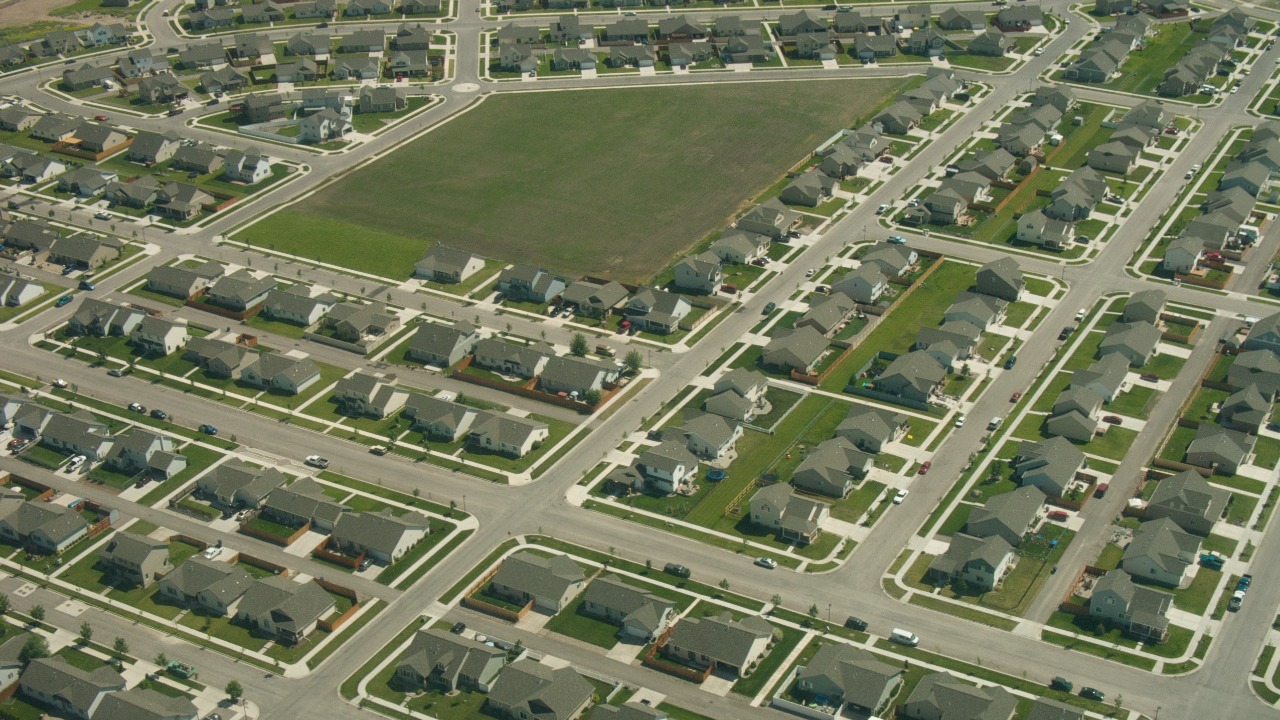
Property tax bills are rising fast enough to push some longtime homeowners out of their neighborhoods, and state politicians have noticed. A handful of states have already moved to cut or cap those bills, while others are racing to copy them with proposals that range from targeted relief to abolishing the tax entirely. I see a new tax competition taking shape, with governors and legislators vying to be the first to promise homeowners that the annual property tax shock will finally ease.
The stakes are enormous for retirees on fixed incomes, families who bought at the top of the market, and local governments that depend on property taxes to fund schools and public safety. The question is not just who cuts first, but whether these experiments can deliver relief without blowing holes in state and local budgets.
Montana and North Dakota move first, and other states take notes
Two states that rarely lead national tax debates, Montana and North Dakota, have suddenly become models for property tax relief. Reporting on new “homestead” rules in Montana describes legislation that cuts bills for older homeowners and other residents by reshaping how primary residences are taxed, part of a broader package of retirement property tax. Analysts note that these changes arrive after years in which property tax assessments climbed alongside soaring home prices, leaving many residents struggling to afford where they live.
In North Dakota, the ambition goes further than trimming bills. Officials in North Dakota say they are on their way to ending homeowner property taxes altogether by using state oil revenue to replace what local governments collect. Coverage of the plan explains that the state would assume more responsibility for funding services that are now paid for through local levies, a shift that has already produced lower bills in some communities and is being watched closely by lawmakers in other states who are also wrestling with how to slow property tax growth that, as one analysis put it, has left homeowners feeling the market is “on fire”.
Georgia, Florida and Texas test caps and cuts instead of full repeal
Not every state is ready to follow North Dakota toward abolition, but many are racing to contain how fast bills can rise. In Georgia, GOP lawmakers have proposed phasing out most property taxes by shifting more of the burden to other revenue sources, while also pushing near term guardrails on local increases. A report on a new measure notes that Meimei Xu of WABE described how The Georgia state Senate passed a bill Tuesday that would make a cap on annual property tax increases mandatory, limiting how much local governments can raise bills without additional approval. Separate coverage of the broader debate notes that GOP legislators in Georgia are also exploring ways to phase out most property taxes over time.
In Florida and Texas, the focus is on targeted relief and tighter limits rather than outright repeal. Florida Chief Financial Officer Blaise Ingoglia, a Republican, has been touring the state arguing that local governments are overspending and calling for shifting taxes around to ease the load on homeowners, while separate reporting details proposals aimed at cutting property taxes that may or may not reach the ballot. Texas, which already leans heavily on property taxes because it has no state income tax, is also under pressure from homeowners in fast growing metros, and statewide debates over Texas school funding and appraisal caps are increasingly tied to the same affordability concerns.
Indiana, Tennessee and South Dakota flirt with abolishing the tax
Some of the boldest experiments are emerging in the middle of the country, where lawmakers are openly discussing ending property taxes for homeowners. In Indiana, House Bill 1288 would abolish taxes on tangible property after a transition period, replacing the revenue with a local government sharing fund that redistributes other state income, according to coverage that highlighted the skyline of Indianapolis and cited Indiana’s plan. A separate analysis notes that Indiana is “joining in” with other states that are throwing their weight behind full scale property tax repeal, underscoring how quickly the idea has moved from the fringes into mainstream legislative debate.
In Tennessee and South Dakota, the push is coming as much from citizens as from politicians. Tennessee has not collected a dime in state property taxes since 1949, but that absence is now a matter of constitutional debate, with a proposed amendment known as the Tennessee Prohibit State that would bar the state from ever enacting such taxes again, a measure described in detail in a table that lists the State, Year, Type, Title, Description and its status as an LRCA. One investigation quoted a resident who said She sees longtime residents being displaced not because they want to leave, but because they can no longer afford their tax bills, even though property taxes remain strictly a local issue, a point echoed in a separate explainer on the Tennessee property tax ban 2026.
Citizen led campaigns and the risk to schools and local services
Behind many of these proposals is a wave of homeowner frustration that has spilled into organized campaigns. A detailed look at citizen efforts describes how activists in multiple states are “done waiting” and are pushing ballot measures to abolish property taxes, with one example from South Dakota where the bet is to Replace property taxes with a retail transaction tax. Another account of these efforts notes that in late January the state Senate in one state passed a measure requiring a local election anytime a school board wants to exceed state property tax caps, a sign of how deeply the backlash is reshaping school finance rules.
Experts warn that while the political appeal of cutting or eliminating property taxes is obvious, the revenue is hard to replace without painful trade offs. A national discussion hosted by WBUR highlighted how Rising property tax bills are squeezing homeowners across the country, but also asked how these changes would impact local communities that rely on the money for basic services. One analysis of state level reforms pointed out that Individual Income Tax are also in play, with Eight states including Indiana cutting income tax rates at the same time they consider property tax relief, a combination that could tighten budgets even further.
Why the fight over property taxes is spreading so fast
What began as a set of state specific fights is now a national trend, with lawmakers trading ideas and homeowners comparing notes across state lines. A concise overview framed it as The Brief on how Lawmakers in several states are considering slashing or eliminating property taxes as rising home values push bills higher, and a follow up piece invited readers to Dig deeper into specific efforts in North Dakota and Georgia. Another analysis of where States Have Cut emphasized that Key Takeaways include that Montana and North have already lowered property taxes, and more states are trying to slow increases that have tracked the run up in home prices.
At the same time, the broader political climate is primed for tax fights. A recent Federal Legislative Update on the Week of February detailed how House and Senate in the House and Senate has been consumed by a Partial federal government shutdown, while a separate report from Connecticut showed FILE images of Lawmakers at the Capitol Building in Hartford for the first day of the legislative session, underscoring how budget fights at every level are sharpening voter attention on taxes. Against that backdrop, it is not surprising to see homeowners in places as different as Ohio, Ohio suburbs, Montana ranch towns and North Dakota oil communities demanding the same thing: a property tax bill that no longer feels like a moving target.
More From The Daily Overview
*This article was researched with the help of AI, with human editors creating the final content.

Julian Harrow specializes in taxation, IRS rules, and compliance strategy. His work helps readers navigate complex tax codes, deadlines, and reporting requirements while identifying opportunities for efficiency and risk reduction. At The Daily Overview, Julian breaks down tax-related topics with precision and clarity, making a traditionally dense subject easier to understand.

