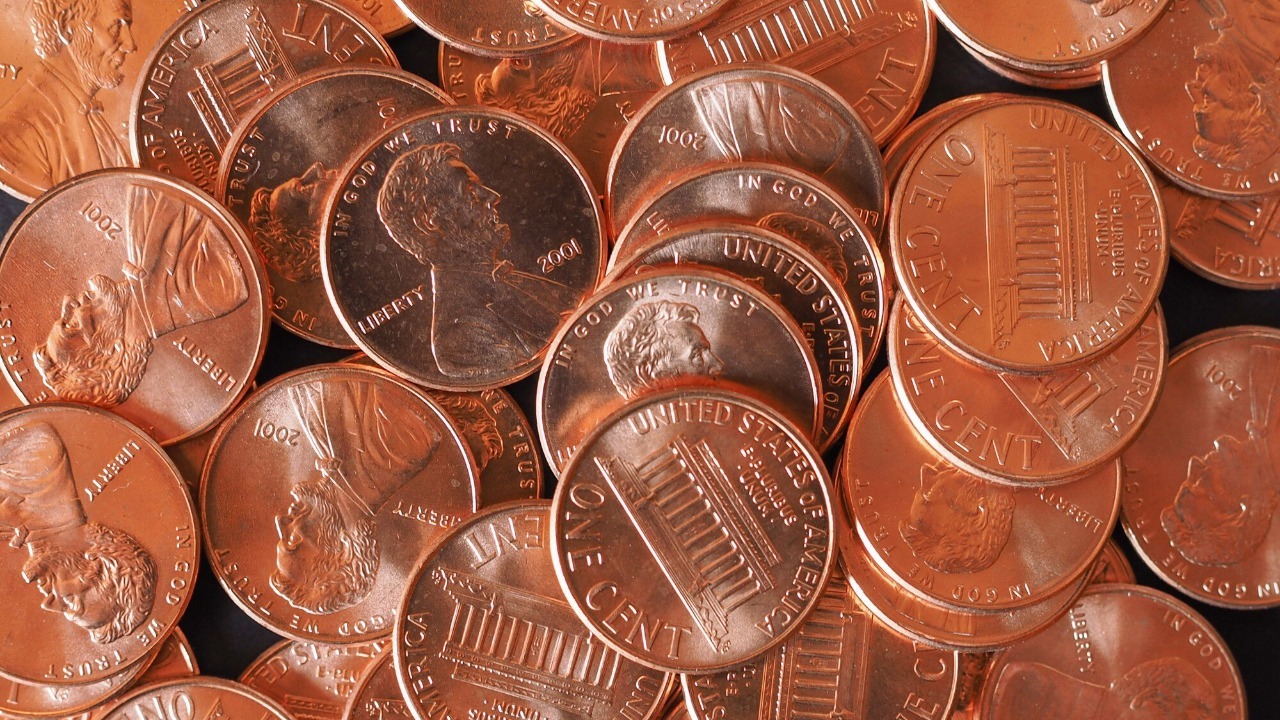
The United States has finally done what generations of shoppers joked about but policymakers long resisted: it has stopped making the penny. That decision caps more than two centuries of minting 1 cent coins and forces a rethink of how small-value payments work in an economy that is already tilting toward cards and phones. As the last copper-colored pieces roll off the presses, the real question is whether this is a one-off tweak or the start of a broader retreat from physical cash.
I see the end of the penny as both a symbolic and practical turning point, one that exposes how much of our payment system is already digital and how expensive it has become to keep tiny coins alive. It also raises a sharper possibility that used to sound fringe: if policymakers are willing to kill off a coin that has been around for more than 230 years, what happens when they turn that same cost-benefit lens on other denominations, or even on cash itself?
The long goodbye to a 1 cent icon
The penny did not vanish overnight. The U.S. Mint had been warning for years that it cost more than 1 cent to make each coin, and earlier this year the Treasury finally pulled the plug after more than 230 years of production. The US Treasury confirms the end of the 1 cent coin, a move that aligns the United States with Other advanced economies that have already scrapped their lowest denominations, including Canada. The decision was not just about nostalgia or symbolism, it was about a basic math problem that had become impossible to ignore.
On Nov. 12, the Mint concluded production of the penny, bringing a formal close to a coin that had been part of American pockets since the early republic. Officials framed the move as a practical response to rising metal and manufacturing costs, not a cultural statement, and they stressed that existing coins would remain legal tender. As one detailed explainer put it, the NEED to KNOW for consumers is straightforward: On Nov. 12 the Mint stopped making new pennies, but American cents already in circulation can still be used, even as officials quietly encourage people to spend or deposit them rather than hoard jars of change.
How the final penny was minted, and why it happened now
The end of production was choreographed to underline the moment. The last-ever penny was minted in Philadelphia, a city that has long been central to American coinage, and officials there treated the final press as a kind of state funeral for small change. In a wry turn of phrase, one account noted that The American penny “passed away” after a prolonged illness of low purchasing power and high production costs, even as the coin remains legal tender for anyone still willing to count it out at the register.
Behind the ceremony was a hard-nosed financial rationale. Much of the shift away from the penny has been driven by rising production costs and declining cash usage, trends that have accelerated as more people tap cards or phones for even the smallest purchases. Over the past decade, the Mint’s cost to produce each 1 cent coin routinely exceeded its face value, a gap that grew harder to justify as pennies piled up unused in kitchen drawers. As one analysis put it, Much of the rationale for ending production came from the fact that Over the years the Mint was effectively losing money on every penny it made, even as Americans used cash less often for everyday transactions.
From presidential order to 230 years of history ending in Philly
The policy shift was not just a bureaucratic tweak, it was a presidential call. President Donald Trump ordered the Mint to stop producing the 1 cent coin, a directive that capped more than two centuries of penny-making and set off a scramble among retailers and banks to adjust. The final batch of coins was pressed in Philly, a fitting bookend for a denomination that had been part of the national story since the early days of the republic. One detailed account noted that penny production ends after more than 230 years, with the last coins rolling out of Philly as cameras rolled and a Video Player captured the moment for history.
Officials have emphasized that pennies will remain legal tender, but they also acknowledge that many already sit unused in jars and drawers, effectively out of circulation. The cost savings of ending production are expected to come largely from reduced metal and manufacturing expenses, not from any immediate change in how people pay. In practice, retailers are being urged to round cash totals to the nearest 5 cents while card and digital payments continue to be charged to the exact cent, a quiet acknowledgment that the physical coin was the problem, not the underlying unit of account. The policy message is clear: the government is saying goodbye to the penny in your stores and retail outlets, but it is not yet saying goodbye to cash itself.
Other countries scrapped small coins first
The United States is late to a trend that has been unfolding across advanced economies for years. Several countries have abolished their lowest value coins, often after long debates about tradition, inflation and fairness. Notable examples include Canada, which phased out its penny in 2012, and Australia, which removed its 1 and 2 cent coins decades earlier, relying on rounding rules that consumers quickly adapted to. A detailed overview of these moves notes that Notable cases like Canada and Australia show how governments weighed the costs of small-denomination coins against their limited usefulness and decided the minting expense was no longer worth it.
Those international precedents matter because they show that scrapping a low-value coin does not break everyday commerce. In Canada, cash transactions are rounded to the nearest 5 cents while electronic payments still settle to the exact cent, a model that U.S. retailers are now echoing. Australia’s experience with removing 1 and 2 cent pieces suggests that after an initial adjustment period, shoppers barely notice the change, especially as card and mobile payments take a larger share of transactions. For U.S. policymakers, these examples provided a real-world test case that the economy can function smoothly without a tiny coin that costs more to make than it is worth.
Is the nickel next, and what about cash itself?
Once a government proves it is willing to retire a long-standing coin, attention naturally shifts to the next candidate. In the United States, that spotlight has landed on the nickel, which is also expensive to produce relative to its face value. Analysts have modeled what would happen if the 5 cent coin were retired and found that the impact on households would be modest. One assessment estimated that even if prices were rounded in a way that slightly favored merchants, the average cost would come to only 42 cents for each of the nation’s 133 m households, a figure that suggests the economic stakes are far smaller than the emotional attachment some people feel to coins.
The cultural debate is already underway. Commentators are openly asking, “Is the nickel next to go?” and pointing out that the penny is only the latest U.S. coin to be discontinued, following earlier retirements of the half-cent, the half-dime, the large cent and the dollar coin in everyday use. One analysis framed the question bluntly: Is the nickel next to go, and if so, what does that say about the future of cash in an era when many people already pay with phones and watches? For now, policymakers are moving cautiously, but the logic that doomed the penny is already being applied to other denominations.
Congress, cards and the slow fade of physical money
Even before the administration acted, lawmakers had been wrestling with whether small coins still made sense in a digital-first economy. On Capitol Hill, the Make Sense Not Cents Act Referred to the Senate Committee on Banking, Housing, and Urban Affairs signaled that some members of Congress were ready to legislate the penny’s demise rather than wait for an administrative decision. A legislative brief on the proposal, cataloged as S. 1554, laid out how the bill would phase out production and adjust federal pricing rules, underscoring that the debate was not just about coins but about how the government manages the unit of account itself. The Make Sense Not Cents Act Referred to the Senate Committee on Banking, Housing, and Urban Affairs captured that shift, treating the penny as a policy variable rather than an untouchable symbol.
At the same time, the market has been quietly voting with its feet. As contactless cards, peer-to-peer apps like Venmo and Cash App, and mobile wallets such as Apple Pay and Google Wallet spread, the share of transactions settled in physical cash has steadily declined. That trend made it easier for policymakers to argue that the costs of minting and distributing low-value coins outweighed their benefits, since many people already pay exact amounts digitally without ever touching change. The penny’s retirement, and the debate over whether the nickel might follow, are less about forcing people into a cashless future and more about acknowledging that for a growing share of the economy, that future has already arrived.
More From TheDailyOverview

Silas Redman writes about the structure of modern banking, financial regulations, and the rules that govern money movement. His work examines how institutions, policies, and compliance frameworks affect individuals and businesses alike. At The Daily Overview, Silas aims to help readers better understand the systems operating behind everyday financial decisions.

