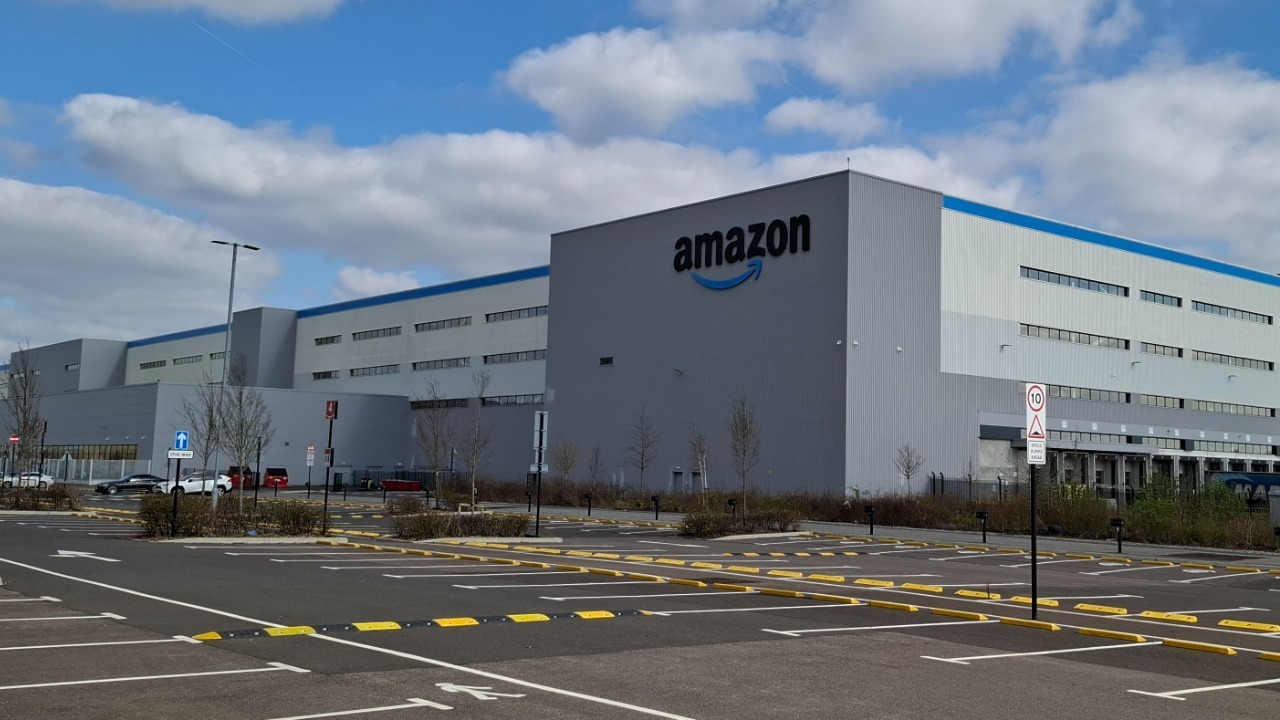
Amazon’s latest restructuring has carved deep into its own people business, eliminating thousands of human resources roles just as the company leans harder into automation and artificial intelligence. The cuts arrive on top of a rapid-fire sequence of job reductions across corporate units, turning the group that hires, supports, and disciplines staff into one of the most heavily thinned functions inside the tech giant.
The pattern that emerges is not just another efficiency drive but a deliberate rewiring of how a company of Amazon’s scale intends to manage labor. HR is being treated less as a strategic partner and more as a cost center to be automated, even as leadership commits vast sums to AI and cloud infrastructure that will define its next decade.
The biggest corporate cull in Amazon’s history
Amazon has moved from sporadic belt-tightening to a sustained campaign of white-collar downsizing. After cutting 14,000 corporate jobs in late 2025, the company has now confirmed another 16,000 corporate roles will go, a combined 30,000 positions in roughly three months that executives have framed as necessary to reset the cost base for the next phase of growth. Internal messaging has described this as the largest corporate reduction in Its History, with the latest wave focused on Cutting layers of management and support functions that leadership sees as bloated.
In a detailed internal note shared with staff, Amazon said the 16,000 Corporate Roles being eliminated are part of a broader effort to simplify decision making and prioritize teams that are “critical to our future.” A separate breakdown of the restructuring has reiterated that the 16,000 figure is on top of the 14,000 jobs cut earlier, underscoring how quickly the company has moved from hiring freeze to Conduct Biggest Layoffs in Its History. Another analysis of the move has stressed that Amazon cut 16,000 corporate jobs in January 2026 after 14,000 layoffs in October 2025, presenting the two rounds as a single, aggressive reset of the corporate workforce.
HR in the crosshairs of an anti‑bureaucracy crusade
Within that headline number, HR has been hit disproportionately hard. People teams that once spanned recruiting, employee relations, performance management, and diversity work have been told to merge, automate, or disappear, with managers instructed to absorb larger spans of control and rely more heavily on standardized tools. The logic from the top is clear: if the company wants fewer layers of management and less bureaucracy, then the departments that administer those layers are an obvious target.
Leadership has explicitly tied the layoffs to a campaign to “strengthen our organization by reducing layers of management and reduce bureaucracy,” a phrase that appears in a blog post explaining the cuts. Reporting on the internal message that What Amazon told employees about axing 16 000 jobs shows HR and other corporate support roles singled out as areas where leaders believed work could be consolidated or automated. Another breakdown of the restructuring notes that Amazon has reportedly announced another major round of layoffs, cutting around 16,000 corporate roles across departments like cloud, retail, and corporate services, which includes HR, as part of a broader shift toward the AI and automation era.
Seattle and Washington: ground zero for the HR shock
The impact of this strategy is most visible in Amazon’s home territory. In the Seattle region, thousands of corporate staff have been told their roles are gone, with HR professionals among those escorted out of The Amazon Spheres campus that has long symbolized the company’s growth. For a workforce that had equated the company’s rising revenue and stock price with job security, the sudden reversal has been jarring.
State filings show that almost 2,200 Seattle-area employees are being cut as part of the latest wave, with the company explicitly citing a desire to reduce layers of management and reduce bureaucracy in its Seattle footprint. Separate reporting on Amazon cuts thousands in WA, leaving workers feeling ‘expendable’ describes HR and other corporate staff in Washington talking about a climate of anxiety and extra work, with remaining employees bracing for heavier administrative loads. Another account of Thousands of Amazon employees waking up on a Wednesday to early-morning emails about job losses captures how the shock rippled through the company’s headquarters just as executives were touting record profits and a costly AI race.
Project Dawn and the cloud of uncertainty over AWS
The layoffs have not been confined to retail or headquarters functions. Inside Amazon Web Services, the cloud unit that powers much of the internet, staff learned of impending cuts through an email that was never meant to reach them, a misfire that has become a symbol of how opaque the process has felt. The message referenced an internal effort called Project Dawn, which employees interpreted as a codename for a restructuring that would hit both technical and support roles, including HR business partners embedded in engineering teams.
According to one account, Representatives from Amazon did not immediately respond to questions after the accidental email about Project Dawn went out, leaving AWS staff to speculate about the scale and focus of the cuts until formal notices arrived on Wednesday, a sequence detailed in a report on the inadvertent message. A separate confirmation that US technology giant Amazon has cut 16,000 jobs worldwide, including in cloud and corporate units, notes that the internal codename Project Dawn was used in communications about the restructuring. Another breakdown of the 16,000 corporate roles being eliminated highlights that cloud, HR, and other central functions are all part of the same push to streamline operations around AI and automation.
Record profits, $200 billion for AI, and a shrinking people team
What makes these HR cuts so contentious is the backdrop of financial strength. Amazon is not a company in distress; it is a company choosing to reallocate resources. Public messaging has emphasized record profits and a massive investment in artificial intelligence, with executives arguing that every dollar tied up in bureaucracy is a dollar that cannot be spent on the next generation of products and infrastructure. The result is a stark contrast: the teams that manage hiring, performance, and workplace disputes are being thinned out just as the company commits to a far more automated future.
One analysis of the restructuring notes that Amazon cut 16,000 jobs in January 2026 and then said it would spend $200 billion this year on AI, a juxtaposition that has fueled criticism that the company is treating workers as expendable in its race to dominate machine learning, a point highlighted in a $200 billion post about the AI budget. Another report on Amazon cuts thousands of workers amid record profits and a costly AI race describes how Thousands of Amazon employees received early-morning layoff emails on a Wednesday while leadership stressed that “record profits” and the need to cut “bureaucracy” were driving the decisions. A separate breakdown of Amazon layoffs 2026 notes that Amazon cut 16,000 corporate jobs in January 2026 after 14,000 layoffs in October 2025, framing the reductions as part of deeper AI-driven workforce changes rather than a short-term response to financial pressure.
From human recruiters to automated gatekeepers
Behind the numbers is a strategic bet on software over staff. Amazon has spent years building internal tools that score candidates, track performance, and flag potential policy violations, and those systems are now being asked to do more as HR headcount shrinks. For job seekers, that means more interactions with automated screeners and fewer with human recruiters, while managers are being pushed to rely on dashboards and standardized workflows instead of bespoke advice from HR partners.
The company’s own product pages for AWS highlight a growing suite of AI and analytics services that can be used to automate everything from resume parsing to workforce planning, tools that are increasingly being deployed internally as well as sold to customers. The broader corporate site for Amazon showcases a sprawling ecosystem of retail, logistics, and cloud operations that all depend on consistent, scalable processes, which automation promises to deliver more cheaply than human-heavy HR teams. Reporting on Amazon Layoffs Hit Software Developers, Engineers, Directors And Managers In Washington shows that even highly skilled technical staff are being cut or redeployed as the company retools around AI, suggesting that HR is not the only function being reshaped by this shift.
How HR cuts ripple through culture, diversity, and trust
When a company trims HR, it is not just removing administrators; it is weakening the internal systems that handle complaints, mediate conflicts, and push for inclusion. Employees in Washington have described feeling “expendable” as thousands of colleagues are let go, with those who remain facing a mix of survivor’s guilt and heavier workloads. In that environment, fewer HR professionals means fewer people to investigate harassment claims, coach struggling managers, or advocate for underrepresented groups, even as leadership insists that culture remains a priority.
Accounts of Amazon cuts thousands in WA, leaving workers feeling ‘expendable’ describe a workforce shocked that strong revenue growth did not translate into job security, and detail how the deep cuts have created a climate of anxiety and extra work for those left behind, a dynamic captured in a Washington-focused report. Another account of Amazon cuts thousands of workers amid record profits and a costly AI race notes that leadership’s emphasis on cutting “bureaucracy” has been interpreted by some employees as a signal that support functions, including HR and diversity initiatives, are negotiable when weighed against AI spending. A separate breakdown of Amazon layoffs 2026 suggests that the 16,000 and 14,000 job cuts are part of a longer-term AI-driven workforce strategy, raising questions about how sustainable the company’s culture will be if human oversight continues to shrink.
More From The Daily Overview
*This article was researched with the help of AI, with human editors creating the final content.

Grant Mercer covers market dynamics, business trends, and the economic forces driving growth across industries. His analysis connects macro movements with real-world implications for investors, entrepreneurs, and professionals. Through his work at The Daily Overview, Grant helps readers understand how markets function and where opportunities may emerge.

