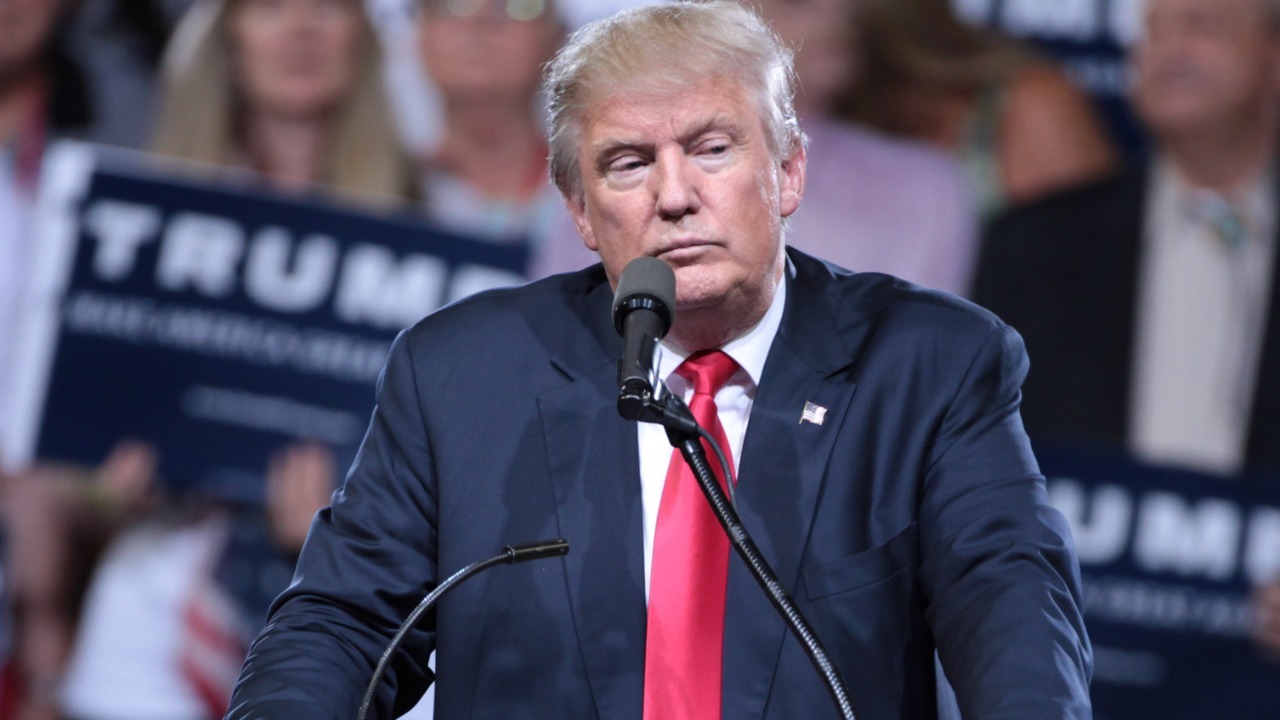
President Donald Trump is once again treating his social media feed like a personal statute book, blurring the line between online venting and the actual powers of his office. His latest Truth Social outbursts, from declaring sweeping economic edicts to handing himself foreign titles, read less like policy and more like a 79‑year‑old president testing how far performance can substitute for law. I see a pattern emerging in which Trump’s rants are framed as binding decisions, even as the legal system and basic constitutional structure say otherwise.
From slogan to “law”: the credit card cap fantasy
Trump’s most striking recent example of confusing a post with a proclamation came in a Truth Social message that treated a campaign‑style promise as if it were already on the books. In a post branded with the shout of “AFFORDABILITY,” he announced that, “Effective January 20, 2026, I, as President of the United States, am calling for a one year cap on Credit Card Interest Rates of 10%.” The phrasing mimicked the cadence of an executive order, but there was no legislation, no regulatory process, and no sign that Congress or the banking system had been consulted before he declared that Credit Card Interest Rates of 10 percent would suddenly be the law of the land.
What stands out to me is not only the substance of the proposal but the way Trump, at 79, presented it as a unilateral act that would simply take effect on a specific date because he said so. The post read like a presidential directive, yet it was nothing more than a Truth Social rant dressed up in legalese, a point underscored by reporting that highlighted how he “confuses his Truth Social rant with the law” when he talks about this cap taking hold “Effective January 20, 2026” as if the calendar and his account together could rewrite financial regulation without Congress or the courts Trump.
Declaring himself above the rules
The credit card decree fits a broader habit in which Trump uses social media to imply that his personal judgment outranks legal constraints. Earlier, he circulated a post that said, “He who saves his country does not violate a…,” a fragment that critics immediately read as a claim that patriotic intent excuses any breach of law. That message, shared on both X and Truth Social, was not a formal legal argument, but it functioned as one in the court of public opinion, suggesting that if Trump believes he is “saving” the United States, then ordinary statutes and constitutional checks should not apply to him.
In my view, that framing is not just rhetorical bravado, it is a direct challenge to the idea that presidents are bound by the same rules as everyone else. The reaction to the post, which came in Feb and quickly drew attention from legal analysts and political opponents, reflected alarm that Trump was edging toward declaring himself effectively above the law, using a single viral sentence to float the notion that motive can erase criminal liability post. When a sitting president toys with that idea in public, it is not a throwaway line, it is a window into how he might treat investigations, court orders, or even election results that do not go his way.
Inventing new titles: “Acting President of Venezuela”
Trump’s impulse to turn social media into a stage for self‑anointment has extended beyond domestic policy into foreign affairs. On Truth Social, he posted a photo of himself labeled as “Acting President of Venezuela,” a designation that does not exist in any treaty, statute, or diplomatic agreement. The image, shared while he was in NEW YORK, presented President Donald Trump as if he had personally assumed authority over Venezuela, even though the United States has no legal mechanism to make its own head of state the “acting” leader of another sovereign country Truth Social.
That stunt did not stay confined to his own platform. President Donald Trump also shared a screenshot that appeared to show Wikipedia listing him as “acting president of Venezuela,” using the open‑edit encyclopedia as a prop to bolster the fantasy that he had acquired a new international role. Reporting on the episode noted that he seemed to support adding “acting president of Venezuela” to his credentials, even as questions swirled about who actually leads Venezuela and how U.S. oil companies might benefit from any shift in control of its reserves Venezuela. I see that as more than trolling; it is a way of normalizing the idea that titles and powers can be conjured online first and sorted out in law, if at all, only later.
Oil, war, and a “deranged” job description
The Venezuela theatrics are intertwined with Trump’s own words about oil and conflict. In coverage of his private comments, Trump has suggested that U.S. oil companies, whom he tipped off about a Venezuela attack without notifying Congress, will invest in the country’s energy sector and that “the oil will be controlled by me.” That boast, paired with his self‑styled role in Venezuela, paints a picture of a president who sees foreign policy less as a web of legal obligations and more as a personal business plan in which he can promise that assets “will be controlled by me” while sidelining Congress from decisions about war and peace oil companies.
Commentators like Zeeshan Aleem have argued that Trump’s suggestion that he is the “president of Venezuela” is worse than a tasteless joke, because it hints at a willingness to seize another country’s resources under the guise of leadership. In that analysis, Trump’s references to Venezuela, including talk of how the United States might “keep the oil” in Venezuela, are not just bluster but a signal that he views international law as optional when it conflicts with his goals Zeeshan Aleem. From my perspective, the combination of self‑appointed titles and casual talk of controlling foreign oil underscores how Trump’s social media persona bleeds into real‑world policy risks.
Health, age, and the late‑night national security panic
Trump’s online behavior is also increasingly colored by his age and his own fixation on his physical condition. At 79, he used a roughly 500‑word social media message to complain about his health, a post that read like a stream‑of‑consciousness airing of grievances rather than a measured update from a head of state. In that rant, President Donald Trump veered between self‑pity and bravado, prompting questions about why the commander in chief was choosing to litigate his medical status in public instead of through official channels or medical briefings President Donald Trump.
Those concerns are amplified by reports that Trump, who is on track to become the oldest sitting U.S. president to date, is starting his days later and working fewer traditional hours while still using late‑night posts to declare sweeping threats. In one such episode, he described an “absurd” national security danger and took aim at economic figures, claiming that some prices had gone up to “3,000 percent,” a number that sounded more like a social media exaggeration than a vetted intelligence assessment Trump. I read those late‑night blasts as part of the same pattern: a president using his feed as a substitute for formal briefings, even on matters that touch directly on national security.
When posts collide with reality
Trump’s habit of treating Truth Social as a parallel government has ripple effects beyond Washington. In India’s northeast, for example, U.S. President Donald Trump’s “acting president of Venezuela” image was picked up and shared by regional outlets, which noted that the designation was not recognized in any official records. One such report, appearing alongside local coverage of The Mizoram State AIDS Control Society and its warning about an alarming rise in cases tracked by MSACS, highlighted how Trump’s post traveled globally even though the title he claimed had no basis in law or diplomacy MSACS.
Even within the United States, the gap between Trump’s posts and legal reality is widening. When he repeats the “AFFORDABILITY” slogan and insists that, “Effective January 20, 2026,” he will cap Credit Card Int at a fixed rate, he is not issuing a binding order, he is performing the role of lawmaker, regulator, and judge all at once AFFORDABILITY. From my vantage point, that is the core problem: a president who increasingly behaves as if typing words into his preferred platform can rewrite statutes, redraw borders, and redefine his own powers, even when every branch of government and every allied capital knows that is not how law works.
More From TheDailyOverview

Silas Redman writes about the structure of modern banking, financial regulations, and the rules that govern money movement. His work examines how institutions, policies, and compliance frameworks affect individuals and businesses alike. At The Daily Overview, Silas aims to help readers better understand the systems operating behind everyday financial decisions.

