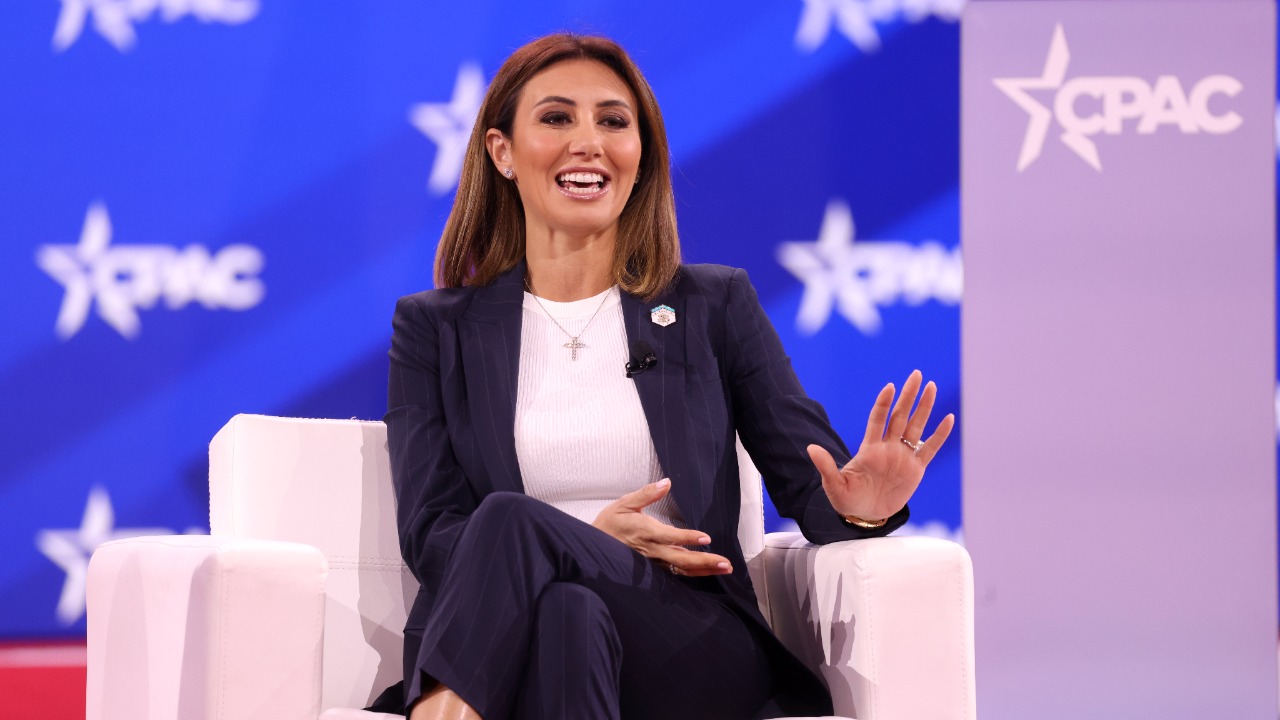
A federal judge has ordered President Donald Trump and his attorney Alina Habba to pay nearly $1 million in sanctions after concluding that their sweeping lawsuit against Hillary Clinton and a long list of other defendants was built on political grievances rather than viable legal claims. The penalty marks one of the most severe courtroom rebukes yet of Trump’s post-presidency litigation strategy and signals that judges are increasingly willing to punish what they view as abusive filings.
The ruling does more than close the book on a single case. It crystallizes how Trump’s efforts to relitigate the origins of the Russia investigation have collided with the limits of civil procedure, and it raises the stakes for lawyers who choose to turn campaign narratives into sprawling conspiracy complaints.
The lawsuit that tried to turn a political narrative into a racketeering case
From the outset, Trump’s lawsuit against Clinton and more than two dozen other defendants read less like a conventional civil complaint and more like a greatest-hits compilation of his long-running grievances over the Russia probe. He accused Clinton, the Democratic National Committee, former FBI officials and others of orchestrating a criminal enterprise to fabricate the narrative that his 2016 campaign colluded with Russia, framing the case as a racketeering-style conspiracy that supposedly violated the Racketeer Influenced and Corrupt Organizations Act and several other statutes. The complaint sought sweeping damages and attempted to fold years of political and investigative history into a single civil action, even though many of the underlying events had already been examined by the Justice Department and congressional committees, as reflected in the court’s summary of the allegations.
Judge Donald Middlebrooks, who sits in the Southern District of Florida, ultimately found that the case was structurally unsound, legally deficient and saturated with rhetoric rather than facts that could survive basic scrutiny. In dismissing the complaint, he noted that Trump’s filing attempted to repackage long-settled political disputes as fresh legal injuries, even though the supposed conspiracy had already been the subject of extensive public reporting and official investigations. The court concluded that the claims were barred by multiple doctrines, including statutes of limitations and immunity principles, and that the narrative of a vast, coordinated criminal enterprise was unsupported by the kind of specific, nonconclusory allegations that federal rules require, a point underscored in the judge’s detailed dismissal order.
Why the judge called Trump a “prolific and sophisticated litigant” misusing the courts
In imposing sanctions, Judge Middlebrooks did not simply say the lawsuit failed; he said it never should have been filed in the first place. He described Trump as a “prolific and sophisticated litigant” who is fully aware of how the legal system works and who has repeatedly used it to advance political objectives rather than to resolve genuine disputes. According to the sanctions order, the court viewed the Clinton case as part of a broader pattern in which Trump and his lawyers file sweeping complaints, generate headlines, then quietly abandon or lose the cases once they have served their public-relations purpose, a pattern the judge documented by citing other Trump-related filings in federal and state courts within the sanctions opinion.
The judge’s language was unusually sharp for a federal sanctions ruling, signaling that he saw the case as an abuse of judicial resources rather than a close call on the margins of acceptable advocacy. He wrote that the complaint was “brought in bad faith for an improper purpose,” emphasizing that it was riddled with “political grievances” and “narratives” that had no place in a federal civil action. The order stressed that courts are not venues for airing campaign talking points or relitigating public controversies that have already been investigated, and it warned that allowing such suits to proceed would invite a flood of similarly meritless cases. That reasoning underpinned his conclusion that both Trump and Habba should be held jointly and severally liable for the financial consequences of their litigation choices, as set out in the court’s findings.
How the nearly $1 million penalty was calculated and who gets paid
The nearly $1 million figure is not a round, symbolic number; it is the product of detailed fee submissions from multiple defendants who argued that they had been forced to spend substantial sums responding to a case that never had a realistic chance of success. Judge Middlebrooks reviewed billing records and supporting affidavits from Clinton and other defendants, then trimmed or adjusted certain entries before arriving at a total sanctions award of $937,989.39. The order specifies that Trump and Habba are jointly and severally responsible for that amount, meaning each is legally on the hook for the full sum until it is paid, a structure the court adopted to ensure that the prevailing parties can actually collect the sanctioned fees.
The money is not a fine payable to the government but a reimbursement to the defendants for the legal costs they incurred in moving to dismiss the case and seeking sanctions. The court accepted that the defendants had to mobilize significant legal teams to address the breadth of Trump’s allegations, which spanned years of political and investigative history and implicated numerous individuals and entities. By ordering Trump and Habba to cover those expenses, the judge signaled that parties who drag opponents into baseless litigation will be made to bear the financial burden, not the targets of their claims. The order also noted that the sanctions were necessary to deter similar conduct in the future, both by Trump and by other litigants who might be tempted to use the courts as a stage for political theater, a rationale spelled out in the opinion’s discussion of deterrence and Rule 11 standards.
What the ruling means for Alina Habba and Trump’s legal team strategy
For Alina Habba, the sanctions order is more than an expensive setback; it is a public rebuke of her professional judgment in one of the highest-profile cases she has handled for Trump. The court found that she had advanced claims that lacked factual and legal support, and that she had persisted even after warning signs emerged that the case was untenable. Judge Middlebrooks emphasized that lawyers have an independent duty to vet their clients’ narratives before turning them into federal complaints, and he concluded that Habba had failed to meet that obligation in a way that justified personal financial responsibility for the resulting sanctions.
The ruling also sends a broader message to Trump’s current and prospective attorneys about the risks of aligning legal strategy too closely with political messaging. Over the past several years, Trump has relied on a rotating cast of lawyers to file aggressive suits that echo his public claims about elections, investigations and perceived enemies. Judge Middlebrooks’ order suggests that courts are increasingly unwilling to indulge that approach when it crosses the line into frivolous litigation, and it may prompt some lawyers to think twice before signing their names to complaints that read like campaign speeches. The opinion’s detailed discussion of counsel’s responsibilities under Rule 11 and the court’s inherent authority underscores that judges can and will hold attorneys personally accountable when they help transform political narratives into baseless lawsuits.
Broader implications for political lawsuits and judicial patience
The sanctions in the Clinton case land at a moment when American courts are grappling with a surge of politically charged litigation, much of it driven by figures who seek to contest elections, investigations or public narratives through civil suits. Judge Middlebrooks’ opinion reads as a warning that there are limits to how far litigants can push that trend before judges push back. By cataloging Trump’s history of meritless or quickly abandoned cases and tying the Clinton lawsuit to that pattern, the court signaled that it is prepared to treat such filings not as isolated missteps but as part of a broader misuse of judicial resources that warrants escalating sanctions.
For future political plaintiffs, the message is clear: courts expect concrete facts, plausible legal theories and respect for procedural rules, not recycled talking points or sprawling conspiracy narratives. The nearly $1 million penalty underscores that the cost of ignoring those expectations can be steep, both for clients and for the lawyers who represent them. As Trump continues to navigate a dense web of civil and criminal matters while serving as president, the Clinton sanctions order stands as a case study in how judges may respond when political combatants try to turn the courthouse into an extension of the campaign trail, a dynamic the opinion captures in its closing discussion of deterrence and the need to protect the judiciary from being used as a political tool.
More From TheDailyOverview

Julian Harrow specializes in taxation, IRS rules, and compliance strategy. His work helps readers navigate complex tax codes, deadlines, and reporting requirements while identifying opportunities for efficiency and risk reduction. At The Daily Overview, Julian breaks down tax-related topics with precision and clarity, making a traditionally dense subject easier to understand.

